Condo Board May Be Negligent for not Filing Construction Defect Suit in a Timely Fashion
December 9, 2011 — CDJ Staff
The Maryland Court of Special Appeals has ruled that condominium association boards have a duty to “properly pursue any claims,” overturning the decision of a lower court that said that it had no legal duty to file suit. Tom Schild, writing at Marylandcondominiumlaw.net, writes about Greenstein v. Avalon Courts Six Condominium, Inc.
In this case, the condominium board waited six years after residents complained about water intrusion problems before suing the developer. The court ruled that the suit could not be filed, as the statute of limitations was only three years. After residents were assessed for the repairs, homeowners sued the board, arguing that their delay lead to the need for the special assessment.
After overturning the decision, the Court of Special Appeals has asked the trial court to review the negligence claim.
Read the full story…
Injured Construction Worker Settles for Five Hundred Thousand
October 28, 2011 — CDJ Staff
An upstate New York man who was injured when an unsecured truss fell off the railings of a scissor lift has settled for $500,000. As the accident happened at the building site for a casino for the Seneca Nation, attorneys for the construction firm had argued that New York labor laws were inapplicable as the injury happened on Seneca Nation land. The state appeals court ruled that as none of the parties involved were Native Americans, it was not internal to the affairs of the Seneca Nation.
Read the full story...
Repair of Part May Necessitate Replacement of Whole
February 10, 2012 — CDJ Staff
Judge Gleuda E. Edmonds, a magistrate judge in the United States District Court of Arizona issued a ruling in Guadiana v. State Farm on January 25, 2012. Judge Edmonds recommended a partial summary judgment in favor of the plaintiff.
� Ms. Guandiana’s home had water damage due to pluming leaks in September 2004. She was informed that polybutylene pluming in her house could not be repaired in parts “it must be completely replaced.” She had had the plumbing replaced. State Farm denied her claim, arguing that “the tear-out provision did not cover the cost of accessing and replacing those pipes that were not leaking.”
� In September 2007, State Farm filed a motion to dismiss. The court rejected this motion, stating that “If Guadiana can establish as a matter of fact that the system that caused the covered loss included all the pipes in her house and it was necessary to replace all the pipes to repair that system, State Farm is obligated to pay the tear-out costs necessary to replace all the pipes, even those not leaking.”
� In March 2009, State Farm filed for summary judgment, which the court granted. State Farm argued that “the tear-out provision only applied to ‘repair’ and not ‘replace’ the system that caused the covered leak.” As for the rest of the piping, State Farm argued that “the policy does not cover defective materials.”
� In December 2011, Ms. Guadiana filed for summary judgment, asking the court to determine that “the policy ‘covers tear-out costs necessary to adequately repair the plumbing system, even if an adequate repair requires replacing all or part of the system.”
� In her ruling, Judge Edmonds noted that Ms. Guadiana’s claim is that “the water damage is a covered loss and she is entitled to tear-out costs necessary to repair the pluming system that caused that covered loss.” She rejected State Farm’s claim that it was not obligated to replace presumably defective pipes. Further, she rejected State Farm’s argument that they were only responsible for the leaking portion, noting “Guadiana intends to prove at trial that this is an unusual case where repair of her plumbing system requires replacement of all the PB plumbing.”
� Judge Edmonds concluded by directing the District Court to interpret the tear out issue as “the tear-out provision in State Farm’s policy requires State Farm to pay all tear-out costs necessary to repair the plumbing system (that caused the covered loss) even if repair of the system requires accessing more than the leaking portion of the system.”
Read the court’s decision…
Limitations of Liability in Subcontractors’ Contracts May Not Be Enforceable in Colorado to Limit Claims by Construction Professionals.�
October 23, 2012 — Heidi J. Gassman, Higgins, Hopkins, McLain & Roswell
The Colorado Homeowner Protection Act of 2007 (“HPA”), codified at C.R.S. § 13-20-806(7), specifically voids express waivers of, or limitations on, a residential property owner’s ability to enforce any rights, remedies, and damages provided by law in a construction defect case. Practically speaking, this means that limitation of liability provisions in contracts between construction professionals and residential homeowners are void and will not be enforced in Colorado. The HPA can extend even further, however, to subcontractors on residential projects, as seen in a recent District Court ruling.
�The HPA was tested in Thacker v. Gallery Homes, et al., v. Terracon Consultants, Inc., et al., Larimer County District Court Case No. 2007CV1195. Gallery Homes hired Terracon to provide geotechnical and structural engineering services at the Colony Ridge subdivision in Loveland, Colorado. Terracon performed work for Gallery Homes under three separate contracts, each of which included a provision limiting Terracon’s total liability to Gallery Homes.
�After the project was completed, two homeowners filed suit against Gallery Homes for alleged construction defects involving movement of their basement floor systems and foundations and damage to porches, patios, garages, and driveways. Gallery Homes sued Terracon as a third-party defendant, and Terracon sought to enforce its limitation of liability provisions via a partial summary judgment motion.
� Read the full story…
�Reprinted courtesy of Heidi J. Gassman, Higgins, Hopkins, McLain & Roswell, LLC. Ms. Gassman can be contacted at gassman@hhmrlaw.com
�
Court Orders House to be Demolished or Relocated
April 26, 2011 — April 26, 2011 Beverley BevenFlorez - Construction Defect Journal
Decision Affirmed in Central Arkansas Foundation Homes, LLC v. Rebecca Choate
�The Arkansas Court of Appeals affirmed the decision by the trial court in Central Arkansas Foundation Homes, LLC v. Rebecca Choate. In the trial case, Central Arkansas Foundation Homes (CAFH) sought payment for a home built for Choate, while Choate alleged that the builders committed multiple construction defects including using the wrong foundation materials and positioning the house in the wrong direction.
�After the house was built, CAFH contacted Choate regarding payment, however, Choate alleged that the finished product did not match the contract. “ After CAFH completed construction, it obtained permanent home financing for Choate and tried to contact her to close the transaction. Choate did not respond until October 2005, when she sent CAFH a list of alleged construction defects, including that the house was facing in the wrong direction; that it was not built on a slab; and that the fireplace, garbage disposal, driveway, and storage area were missing. CAFH replied to Choate in writing, telling her that she had until January 6, 2006, to close on the house or CAFH would sell it. The correspondence enclosed worksheets showing that the amount Choate would owe at closing exceeded $94,000, which included interest that had accrued on the as-yet unpaid construction loan.”
�Initially, the court found in favor of CAFH. “On April 18, 2007, Choate’s attorney withdrew from representing her. Soon thereafter, CAFH’s attorney asked the court to set a final hearing on the case. The attorney purportedly sent Choate a letter by regular mail on May 15, 2007, advising her that the case was set for trial on July 9, 2007. Choate, however, did not appear. CAFH did appear, and its general manager, John Oldner, testified to events leading up to the case and the amount of damages claimed. According to Oldner, the interest on the construction loan had accrued to the point that CAFH now sought $104,965.88 from Choate. The court found in favor of CAFH and entered judgment for that amount, plus attorney fees, on July 18, 2007. The court ruled that CAFH could sell the house and either remit any excess to Choate or look to Choate for the deficiency if the sales price did not cover the judgment.”
�However, Choate successfully argued that she did not receive notice of the trial. A new trial was ordered, and the outcome was quite different. “On June 6, 2008, the circuit court entered judgment for Choate, ruling that the house was not in substantial compliance with the parties’ contract and that the contract should be rescinded. The court found that the house suffered from numerous construction defects, that the contract contemplated a slab rather than a concrete-pier foundation, and that CAFH ignored Choate’s complaints that the house was facing the wrong way. The judgment directed CAFH to hold Choate harmless on the construction loan, to deed Choate’s two acres back to her, and to remove the house from Choate’s property.”
�The Court of Appeals “found that Choate would be unjustly enriched by retaining the benefit of the septic systems and utility lines that CAFH installed on her land. The court therefore awarded $5340 to CAFH as a quantum-meruit recovery for the value of that work. CAFH contends that the award is not sufficient, but we see no clear error.” In the end, the Court of Appeals provided this reason for declining to reverse the trial court’s decision: “The court in this case apparently concluded that the house constructed by CAFH was so fundamentally at odds with Choate’s contractual expectations that she was not unjustly enriched and should simply be, as nearly as possible, returned to the status quo ante. Accordingly, the court ordered the house removed from her property and permitted CAFH to either relocate the house or salvage the house’s materials and unused appliances. We decline to reverse the court’s weighing of the equities in this manner.”
�Read the court’s decision…
Late Filing Contractor Barred from Involving Subcontractors in Construction Defect Claim
March 1, 2012 — CDJ Staff
The Colorado Court of Appeals looked at that state’s Construction Defect Action Reform Act in determining if a general contractor could add subcontractors as third-party defendants to a construction defect lawsuit. Shaw Construction, LLC was the general contraction of the Roslyn Court condominium complex, and was sued by the homeowners’ association in a construction defect case. United Builder Services was the drywall subcontractor on the project. MB Roofing had installed roofs, gutters, and downspouts. The certificate of occupancy for the last building was issued on March 10, 2004. The project architect certified completion of all known remaining architectural items in June, 2004.
�The HOA filed a claim against the developers of the property on January, 21, 2009. A week later, the HOA amended its complaint to add Shaw, the general contractor. Shaw did not file its answer and third-party complaint until March 29, 2010, sending its notice of claim under the CDARA on March 30.
�The subcontractors claimed that the six-year statute of limitations had ended twenty days prior. Shaw claimed that the statute of limitations ran until six years after the architect’s certification, or that the HOA’s suit had tolled all claims.
�The trial court granted summary judgment to the subcontractors, determining that “substantial completion occurs ‘when an improvement to real property achieves a degree of completion at which the owner can conveniently utilize the improvement of the purpose it was intended.’”
�The appeals court noted that “Shaw correctly points out that the CDARA does not define ‘substantial completion.’” The court argued that Shaw’s interpretation went against the history and intent of the measure. “Historically, a construction professional who received a complaint responded by ‘cross-nam[ing] or add[ing] everybody and anybody who had a part to play in the construction chain.’” The court concluded that the intent of the act was to prevent unnamed subcontractors from being tolled.
�The court further rejected Shaw’s reliance on the date of the architect’s certification as the time of “substantial completion,” instead agreeing with the trial court that “the architect’s letter on which Shaw relies certified total completion.”
�The appeals court upheld the trial court’s determination that the statute of limitation began to run no later than March 10, 2004 and that Shaw’s complaint of March 29, 2010 was therefore barred. The summary judgment was upheld.
Read the court’s decision…
Pipes May Be Defective, But Owners Lack Standing
September 13, 2012 — CDJ Staff
The United States District Court in Minnesota has determined that Steven and Cecilia Thundander cannot make a class-action claim against Uponor, Inc. over the plumbing in their home, as they do not have Article III standing. In this situation, the alleged defect is that Uponor made fraudulent claims that the pipes met National Sanitation Foundation (NSF) standards for use in potable water systems. Uponor submitted samples of other pipes, and their substitution was discovered when the NSF made an inspection of the manufacturing facility. The court noted that “the Thunanders contend that Uponor failed to inform homeowners, plumbers and consumers that it had been selling pipe that failed to meet NSF toxicity requirements at the time of sale and installation.”
�The Court noted that the Thunanders have not tested their piping to determine if they “demonstrate toxicity or lack of compliance with the NSF 61 standards,” noting also that the Complaint seeks to require Uponor to instruct the plaintiffs on “how to test the piping and water to determine the level of risk.” Lacking testing, the Court could not find that the Thundanders have defective pipes. The Court found that the “Plaintiffs have failed to adequately plead an injury in fact sufficient to confer standing as to their product liability claims.”
�The Court also concluded that it could not determine if the Plaintiff’s warranty actions could not be applied, as they “have failed to allege a plausible defect.” Even in the presence of a defect, the Court noted that more than eight years had passed before the filing of the suit, when the warranties under both Indiana and Minnesota law have a four-year statute of limitations. The Court also rejected the Thunanders tort claims, once again because “Plaintiffs have not tested their pipes,” noting that “a tort requires the existence of an injury.”
�In conclusion, Judge Nelson rejected the entirety of the complaint, granting the motions to dismiss by the defendants. However, despite the problems with the Thunanders’ claims, she found that they were not “patently frivolous or groundless.” Therefore, she denied attorney fees requested by one of the defendants.
Read the court’s decision…
Ensuing Loss Provision Does Not Salvage Coverage
August 2, 2012 — Tred Eyerly, Insurance Law Hawaii
The Minnesota Court of Appeals affirmed the trial court's decision finding no coverage due to exclusions from the all-risk policy for losses related to mold, rot and condensation. Koskovich v. Am Family Mut. Ins. Co., 2012 Minn. App. Unpub. LEXIS 581 (Minn. Ct. App. June 25, 2012).
In 1978, the insureds purchased a home that was built in 1904. From 1991 to 1995, they remodeled, which included rotating the house 45 degrees, removing a wing and adding a new section. Polypropylene vapor barriers were installed, with pinholes for ventilation.
In 2008, water was observed on an interior floor. An investigation revealed that the sheathing under the siding and the house's framing were wet and rotten, requiring removal and replacement of the siding and studs. Repairs were made and a claim was submitted to American Family Mutual Insurance Company.
American's structural engineer inspected and determined that moisture was likely caused by condensation of water vapor where the vapor barrier was held tight to the sheathing and by inward water migration from wet siding during rainy periods through the vapor-barrier perforations. The structural engineer opined that, although the home's framing was deteriorated and structurally compromised, it did not appear as though the home was in imminent danger of collapse.
American denied coverage.
Read the full story…
Reprinted courtesy of Tred R. Eyerly, Insurance Law Hawaii. Mr. Eyerly can be contacted at te@hawaiilawyer.com
Equipment Costs? It’s a Steal!
July 8, 2011 — CDJ Staff
KCBD reports on the problems of a Lubbock, Texas contractor. It’s hard to do the job when your tools keep getting stolen. Corey Meadows, owner of Top Cut Interiors, told KCBD that he had chained an air compressor to a table saw. Since the thieves couldn’t cut the chain, they cut the table saw “and just took the air compressor and the chain.” Meadows estimates the thieves cost him $2,000 in damaged or stolen equipment and time lost.
Read the full story…
Defect Claims as Occurrences? Check Your State Laws
July 10, 2012 — CDJ Staff
Although four states have defined construction defect claims as occurrences, contractors are still dealing with “coverage gaps for faulty work construction,” says Mike Tsikoudakis in a piece at Business Insurance. He quotes Julian Ehrlich, the senior VP of claims for Aon Risk Services that “one of the interesting and compelling aspects of the issue of coverage for defective construction is that jurisdictions differ, so policyholders don’t know what they’re going to get.” He further notes that “in context of construction defect, the term ‘occurrence’ is ambiguous.”
One problem, as noted by Jeffrey J. Vita, a partner at Saxe Doernberger & Vita, is that construction firms end up needing to simultaneously defend against defect claims and to also file suit to be certain their insurance firms will cover claims. Insurance for construction defect claims is described as “expensive and somewhat limited.” Mr. Vita expects more states to help this situation with new laws, clarifying what is an occurrence.
Read the full story…
Construction Defects Leave Animal Shelter Unusable�
October 23, 2012 — CDJ Staff
The Press Democrat reports that the Healdsburg Animal Shelter is proceeding in its lawsuit against the architect, general contractor, and subcontractors of its unfinished new facility. Shelter officials described the building as “effectively uninhabitable,” and the board has suggested that the building might have to be demolished. The chair of the shelter board told donors that “your investment is protected.”
�The defects in the building include cracked concrete slabs and gaps around windows. However, even without these defects, the shelter alleges that the architect failed to correct design flaws.
� Read the full story…
�
New Construction Laws, New Forms in California
July 10, 2012 — CDJ Staff
New construction laws came into effect in California on July 1. Writing for the Martindale-Hubble Legal Library, Glenn Mau, J. Michael McGuire, and John Tonsing, all of Archer Norris, discuss these changes. They note that the most important part of the changes to California construction law is that “all mechanics liens, stop notices and bond claims recorded after July 1, 2012 must use the new standardized forms and follow the new definitions, notice prerequisites and statutory release form language.”
Read the full story…
Another Guilty Plea in Las Vegas HOA Scandal
December 20, 2012 — CDJ Staff
A twenty-eighth person has plead guilty in the ongoing Las Vegas HOA scandal. Dax Louderman, who had been a construction company manager had acknowledged that he stole more than $495,000 from his former employers, Alpha 1 Construction and the Stone Canyon Homeowners Association, and further that he did not report this improper income on his tax returns. He has agreed to work with prosecutors and to pay $134,860 to the IRS. His actual sentencing will happen on June 24.
Read the full story…
Contractor’s Coverage For Additional Insured Established by Unilateral Contract
November 18, 2011 — Tred Eyerley, Insurance Law Hawaii
The contractor was covered as an additional insured under the subcontractor’s policy even though the parties had never actually signed an agreement to add the contractor to the policy. Evanston Ins. Co. v. Westchester Surplus Lines Ins. Co., 2011 U.S. App. LEXIS 20081 (9th Cir. Oct. 3, 2011).
The policies held by Bellevue Master, the general contractor, required it to be an additional insured under any subcontractor’s liability policy. Northwest Tower Crane Services was a subcontractor. Bellevue Master LLC, faxed a message that Northwest could continue to be a subcontractor on the project if it complied with Bellevue Master’s insurance requirements. Northwest contacted its insurance broker and requested an insurance certificate be issued to Bellevue Master so that it would be an additional insured under Northwest’s policy.
Read the full story…
Reprinted courtesy of Tred R. Eyerly, Insurance Law Hawaii. Mr. Eyerly can be contacted at te@hawaiilawyer.com
Guilty Pleas Draw Renewed Interest In Nevada’s Construction Defect Laws
December 9, 2011 — CDJ Staff
A report this week by David McGrath Schwarz of the Las Vegas Sun suggests that Nevada’s construction defect laws will be a point of much contention in upcoming legislative sessions. The report cites renewed interest in the state’s construction defect laws due to ongoing federal investigations of construction defect attorney Nancy Quon and construction company owner Leon Benzer. Guilty pleas have been entered by at least ten individuals including an attorney, property managers, straw purchasers, and former HOA board members.
The article suggests that Nevada’s Chapter 40 laws are easily manipulated to the detriment of Nevada’s homebuilding industry. Construction industry lobbyists have tried unsuccessfully to change the laws in past legislative sessions.
The Sun’s article speculates that the building industry might be able to gain legislative concessions due to the volume of guilty pleas and what it refers to as examples of Chapter 40 abuses. ”With federal authorities collecting guilty pleas, the construction industry has prime examples of the system being abused, and how lucrative it can be for attorneys.”
Read the full story…
Nevada Senate Rejects Construction Defect Bill
June 7, 2011 — CDJ Staff
The Las Vegas Sun reports that Assembly Bill 401, the construction defect bill, lost in a vote of 9 to 12. The measure extended the time for construction defect suits to be filed, awarded legal costs only to successful plaintiffs, and set a definition of construction defects. Two Democrats joined the Republicans in the Senate in defeating the bill.
�Read the full story…
2011 West Coast Casualty Construction Defect Seminar – Recap
June 1, 2011 — CDJ Staff
� 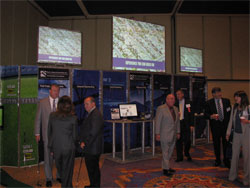 | �
�| Event exhibitors and sponsors contribute to an informative and engaging environment | �
�This year’s meeting was the best yet for the industry-leading construction defect and claims event.
�This year’s seminar concluded on May 13, 2011 with the Construction Defect Community Charitable Foundation Golf Tournament, held at Strawberry Farms Golf Course.
�The Disneyland Hotel in Anaheim, California was the place where more than 1,500 attendees convened for two days of professional development activities and seminars that included CLE workshops and panel discussions of special interest to legal and insurance professionals concerned with construction defect and claims litigation. Key events included “Challenges for Experts in Construction Defect Claims and Litigation,” “Keeping Up with Construction Defect Coverage,” and “Tips for Avoiding the ‘Perfect Storm’ in Handling of Wrap Claims.”
� �  | �
�| Supporting the golf tournament at the 15th hole | �
�This year’s Ollie award was given to George D. Calkins II, Esq. The West Coast Casualty Jerrold S. Oliver Award of Excellence was named in honor of the late Judge Jerrold S. Oliver, and recognizes an individual who is outstanding or has contributed to the betterment of the construction community.
�In addition to being the most comprehensive professional development seminar in the area of construction defects, this year’s seminar was equally valuable as a networking opportunity for members of the industry. People participated in professional development events during the day and then continued networking in the evening at numerous social events. The Lawn Party as well as the legendary Wood, Smith, Henning & Berman events were very well attended. Additional valuable networking events were hosted by a number of industry professionals at the House of Blues, and Tortilla Joe’s.
�As of this writing the 2011, West Coast Casualty's Construction Defect Seminar has applied for or has already received the following continuing education accreditation in the following areas;
�Read the full story…
�For more information about next year’s event, visit West Coast Casualty.
Texas contractual liability exclusion
May 18, 2011 — May 18, 2011 - CDCoverage.com
In Ewing Construction Co., Inc. v. Amerisure Ins. Co., No. C-10-256 (S.D. Tex. April 28, 2011), insured Ewing was the general contractor for an athletic facility constructed for a school district. The school district sued Ewing alleging defective construction of the project. The underlying complaint included contract and negligence causes of action, and sought damages for the repair of the damages and loss of the use of the project. The complaint did not allege damage to any property other than the project itself. Ewing tendered its defense to its CGL insurer Amerisure. Amerisure denied a defense and Ewing filed suit against Amerisure. The federal district trial court entered summary judgment for Amerisure. Applying Texas law, the court held that all of the damages fell within the “contractual liability†exclusion precluding any duty to defend or indemnify.
�Read the full story…
�Reprinted courtesy of CDCoverage.com