Bad Faith and a Partial Summary Judgment in Seattle Construction Defect Case
February 10, 2012 — CDJ Staff
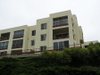
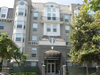
The US District Court of Washington has issued a ruling in the case of Ledcor Industries v. Virginia Surety Company, Inc. Ledcor was the builder of a mixed-use real estate project in Seattle called the Adelaide Project. Ledcor purchased an insurance policy from Virginia Surety covering the project. After the completion of the project, Ledcor received complaints of construction defects from the homeowners, which they forwarded to Virginia Surety.
� Virginia Surety denied coverage on several grounds. Absent any lawsuit, Virginia claimed that there was “not yet any duty to defend or indemnify.” Further, as the policy commenced ten days after work on the project was substantially completed, Virginia cited a provision in the policy that excluded coverage for damage that occurred before the policy began. As problems included water intrusion, Virginia noted an exclusion for fungal damage. Finally, Virginia noted that it was not clear whether damage was due to Ledcor’s own actions.
� The homeowners sued over the construction defects. Ledcor settled these suits before trial. In this, they were defended by, and settlements were paid by American Home, another of Ledcor’s insurers. Ledcor claims that Virginia Surety acted in bad faith by denying coverage and by its failure to investigate the ongoing nature of the work at the project.
� The judge determined that Virginia Surety acted in bad faith when it invoked the fungus exclusion. Virginia noted that fungal damage “‘would have been’ referenced in the list of construction defects,” however, the HOAs claimed only “water stains” and “water damage,” and made no mention of mold or fungus. The court found that Virginia Surety “was not entitled to deny coverage simply because it may have suspected that mold or fungus damage existed.” The court noted that further proceedings would be needed to determine what portion of the settlement Virginia is obligated to pay.
� The court found that there were matters of fact to be determined on the further issues in the case. The judge wrote that although Virginia acted in bad faith in invoking the fungus exclusion, it still had to be determined if they were in breach of contract by failing to defend Ledcor. Ledcor still needs to show that the damages claimed by the HOA were due to work actually covered by Virginia Surety.
� Ledcor made an additional claim that Virginia Surety violated Washington’s laws concerning the insurance industry. Here, the court noted that the improper exclusion for fungus issues “constitutes a per se unfair trade practice.” Six other claims were made under this law. The court found that Virginia Surety did not misrepresent “pertinent facts or insurance policy provisions.” It also issued its denial letter promptly, satisfying the fifth provision. However, Virginia Surety did violate the second provision, in that it failed “to acknowledge and act reasonably promptly upon communications with respect to claims.” Two other issues could not be determined.
� Judge Martinez’s decision granted a summary judgment to Ledcor on the issue of bad faith. An additional summary judgment was granted that Virginia Surety violated Washington’s Insurance Fair Conduct Act. Judge Martinez did not grant summary judgment on any of the other issues Ledcor raised.
Read the court’s decision…
Water District Denied New Trial in Construction Defect Claim
August 16, 2012 — CDJ Staff
The United District Court in Tampa, Florida has rejected the motion by Tampa Bay Water for a new trial in their claims that HDR Engineering negligently designed the C.W. Bill Young Regional Reservoir. The claims went to a jury trial, at the end of nineteen days, the jury deliberated for four hours, finding for HDR Engineering. In rejecting Tampa Bay’s motion, the judge noted that “on close examination, TBW’s contentions have little to do with the factual determinations of the jury, which evidently concluded that TBW did not meet its burden of proof, an unsurprising conclusion, considering HDR’s evidence and the weaknesses in TBW’s evidence.”
The court cited an earlier decision that “a new trial may be granted where the jury’s ‘verdict is against the great, not merely the greater weight of the evidence.’” However, the court found that the jury’s verdict “was well supported by the evidence” and that “TBW’s case showed signs of weakness at virtually every turn.” TBW’s expert “changed his opinion late in the case concerning the culpability of the contractor.” As a result, “Brumund’s change in opinions effectively bolstered HDR’s faulty construction defense.”
TBW also raised claims a pre-trial order prevented it “from introducing evidence that HDR did not fulfill its contractual quality control responsibilities” and that evidentiary rulings prevented “TBW from introducing evidence concerning quality control.” However, TBW dismissed its claims over quality control, then “attempted no less than three times during ?Ķ testimony to introduce evidence of the purpose of the quality control requirement and quality control assurance.”
TBW also contended “that it was precluded from introducing evidence that HDR’s inspectors never reported that the protective layer exceeded three feet after inspecting the work as part of HDR’s quality control duties.” The court noted that “TBW asked these very questions of HDR’s Engineer of Record.” The court also found that testimony regarding photographs of the construction was properly excluded as TBW never entered the photos into evidence.
TBW had made an argument for a jury view. Prior the trial “after discussion, and to their credit, the parties agreed to a jointly-prepared helicopter ‘flyover’ video.” The court noted that “the size and physical characteristics of the reservoir were adequately and effectively depicted in the video.” The hazards the jury did not, then, have to encounter included the narrow, unpaved rim of the reservoir, snakes, and alligators.
Read the court’s decision…
Court Requires Adherence to “Good Faith and Fair Dealing” in Construction Defect Coverage
September 30, 2011 — CDJ Staff
The California Court of Appeals has ruled in the case of Allied Framers, Inc. v. Golden Bear Insurance Company. Allied had been sued in a construction defect case and its primary insurer had become insolvent. Coverage for Allied’s defense was paid for by the California Insurance Guarantee Association through June 8, 2006. When warned that CIGA’s involvement was ending, Allied notified Golden Bear, which declined to provide coverage.
In the matters that followed, Golden Bear claimed that Allied had not exhausted its $1 million in primary insurance. Allied then showed that $1 million had already been paid out in the case. A few months thereafter, Golden Bear offered a $500,000 settlement on behalf of Allied which was rejected. Thereafter, Golden Bear hired new counsel to defend Allied. Golden Bear received, but allegedly did not pay, invoices Allied sent from their former counsel. Golden Bear finally settled the construction defect case for $2 million.
Allied’s original counsel sued Allied for payment. Golden Bear declined coverage. Allied then claimed that Golden Bear liable on several counts, arising from its failure to settle the construction defect action earlier than it did and its failure to pay Allied’s counsel. Golden Bear demurred, arguing that Allied had now exhausted is coverage with the $2 million settlement. The lower court sustained Golden Bear’s demurrer, dismissing Allied’s complaints.
The appeal court reviewed Allied’s seven complaints and sustained most of them. However, the court did reverse the trial court’s order in regard to Allied’s complaint that Golden Bear breached an implied covenant of good faith and fair dealing. The appeals court was not convinced that Golden Bear properly evaluated the settlement demand in the underlying construction defect case. The court found three other ways in which Golden Bear’s actions might show bad faith, in refusing to pay defense fees “after promising [Allied] such costs would be paid in full,” “failing to advise Allied about ‘actual or potential negative consequences of agreeing to the proposed settlement,’” and that their choice of counsel “failed to protect [Allied’s] interests in the negotiation.”
Read the court’s decision…
Court finds subcontractor responsible for defending claim
May 18, 2011 — May 18, 2011 - CDJ Staff
In an unpublished decision, the California Fourth Appellate District Court has reversed the judgment of Judge Linda B. Quinn of the Superior Court of San Diego. In the case Inland California, Inc. v. G.A. Abell, Inland, a general contractor had subcontracted with Apache Construction and Precision Electric Company (G.A. Abell).
�Apache alleged that extra demolition and drywall work was needed due to Precision’s electrical work. Inland tendered a defense of Apache’s claims. However, Precision did not provide any defense. Inland withheld payment from Precision.
�At trial, Inland “conceded Precision earned the $98,000 in progress payments Inland withheld.†They were obligated to additionally pay Precision’s costs and attorney fees.
�The Fourth Appellate District court has overturned this and remanded the case back to the lower court. The judges determined that Precision was obligated to defend itself against the claims raised by Apache and therefore vacated the judgment against Inland.
�Read the court’s decision…
Insurance Policy Provides No Coverage For Slab Collapse in Vision One
August 17, 2011 — Douglas Reiser, Builders Counsel
This post will examine whether Division Two of the Washington Court of Appeals properly reversed and remanded several lower court decisions in the case of Vision One LLC v. Philadelphia Indemnity Insurance. In short, and from the perspective of an appellate attorney, the court of appeals got the decision right. Given the rules of contract interpretation and causation in tort claims, there was really no other way the court could have ruled. I understand that from a contractor’s perspective and insurance perspective, the decision seems odd. But from a purely legal standpoint, the decision is well-reasoned and well-supported. Let me explain.
�Background
�First, here are the facts in a nutshell. Vision One is a construction company that undertook to construct a condo complex in Tacoma. Vision then contracted with D&D Concrete to pour a concrete slab for a section of the foundation. To shore the concrete slab, D&D further contracted Berg Equipment to provide necessary equipment to stabilize the structure. Well, something down the line went wrong. The shoring failed and the slab collapsed, causing a great deal of damage.
Read the full story…
�Read the court’s decision…
�Reprinted courtesy of Douglas Reiser of Reiser Legal LLC. Mr. Reiser can be contacted at info@reiserlegal.com
Landmark San Diego Hotel Settles Defects Suit for $6.4 Million
March 4, 2011 — April 4, 2011 Beverley BevenFlorez - Construction Defect Journal
After five years of legal battles, the condo owners of the El Cortez Hotel building in downtown San Diego settled for $6.4 million, as reported by The San Diego Union-Tribune on March 28, 2011. The Homeowners Association will net just over $3 million from the settlement.
�The litigation may have had an adverse effect on the value of the condos within the El Cortez Hotel building. According to an article by Kelly Bennett of Voice of San Diego, “Many condos in the building originally sold for more than $600,000. Currently, the three units on the market are asking for just more than $200,000, the U-T said.”
�Andrew Berman, the owners’ attorney, told The San Diego Union-Tribune that the five years of litigation included six lawsuits, 200 depositions, and multiple construction tests.
�Read the full story... (San Diego Union Tribune)
�Read the full story... (Voice of San Diego)
Anti-Concurrent Causation Clause Bars Coverage for Landslide and Water Leak
June 19, 2012 — Tred Eyerly, Insurance Law Hawaii
The insured unsuccessfully attempted to get around the policy’s anti-concurrent causation clause by arguing a covered cause of loss was a contributing factor. See Stor/Gard, Inc. v. Strathmore Ins. Co., 2012 U.S. Dist. LEXIS 63217 (D. Mass. May 4, 2012).
A building at the insured’s storage facility was damaged when heavy rain caused a mass of soil to slide down a slope, causing soil and a retaining wall to fall on the building. The accident caused a partial collapse of the building. The insurer hired two soil engineers, each of whom concluded that a landslide caused the accident. The reports also noted, however, that a leak from the property’s drainage system resulted in a very small percentage of water infiltrating the ground.
The insurer denied coverage based upon an exclusion for landslides.
Reprinted courtesy of Tred R. Eyerly, Insurance Law Hawaii. Mr. Eyerly can be contacted at te@hawaiilawyer.com
Read the full story…
Florida “get to” costs do not constitute damages because of “property damage”
August 11, 2011 — CDCoverage.com
In Palm Beach Grading, Inc. v. Nautilus Ins. Co., No. 10-12821 (11th Cir. July 14, 2011), claimant general contractor Palm Beach Grading (?PBG?) subcontracted with insured A-1 for construction of a sewer line for the project.  A-1 abandoned its work and PBG hired another subcontractor to complete construction of the sewer line.  The new subcontractor discovered that A-1?s work was defective requiring repair and replacement of portions of the sewer line which also required the destruction and replacement of surrounding work.�
Read the full story…
Reprinted courtesy of CDCoverage.com
Loss Caused by Seepage of Water Not Covered
July 10, 2012 — Tred Eyerly, Insurance Law Hawaii
The anti-concurrent clause in a homeowner’s policy barred coverage for damage caused by hidden seepage. Boazova v. Safety Ins. Co., 2012 Mass. LEXIS 462 (Mass. May 29, 2012).
The insured had a concrete patio built along the rear wall of her house at a grade higher than the home’s foundation. Years later, severe deterioration was discovered in the floor joists, wall studs and other parts of the home. The insured held a homeowner’s policy with Safety. An inspector hired by Safety determined the deterioration was caused by the placement of the concrete patio slab adjacent to the wall of the house, allowing water to seep onto the top of the foundation.
Safety denied coverage because the damage was caused by a combination of surface water, deterioration, settling and improper construction of the concrete patio.
Read the full story…
Reprinted courtesy of Tred R. Eyerly, Insurance Law Hawaii. Mr. Eyerly can be contacted at te@hawaiilawyer.com
Virginia Chinese Drywall “property damage” caused by an “occurrence” and number of “occurrences”
August 4, 2011 — CDCoverage.com
In Dragas Management Corp. v. Hanover Insurance Co., No. 2:10cv547 (E.D. Va. July 21, 2011), claimant residential home general contractor and developer DMC filed for arbitration against insured drywall supply and install subcontractor Porter-Blaine seeking damages for (1) the replacement of defective Chinese drywall, and (2) the repair of resulting property to other components of the DMC homes and homeowners’ personal property in seventy-four homes. Porter-Blaine’s CGL insurer Citizens and excess insurer Hanover defended Porter-Blaine in the DMC arbitration.
Read the full story…
�Reprinted courtesy of CDCoverage.com
Harmon Tower Construction Defects Update: Who’s To Blame?
August 17, 2011 — CDJ Staff
Reporting on the site VegasInc.com, Liz Benton notes that “nobody wants to take the fall for what happened at Harmon.” Work on the Harmon hotel building in Las Vegas’s CityCenter stopped in 2008 after 26 of the planned 49 stories were completed. Lorence Slutzky, a construction law professor at John Marshall Law School and a partner with the Chicago firm Robbins Schwartz Nicholas Lifton & Taylor told Benton that while inspectors and others are complicit, “the real responsibility rests with Perini, which has an obligation to comply with the plan specifications.” Perini’s claim is that they were given faulty design drawings. MGM disputes this.
�Perini has offered to repair the building defects, however MGM has released a statement that they have “zero confidence or trust that Perini can and will properly fix a building it has so badly constructed thus far.” One MGM spokesperson likened these requests from Perini to “the director of ‘Ishar’ demanding a sequel.” “Ishtar,’ cost Columbia Pictures $55 million dollars and earned only $4.2 million in its initial run. Perini claims that MGM halted work because of the economy.
Read the full story…
Texas Court of Appeals Conditionally Grant Petition for Writ of Mandamus to Anderson
April 25, 2011 — April 25, 2011 Beverley BevenFlorez - Construction Defect Journal
The Texas Court of Appeals conditionally grant mandamus relief to Anderson Construction Company and Ronnie Anderson (collectively “Anderson”)… from the trial court in a construction defect lawsuit filed by Brent L. Mainwaring and Tatayana Mainwaring. See Tex. Prop. Code Ann. 27.001-.007 (West 2000 & Supp. 2010). Relators contend the trial court abused its discretion by compelling discovery while the case was abated by operation of law.
�The Court of Appeals opinion describes what led up to the proceedings: “The Mainwarings’ original petition identified certain defects in their Anderson-constructed home. Those defects concerned the roof trusses and framing, air conditioning, mortar and masonry, exterior doors and windows, and weep holes. With respect to the five areas of defects identified in their original petition, the Mainwarings gave Anderson the statutorily required notice on January 13, 2010. After implementing agreed extensions, Anderson made an offer of settlement for the defects the Mainwarings identified in their notice. Almost eight months later, the Mainwarings filed an amended petition adding defects they had not included in their original petition and notice. The additional defects the Mainwarings included in their amended petition had not been addressed by Anderson’s offer of settlement.”
�Following these events, Anderson claimed the Mainwarings did not respond in writing to their settlement offer. “Anderson filed a verified plea in abatement on December 2, 2010. In the trial court, Anderson claimed that the Mainwarings failed to respond in writing to Anderson’s settlement offer, as required by Section 27.004(b) of the RCLA. See Tex. Prop. Code Ann. 27.004(b)(1). The Mainwarings moved to compel discovery responses from Anderson. The Mainwarings alleged that they rejected Anderson’s settlement offer, and that if their response was insufficient, they contend that Anderson’s offer was rejected by operation of law on the twenty-fifth day after the Mainwarings received it. See Tex. Prop. Code Ann. 27.004(i). The Mainwarings’ motion to compel was not supported by affidavit. See Tex. Prop. Code Ann. 27.004(d)(2). On January 13, 2011, Anderson filed a verified supplemental plea in abatement. Anderson alleged that the Mainwarings failed to provide written notice concerning the newly alleged defects and complained the Mainwarings were attempting to circumvent the inspection and resolution procedure of the RCLA. Over Anderson’s objection that the lawsuit had been abated, the trial court granted the Mainwarings’ motion to compel discovery.”
�After listening to both sides, the Court of Appeals offered this reasoning for their opinion: “The parties do not dispute that Anderson inspected the property before the Mainwarings alleged the existence of additional defects in their amended pleading, nor do the Mainwarings claim that Anderson has been given an opportunity to inspect the additional defects the Mainwarings identified in their amended pleadings. We conclude the trial court did not have the discretion to deny or lift the abatement until the Mainwarings established their compliance with the statute. In other words, the Mainwarings are required to provide Anderson a reasonable opportunity to inspect the additional defects identified by their amended pleading, which will allow Anderson the opportunity to cure or settle with respect to the newly identified defects.”
�The Court of Appeals spoke directly on the issue of mandamus relief: “The Mainwarings contend that mandamus relief is not available because the trial court’s ruling does not prevent Anderson from making settlement offers during the discovery process. ‘An appellate remedy is “adequate” when any benefits to mandamus review are outweighed by the detriments.’ In re Prudential Ins. Co. of Am., 148 S.W.3d 124, 136 (Tex. 2004). The failure to abate a case is typically not subject to mandamus. See In re Allstate Cnty. Mut. Ins. Co., 85 S.W.3d 193, 196 (Tex. 2002) (citing Abor v. Black, 695 S.W.2d 564, 567 (Tex. 1985)). In this case, however, the case was abated by operation of law. By ignoring the statutory abatement, the trial court interfered with the statutory procedure for developing and resolving construction defect claims. See In re Kimball Hill Homes Tex., Inc., 969 S.W.2d 522, 525 (Tex. App. Houston [14th Dist.] 1998, orig. proceeding) (An appeal provides an inadequate remedy for the trial court’s failure to observe automatic abatement pursuant to the RCLA.). The benefits of mandamus review are not outweighed by the detriments of mandamus review in this case.“
�In conclusion, “The trial court had no discretion to compel discovery while the case was abated, and Anderson, who has been compelled to respond to discovery during a period the case was under an automatic abatement, has no adequate remedy on appeal. Accordingly, we conditionally grant the petition for writ of mandamus. The writ will issue only if the trial court fails to vacate its order of February 3, 2011, and fails to refrain from proceeding with the case until a motion to reinstate is filed that establishes compliance with the notice and inspection requirements of the Residential Construction Liability Act.”
�Read the trial court’s decision…
Insurance Company Must Show that Lead Came from Building Materials
August 17, 2011 — CDJ Staff
The Fourth Circuit Court of Appeals for Louisiana has reversed the summary judgment of a lower court in the case of Widder v. Louisiana Citizens Property Insurance Company. Judge Roland L. Belsome wrote the opinion for the panel of three judges. Ms. Widder discovered that her home and its content were contaminated by lead. She applied to her insurer, Louisiana Citizens Property Insurance, which denied her claim.
�In response to Ms. Widder’s suit, LCPIC applied for a summary judgment on the grounds that there was no physical loss and that the policy did not cover defective material, latents defects, and pollution damage.
�The appeals court found that the lead contamination of Widder’s home did meet the standards of a direct physical loss, citing a recent Chinese Drywall case. There, it was found, “when a home has been rendered unusable or uninhabitable, physical damage is not necessary.”
�The lower court addressed only one of LCPIC’s exclusions, addressing only the exclusion on basis of “faulty, inadequate or defective material.” The appeals court noted that the evidence offered at trial does not show that the building materials were the source of the lead. This provided the appeals court with a matter of fact to remand to the lower court.
Read the court’s decision…
Plaintiff Not Entitled to Further Damages over Defective Decking
August 2, 2012 — CDJ Staff
The Court of Appeal of the State of California, Third Appellate District has rejected an appeal from the successful plaintiff of a construction defect case in Evilsizor v. Calaveras Lumber Company. John Evilsizor hired Scott Hunton to remove and replace the deck at the rear of his home. Subsequently, the deck, which had been constructed with a product called SmartDeck, a product of the subsequently bankrupt US Plastic Lumber, exhibited problems. Hunton made some repairs. Calaveras Lumber offered replacement decking if Evilsizor would pay the difference in price. Mr. Evilsizor hired another contractor to replace the decking and then sued for lost use and compensation for the amount he paid the second contractor. Replacing the deck a second time cost Mr. Evilsizor $113,065.44.
During the trial, the defendant conceded that the planking was defective. It has been recalled by the manufacturer. Additionally, the jury heard testimony from a construction and building codes consultant, Lonne Haughton, however the trial court found that Mr. Haughton did not have sufficient expertise in wood-plastic composite materials. Further, Haughton had been a California contractor for only three years, and though he claimed a college degree, this was “‘a distance learning diploma’ that required no in-class work.” The appeals court upheld the decision that Mr. Haughton was not qualified to testify as an expert about wood-plastic materials.
The court also upheld the trial court’s exclusion of two pieces of evidence. One was a list of SmartDeck sales. However, the witness asked about it was not able “to testify who prepared it or confirm that it had been prepared by a Cascade employee.” Further, “the fact defendant bought and sold SmartDeck was not disputed.” The other was an e-mail in which US Plastics said they had “some bad product in the field.” This e-mail went to Westmark & Associates, and the plaintiff did not establish that it was ever sent to the defendant.
Though the defense has suggested an award of $18,000 plus loss-of-use damages for one year and an additional $4,000 if the jury believed that leftover material from the front deck was used in the rear. As the plaintiff requested $100 per month of loss of use, this would have totaled $34,000. The jury awarded the cost of the decking, $6,275,82. The court cites earlier decision that the amount of the award is “a question of fact to be determined by the jury.”
In conclusion, Mr. Evilsizor was not only unable to receive a larger award, but the court ruled that he must pay the defendant’s cost on appeal.
Read the court's decision…
Construction Defect Exception Does Not Lift Bar in Payment Dispute
September 13, 2012 — CDJ Staff
The Court of appeals of Oregon has affirmed the ruling of a lower court, agreeing that ORS 701.131(1) bars John Pincetich from pursuing a payment dispute against his clients, Thomas and Frances Nolan. The Nolans hired Mr. Pincetich to build a home, during which time Mr. Pinchtich lost his license due to a lapse in liability insurance. Mr. Pincetich was reinstated after reestablishing insurance.
�After the house was concluded, a dispute over payment arose. The Nolans claimed that Mr. Pincetich was unable to bring an action against them as ORS 701.131(1)(b) specifies that the contractor must hold a license “continuously while performing the work for which compensation is sought.” As there were fourteen days in which Mr. Pincetich did not hold a license, the trial court concluded that this law did not apply.
�Mr. Pincetich claimed that in hiring him, the defendants became residential developers. Mr. Pincetich argued that developers are exempted under ORS 701.121(2)(C), but this was rejected by the trial court. This formed the basis of his appeal. The appeals court concluded that the exception he cited was motivated to “further benefit consumers by providing authority for unlicensed contractors to pursue third-party claims in construction-defect cases.” The court concluded that Mr. Pincetich’s reasoning would “allow unlicensed contractors to do the very thing that the claims bar is intended to prevent them from doing.”
Read the court’s decision…
The Year 2010 In Review: Design And Construction Defects Litigation
February 25, 2011 — Candace Matson, Harold Hamersmith, and Helen Lauderdale -
Construction & Infrastructure Law Blog - February 25, 2011
This article is the first in a series summarizing construction law developments for 2010
�1. Centex Homes v. Financial Pacific Life Insurance Co., 2010 U.S. Dist. LEXIS 1995 (E.D. Cal. 2010)
�After settling numerous homeowners’ construction defect claims — and more than ten years after the homes were substantially completed — a home developer brought suit against one of the concrete fabrication subcontractors for the development seeking indemnity for amounts paid to the homeowners, as well as for damages for breach of the subcontractor’s duties to procure specific insurance and to defend the developer against the homeowners’ claims. The subcontractor brought a motion for summary adjudication on the ground the developer’s claims were barred by the ten year statute of repose contained in Code of Civil Procedure Section 337.15.
The District Court agreed the developer’s claim for indemnity was barred by Section 337.15. And it held that because the damages recoverable for breach of the subcontractor’s duty to purchase insurance are identical to the damages recoverable through the developer’s indemnity claim, the breach of duty to procure insurance claim also was time-barred. The District Court, however, allowed the claim for breach of the duty to defend to proceed. The categories of losses associated with such a claim (attorneys’ fees and other defense costs) are distinct from the damages recoverable through claims governed by Section 337.15 (latent deficiency in the design and construction of the homes and injury to property arising out of the latent deficiencies).
� �2. UDC — Universal Development v. CH2M Hill, 181 Cal. App. 4th 10 (6th Dist. Jan. 2010)
��Indemnification clauses in construction agreements often state that one party to the agreement — the “indemnitor” — will defend and indemnify the other party from particular types of claims. Of course, having a contract right to a defense is not the same as actually receiving a defense. Any indemnitor attempting to avoid paying for defense costs can simply deny the tender of defense with the hope that when the underlying claim is resolved the defense obligations will be forgotten. In the past, when parties entitled to a defense — the “indemnitees” — had long memories and pressed to recover defense costs, indemnitors attempted to justify denying the tender by claiming their defense obligations coincided with their indemnity obligations and neither arose until a final determination was made that the underlying claim was one for which indemnity was owed.
��Read the full story...
�Reprinted courtesy of Candace Matson, Harold Hamersmith, and Helen Lauderdale, Sheppard Mullin Richter & Hampton LLP. Ms. Matson can be contacted at cmatson@sheppardmullin.com, Mr. Hamersmith can be contacted at hhamersmith@sheppardmullin.com, and Ms. Lauderdale can be contacted at hlauderdale@sheppardmullin.com.
Construction Defect Bill Introduced in California
June 10, 2011 — CDJ Staff
Linda Halderman (R-Fresno) has introduced a bill which would require lawyers soliciting clients for construction defect cases to provide their prospective clients with a statement including that sellers may be required to disclose that they were engaged in a construction lawsuit. Further, the bill would require lawyers to disclose that they cannot guarantee financial recovery.
�Halderman was quoted by The Business Journal as saying, “Lawsuit abuse has been very damaging, especially to homeowners in the Valley.” Halderman hopes that her bill will discourage class action lawsuits against builders and that this will protect jobs in the construction industry.
�Read the full story…
Construction Delayed by Discovery of Bones
June 28, 2011 — CDJ Staff
Work stopped on a $7 million construction project in Oak Harbor, Washington, after three sets of Native American remains were found. The Washington State Department of Archaeology and Historic Preservation had suggested that the project employ an archaeologist. City, state, and tribal officials are determining what will happen next. The Seattle Times reports that Jim Slowik, Oak Harbor’s mayor, has asked for a review of why no archaeologist was part of the project.
Read the full story…