Flooded Courtroom May be Due to Construction Defect
September 1, 2011 — CDJ Staff
The General Services Administration wouldn’t pin it on a construction defect, but a spokesperson said that a pipe that was misaligned during installation was the likely cause of a flood in the Thomas F. Eagleton US Courthouse on August 23. According to the St. Louis Dispatch, the burst pipe caused a 17-story waterfall in the courthouse, soaking ceilings and floors, and drenching the building’s contents.
The building was dedicated eleven years ago. During the nearly ten years before the building was complete, there were construction disputes and soil contamination issues.
Read the full story…
Five Years of Great Legal Blogging at Insurance Law Hawaii
December 9, 2011 — CDJ Staff
Our congratulations to Tred Eyerly who has been blogging at Insurance Law Hawaii for five years now. Over the years, he has posted more than five hundred posts and has provided us all with fascinating insights into the laws on insurance coverage. He describes his blog as “a commentary on insurance coverage issues in Hawaii and beyond.” We are grateful that the “beyond” has just in the last few weeks included Colorado, Illinois, Washington, Minnesota, and Rhode Island (about as far from the island of Hawaii as you can get).
You can read his blog at Insurance Law Hawaii.
A Performance-Based Energy Code in Seattle: Will It Save Existing Buildings?
August 11, 2011 — Douglas Reiser, Builders Counsel
The City of Seattle has one of the most stringent energy codes in the nation. Based upon the Washington State Energy Code (which has been embroiled in litigation over its high standards), the code demands a lot from commercial developers. But, does it prevent developers from saving Seattle?s classic and old buildings? Perhaps.
�The general compliance procedure requires buildings to be examined during the permitting process. This means that buildings are examined before they begin operating. The procedure is not malleable and is applicable to all buildings, old and new, big and small.
�The downside of this procedure is that it eliminates awarding compliance to those buildings exhibiting a number of passive features, such as siting, thermal mass, and renewable energy production. This problem has prevented a number of interesting and architecturally pleasing existing building retrofits from getting off the ground. The cost of complying with the current system can be 20% more, and it might prevent builders from preserving a building?s historical integrity.
Read the full story…
�Reprinted courtesy of Douglas Reiser of Reiser Legal LLC. Mr. Reiser can be contacted at info@reiserlegal.com
AFL-CIO Joins in $10 Billion Infrastructure Plan
June 30, 2011 — CDJ Staff
The AFL-CIO has announced plans to generate up to $10 billion in funding for infrastructure development, training construction workers, and making buildings more energy efficient, pledging $20 million to retrofit buildings. Bloomberg News reports that union officials made the announcement in Chicago at the Clinton Global Initiative, releasing a statement from Richard Trumka, president of the union, “we, at the AFL-CIO, believe that together, with our partners in business and government, we can profitably invest significant resources to make America more competitive and energy efficient.” A foot injury prevented Mr. Trumka from attending the event.
�The statement also quoted Mark Ayers, president of the Building and Construction Trades Department of the AFL-CIO, “the time is now to become intensely focused on the creation of jobs.”
� Read the full story…
South Carolina Law Clarifies Statue of Repose
July 11, 2011 — CDJ Staff
A new law in South Carolina, H 3375, fixes a loophole in that state’s statute of repose. State law puts a cap of eight years on construction defects, but the 2008 law that set that limit had a loophole that would allow for construction defect claims to start thirteen years after construction. The law also provides a cap on punitive damages.
�The measure was backed by the Carolinas Association of General Contractors. Their spokesperson said that the legislation “increases our state’s ability to be economically competitive and helps protect our members from frivolous lawsuits.”
Read the full story…
�Read South Carolina H 3375…
Preparing for Trial on a Cause of Action for Violation of Civil Code section 895, et seq.�
May 10, 2012 — Samir R. Patel, Esq., Lorber, Greenfield, & Polito, LLP
In 2002, the California Legislature enacted the Right to Repair Act (hereinafter “SB-800”), as codified in Title VII of the Civil Code. As set forth in Civil Code section 895, et seq., SB-800 established a set of standards for residential construction, and provides a statutory protocol to address alleged violations of those standards. SB-800 applies to all new single family homes sold after January 1, 2003, and it created its own cause of action governed completely by its own terms, in that in order to state a cause of action under SB-800, a plaintiff may only allege a violation of the Act. (Civ. Code, § 938.) Under Civil Code sections 896, 897, 943, and 944, the Legislature made it clear that it intended to create a single cause of action for construction defects in homes that fall under the purview of SB-800. By passing SB-800, the Legislature eliminated multiple and often redundant or conflicting causes of action, burdens of proof, statutes of limitations, and types of damages that were common in construction defect actions prior to the enactment of the same.
�Civil Code section 895, et seq. has significantly changed the landscape of construction defect lawsuits. Yet, for years, the only attention given to the statutes focused solely on the codified pre-litigation process that requires plaintiffs and builders to meet and confer regarding defects and attempt a process to repair the alleged defects before litigation is pursued. A major impediment to the implementation of the pre-litigation procedures has often been that the statutes specifically state that the information obtained during the pre-litigation process is admissible at trial. Hence, through use of the pre-litigation process, plaintiffs’ counsel can engage in a builder funded fishing expedition and later use the information obtained to advance their litigation goals. As such, many builders have chosen to opt out of codified pre-litigation process altogether, an option which the builder can elect within their Purchase and Sale Agreements.
�Recently, counsel for builders throughout California have turned their attention to the “exclusive remedy” aspect of SB-800 by seeking, often successfully, to limit plaintiffs to a single cause of action for violation of SB-800. Civil Code section 943 makes clear that a cause of action for violation of SB-800 performance standards is a plaintiff’s sole remedy for a residential construction defect action. Civil Code section 943 states:
�Except as provided in this title, no other cause of action for a claim covered by this title or for damages recoverable under 944 is allowed. (Civ. Code, § 943.) Â
�The question remains: what is the benefit of requiring plaintiffs to trim down their complaint and eliminate their tried and true common law causes of action, and requiring them to pursue only a single cause of action for violation of SB800?
�The construction standards enumerated within SB-800 include fifty-plus functionality standards. On their face, any benefit to pursuing a construction defect action under a single cause of action for violation of SB-800 initially appears trivial at best, in light of the fact that a jury may be very confused with the complexity of the functionality standards set forth within the Civil Code. Nevertheless, Title VII of the Civil Code actually contains numerous provisions that builders can utilize to their benefit throughout the process of construction defect litigation, including during preparation for trial.
�First and foremost, counsel for builders can assert numerous affirmative defenses that will be beneficial if the matter proceeds to trial. These affirmative defenses, as codified in Civil Code section 945.5, include mitigation, in whole or in part, for damages caused by: an unforeseen act of nature; a homeowner’s failure to allow reasonable and timely access for inspections and repair under the pre-litigation procedures; the homeowner’s failure to follow the builder’s recommendations and commonly accepted homeowner maintenance obligations; ordinary wear and tear; misuse; abuse; or neglect. Builders should include these affirmative defenses within their responsive pleadings and as trial approaches, prepare appropriate motions in limine and request special jury instructions regarding the same. As frustrated builders and their attorneys are well aware, many construction defect suits result from a homeowner’s failure to properly maintain their property in a manner that is consistent with normal maintenance procedures and guidelines. Furthermore, within the ten year statute of limitations for most defects, ordinary wear and tear is often attributable to numerous deficiencies alleged by plaintiffs. The affirmative defense for a homeowner’s failure to allow inspections and repairs is also vital, as plaintiffs’ counsel may encourage a homeowner to forego the repair and seek monetary damages, allowing plaintiffs’ counsel to ultimately obtain their share of attorney’s fees. Therefore, the SB-800 statutes provide the builder with recourse and distinctive mitigation defenses that were previously and confusingly mixed into tort and contract related defenses. These affirmative defenses can also be utilized by counsel during the cross-examination of plaintiff homeowners and expert witnesses. Defense counsel should fully grasp these defenses and utilize them as defense themes throughout litigation.
�As a plaintiff is limited to a single cause of action for violation of SB-800, if defense counsel has failed to properly eliminate excessive tort and contract causes of action prior to trial, a motion for summary adjudication, or at the very least, a motion for judgment on the pleadings should be brought to limit the introduction of evidence outside of a single cause of action for violation of SB-800. Practical judges are always looking for ways to streamline and expedite trials, and they are currently ruling that SB-800 is the exclusive remedy available to plaintiffs. In fact, plaintiffs’ firms in SB-800 matters are now voluntarily limiting their complaints to this one cause of action.
�Special jury instructions can also be crafted to limit a jury’s computation of damages pursuant to Civil Codesection 944, which provides the method for computing damages within a construction defect action, as follows:
�If a claim for damages is made under this title, the homeowner is only entitled to damages for the reasonable value of repairing any violation of the standards set forth in this title, the reasonable cost of repairing any damages caused by the repair efforts, the reasonable cost of repairing and rectifying any damages resulting from the failure of the home to meet the standards, the reasonable cost of removing and replacing any improper repair by the builder, reasonable relocation and storage expenses, lost business income if the home was used as a principal place of a business licensed to be operated from the home, reasonable investigative costs for each established violation, and all other costs or fees recoverable by contract or statute. (Civ. Code, § 944.) [Emphasis added.]
�Civil Code section 944 specifically prohibits recovery for damages outside the scope of its explicit language as it states “the homeowner is only entitled to ... damages for the reasonable value of repairing any violation of the standards set forth in this title....” [Emphasis added.] The statute ultimately provides a “reasonableness” standard for the computation of damages that did not exist when computing damages on traditional common law tort and contract claims. Therefore, defense counsel should prepare special jury instructions to limit evidence of damages introduced at trial to the reasonable value of repairing any violation of the standards, and to exclude any evidence of damages beyond the reasonableness standard. Defense counsel should seize the opportunity to utilize the theme of “reasonableness” when attacking plaintiffs’ allegations and plaintiffs’ proposed repair methodology throughout the discovery process and at trial.
�Defense counsel may also prepare a motion in limine or special jury instruction regarding the limitation of evidence regarding defects that did not cause resultant damage. Civil Code section 897 states:
�Intent of Standards
�The standards set forth in this chapter are intended to address every function or component of a structure. To the extent that a function or component of a structure is not addressed by these standards, it shall be actionable if it causes damage. (Civ. Code, § 897.) [Emphasis added.]
�Defense counsel can argue that the introduction of any evidence supporting a claim for construction-related deficiencies that are not enumerated within Civil Code section 896, or for deficiencies where no damage has occurred is prohibited and must be excluded at trial. This requirement of resultant damages is familiar as the general rule was previously established in Aas v. Superior Court (2000) 24 Cal.4th 627, in which the California Supreme Court held that there is no tort recovery for construction defects that have not actually caused property damage. The legislature effectively codified this rule within Civil Code section 897.
�A motion in limine can also be crafted to limit expert testimony to the standards enumerated in Civil Code section 896, and to deficiencies that caused damage pursuant to Civil Code 897. The motion in limine can be based upon Civil Code section 943 and the fact that claims for defects in homes which were sold after January 1, 2003 may only be pursued under a single cause of action for violation of SB-800. As such, expert testimony should be controlled by the standards set forth in Civil Code section 896. Furthermore, throughout a construction defect matter, defense counsel should ensure that their experts are well versed with the standards and that they can provide testimony that utilizes the same. Defense counsel’s knowledge of the standards will also be helpful during the cross-examination of plaintiffs’ expert witnesses.
�If, despite the efforts of defense counsel, the complaint still has numerous causes of action, or if only some homes fall under the purview of SB-800 while others do not, defense counsel can utilize a motion to bifurcate trial. The motion’s basis is that a cause of action for violation of SB-800 will require the introduction of evidence regarding the violations of the fifty-plus standards, and the tort and contract-based claims would also require the introduction of a wide range of evidence to prove each cause of action. For example, in order to prove the tort causes of action, plaintiffs must prove elements such as: duty, breach, proximate and actual causation, and that the builder placed the homes into the stream of commerce. (See Richards v. Stanley (1954) 43 Cal.2d 60, 63; Kriegler v. Eichler Homes, Inc. (1969) 269 Cal.App.2d 224, 227.) On the contract causes of action, plaintiffs must prove the existence of a valid written contract for the sale of the home, including proof regarding the existence of basic contractual elements such as offer, acceptance, and consideration. (Civ. Code, § 1624 subd. (a); Roth v. Malson (1997) 67 Cal.App.4th 552, 557.) Defense counsel can argue that exposing the jury to elements that may or may not be applicable to all of the homes in the action will complicate and confuse the jury. Thus, concurrently exposing the jury to the SB-800 claims and the non-SB-800 claims will necessitate undue consumption of time, and create the substantial danger of undue prejudice of confusing the issues or misleading the jury.
�One of the most important and relevant features of the SB-800 statutes is that they include shortened statutes of limitation as to certain enumerated defects. The codified statutes of limitations apply from the date of “close of escrow,” and are much more definitive than statutes of limitations regarding tort and contract claims. Therefore, they can be utilized within a motion for summary adjudication in cases where only one or a few defects are alleged. For example, under Civil Code section 896, et seq., there is a five year limitation on paint (Civ. Code, § 896, subd. (g)(1)); a four year limitation on plumbing fixtures (Civ. Code, § 896, subd. (e)); a three year limitation on landscaping (Civ. Code § 896, subd. (g)(12)); and a one year limitation on irrigation systems and drainage (Civ. Code, § 896, subd. (g)(7)). The non-SB-800 claims are subject to a four year statute of limitation for patent defects and a ten year statute of limitation for latent defects. (See Code of Civ. Proc., §§ 337.1, 337.15.) The contrast between the statute of limitations for the SB-800 claims and non-SB-800 claims can complicate a matter at trial, further establishing the necessity to limit plaintiffs to a single cause of action for violation of SB-800. Hence, defense counsel should also utilize a motion to bifurcate the statute of limitations issues from the issue of liability if a question of fact exists. If successful on the motion to bifurcate, plaintiff’s counsel will be barred from the introducing evidence at trial regarding a defect where the statute of limitations has run.
�Defense counsel should also seek to simplify the construction standards for the jury. Ultimately, by drafting jury instructions and a special verdict form that is easy to navigate, counsel can promote an easy interpretation of the standards enumerated within the Civil Code. The best route for drafting a special verdict form is to draft it as a check-list, similar to a traditional real estate walk-through check-list. By incorporating the shortened statutes of limitations into the special verdict form, defense counsel can effectively frame the case for the jury. The special verdict form should also allow the jury to easily eliminate any claim for damages that is mitigated, in whole or in part, through the codified affirmative defenses. Defense counsel should also consider drafting a trial brief that effectively and simplistically provides the trial court judge with an understanding of the specific defects before the court, and simultaneously notes which Civil Code standards are implicated and the scope of the same. If the trial judge is not well versed in construction defect litigation, defense counsel should be all the more careful in breaking down the parameters and limitations codified within SB-800 for the court.
�The strategies outlined within this article are only a few tactics that can be utilized to defend a construction defect suit. Depending on the defect allegations within any particular case, defense counsel should become intimately familiar with Title VII of the Civil Code and use all aspects of the same to their advantage. If not, plaintiffs’ counsel will have the advantage during “court-house step” settlement discussions and at trial.
� Printed courtesy of Samir R. Patel, Esq. of Lorber, Greenfield, & Polito, LLP. Mr. Patel can be contacted at spatel@lorberlaw.com.
�
Kansas Man Caught for Construction Scam in Virginia
December 20, 2012 — CDJ Staff
A Virginia court sent charges of construction fraud against a Kansas man to a grand jury. Larry Foster visited homes in Bedford County, Virginia, tested the water, and told homeowners that they needed new water filtration systems. The homeowners paid, but Mr. Foster never delivered. One homeowner who testified paid him $1,690. Another paid even more, giving $3,090 to Mr. Foster. In order to dupe his victims, Foster used the address of a chiropractor as a business address, unbeknownst to the actual business there.. He is wanted for charges in other states as well.
Read the full story…
Eighth Circuit Remands to Determine Applicability of Collapse Exclusion
January 6, 2012 — Tred Eyerly, Insurance Law Hawaii
The Eighth Circuit determined a jury instruction regarding the applicability of the "all-risk" policy’s exclusion for "collapse" was inadequate. See KAAPA Ethanol, LLC v. Affiliated FM Ins. Co., 2011 U.S. App. LEXIS 22158 (8th Cir. Nov. 3, 2011).
KAAPA had nine large, cylindrical, stainless steel tanks fabricated at its location. Soon after operations began in 2003, some of the tanks experienced unusual movement and began to shift. A geotechnical engineer found "silty clay" had been used for infill instead of compacted granular fill called for in engineering drawings. A year long plan to repair all nine tanks was implemented.
Affiliated’s "all-risk" policy excluded damage caused by faulty workmanship. It also excluded damage caused by settling or cracking. The settling exclusion went on to provide, "This exclusion will not apply to loss or damage resulting from collapse of: a building or structure; or material part of a building or structure." Affiliated denied coverage because of the faulty workmanship and settling exclusions.
Read the full story…
Reprinted courtesy of Tred R. Eyerly, Insurance Law Hawaii. Mr. Eyerly can be contacted at te@hawaiilawyer.com
Wine without Cheese? (Why a construction contract needs an order of precedence clause)(Law Note)
August 11, 2011 — Melissa Brumback
For today’s law note, I’m addressing a comment that came to me last week from Dave O’Hern of Miller O’Hern Construction. Dave writes:
�I am a general contractor doing a fuel tank replacement project for our county. In the specifications there is a spec for a UL 142 tank, on the plans the spec references UL 2085 ? a much more expensive tank. My subcontractor bid the UL 142 tank. The specifications state that the specs and plans are on the same level of precedence.
�The county wants me to furnish the more expensive tank without compensation citing the clause that states the plans and specs are complementary and what is called for by one is binding as if called by all and the most stringent requirement will apply.
Read the full story…
���Reprinted courtesy of Melissa Brumback of Ragsdale Liggett PLLC. Ms. Brumback can be contacted at mbrumback@rl-law.com.
�
Anti-Concurrent Causation Clause Bars Coverage for Landslide and Water Leak
June 19, 2012 — Tred Eyerly, Insurance Law Hawaii
The insured unsuccessfully attempted to get around the policy’s anti-concurrent causation clause by arguing a covered cause of loss was a contributing factor. See Stor/Gard, Inc. v. Strathmore Ins. Co., 2012 U.S. Dist. LEXIS 63217 (D. Mass. May 4, 2012).
A building at the insured’s storage facility was damaged when heavy rain caused a mass of soil to slide down a slope, causing soil and a retaining wall to fall on the building. The accident caused a partial collapse of the building. The insurer hired two soil engineers, each of whom concluded that a landslide caused the accident. The reports also noted, however, that a leak from the property’s drainage system resulted in a very small percentage of water infiltrating the ground.
The insurer denied coverage based upon an exclusion for landslides.
Reprinted courtesy of Tred R. Eyerly, Insurance Law Hawaii. Mr. Eyerly can be contacted at te@hawaiilawyer.com
Read the full story…
Williams v. Athletic Field: Hugely Important Lien Case Argued Before Supreme Court
June 17, 2011 — Douglas Reiser, Builders Counsel
Well, it finally made it. The most important Washington lien case of recent memory was argued in front of the Washington Supreme Court on Tuesday, June 14, 2011. So, what should we all expect?
As I was reading through my RSS feeds this afternoon ? I was stopped dead in my tracks. Williams v . Athletic Field, the Division II case that has been a frequent topic here on Builders Counsel, has finally been argued before the Supreme Court. All of you who have been anxiously awaiting this day, you can check out the Supreme Court submissions by following this link.
The Williams case has been the center of attention for construction lawyers and construction organizations over the past year. Some have called for complete lien law reform, others have tried to patch a hole in the law. Now, we can expect a ruling from the highest court in the state. That ruling will have a major impact on whether the Legislature feels compelled to change lien law.
Read the full story…
Reprinted courtesy of Douglas Reiser of Reiser Legal LLC. Mr. Reiser can be contacted at info@reiserlegal.com
Nevada Court Adopts Efficient Proximate Cause Doctrine
February 10, 2012 — Tred Eyerly, Insurance Law Hawaii
Although the Nevada Supreme Court adopted the efficient proximate cause doctrine, it determined it did not apply to salvage coverage under an all-risk policy for a rain-damaged building. Fourth Street Place, LLC v. The Travelers Indemn. Co., 2011 Nev LEXIS 114 (Nev. Dec. 29, 2011).
� Fourth Street owned an office building which was insured by an all-risk policy issued by Travelers. Fourth Street hired Above It All Roofing to repair the roof of the office building. Above It All removed the waterproof membrane on the roof and prepared to replace the membrane the following week. Over the weekend, however, substantial rain hit. On Sunday, Above It All returned to cover the exposed portions of the roof with tarps, but wind later blew the tarps away. The building suffered significant interior damage as it continued to be exposed to the rain.
Read the full story…
� � � Reprinted courtesy of Tred R. Eyerly, Insurance Law Hawaii. Mr. Eyerly can be contacted at te@hawaiilawyer.com
Supreme Court of Oregon Affirms Decision in Abraham v. T. Henry Construction, et al.
April 20, 2011 — April 20, 2011 Beverley BevenFlorez - Construction Defect Journal
After reviewing the decision in Abraham v. T. Henry Construction, et al., the Oregon Supreme Court affirmed that a tort claim for property damage arising from construction defects may exist even when the homeowner and the builder are in a contractual relationship.
�When the case was initially filed, the plaintiffs alleged breach of contract and negligence. The defendants moved for summary judgment arguing that one, the claim was barred by the six-year statute of limitations and two, no special relationship (such as one between a doctor and patient) existed. The court agreed with the defendants. However, the Court of Appeals while affirming the trial court’s decision on breach of contract reversed the decision on negligence. The Court of Appeals stated that an administrative or statute rule could establish a standard of care independent from the contract.
�The Oregon Supreme Court gave an example of cases where a tort claim could exist when a contract is present: “If an individual and a contractor enter into a contract to build a house, which provides that the contractor will install only copper pipe, but the contractor installs PVC pipe instead (assuming both kinds of pipe comply with the building code and the use of either would be consistent with the standard of care expected of contractors), that failure would be a breach of contract only. […] If the failure to install the copper pipe caused a reduction in the value of the house, the plaintiff would be able to recover that amount in an action for breach of contract. […] On the other hand, if the contractor installed the PVC pipe in a defective manner and those pipes therefore leaked, causing property damage to the house, the homeowner would have claims in both contract and tort. […] In those circumstances, the obligation to install copper instead of PVC pipe is purely contractual; the manner of installing the pipe, however, implicates both contract and tort because of the foreseeable risk of property damage that can result from improperly installed pipes.”
�Read the court’s decision…
Nevada Senate Rejects Construction Defect Bill
June 7, 2011 — CDJ Staff
The Las Vegas Sun reports that Assembly Bill 401, the construction defect bill, lost in a vote of 9 to 12. The measure extended the time for construction defect suits to be filed, awarded legal costs only to successful plaintiffs, and set a definition of construction defects. Two Democrats joined the Republicans in the Senate in defeating the bill.
�Read the full story…
Construction Job Opening Rise in October
December 20, 2012 — CDJ Staff
There was a significant increase in the number of open construction jobs during October, according to a report for the National Association of Home Builders. Working from preliminary data provided by the Bureau of Labor Statistics, the NAHB said that the number of open positions reached “levels and rates last seen in 2007.” As the data is still preliminary, the NAHB noted that the conclusions should be taken with caution.
While there was a spike in job openings, the hiring of people to fill these positions hasn’t caught up with it, and there was a small decline in hires. But to return to the good news, there was also a drop in layoffs in that same period.
Through October, about 8,000 people have been hired in the construction sector. The NAHB notes that this does not correspond with the recent increases with home construction. They suggest that “it may be the case that startups in the home building and remodeling sectors are being missed by the establishment survey.” Another possibility they raise is that already-employed construction workers are simply working more hours.
Read the full story…
Insurer Must Cover Construction Defects Claims under Actual Injury Rule
March 1, 2012 — Tred Eyerly, Insurance Law Hawaii
The Texas Court of Appeals held that the insured need not prove the exact dates physical damage occurred in order to trigger defense and indemnity coverage. Vines-Herrin Custom Homes, LLC v. Great Am. Lloyds Ins. Co., 2011 Tex. App. LEXIS 10027 (Tex. Ct. App. Dec. 21, 2011).
�In 1999, the insured built a home. He was insured under a CGL policy issued by Great American from November 9, 1998 to November 9, 2000. Thereafter, the insured held a CGL policy issued by Mid-Continent from November 9, 2000 to September 18, 2002.
�After construction was completed, the insured sold the house to the buyer in May 2000. After moving in, the buyer found numerous construction defects in the home, including water entering cracks in the home, and sinking and sagging of parts of the house. The buyer sued the insured, who sought coverage under the two policies. When the insurers refused to defend the underlying suit, the insured sued for a declaratory judgment.
�The underlying case went to arbitration and an award of $2.4 million was granted to the buyer. The insured assigned to the buyer his claims against the insurers.
Read the full story…
���Reprinted courtesy of Tred R. Eyerly, Insurance Law Hawaii. Mr. Eyerly can be contacted at te@hawaiilawyer.com
�
Court Grants Summary Judgment to Insurer in HVAC Defect Case
August 4, 2011 — CDJ Staff
The US District Court in Colorado has determined in the case of RK Mechanical, Inc. v. Travelers Property Casualty Company of America that Travelers did not breach its insurance contract when it refused to cover RK Mechanical.
�RK Mechanical performed an HVAC installation for a residential project for which J.E. Dunn Rocky Mountain was the general contractor. As part of the work, RK “installed approximately one hundred seventy-one CPVC flanges, which were manufactured by Charlotte Pipe and Foundry Company.” Two of these flanges failed in June, 2009 leading to water damage. RK replaced the cracked flanges and engaged in water remediation. “Travelers paid Dunn and RK for the costs associated with the water damage associated with the Flange Failure.” The court notes that Travelers did not pay for the cracked flanges, however.
�Subsequently, RK examined the remaining flanges, finding many cracked ones. These were replaced with new ones. Later, all the Charlotte flanges were replaced with ones from another manufacturer. RK applied for coverage.
�All sides brought in their experts: “Microbac Laboratories, Inc. prepared a report on behalf of RK concluding that the Flange Failure was due, in part, to an assembly or workmanship defect in addition to manufacturing defects in the flanges. Higgins & Associates prepared a report on behalf of Travelers concluding that the flanges failed due to improper installation. Plastic Failure Labs prepared a report on behalf of the flange manufacturer concluding that the flanges failed due to improper installation by RK.”
�At this point, Travelers denied coverage. RK sued alleging that the coverage for flange failure and water damage implicitly includes mitigation costs. The court rejected this claim, noting it would do so even if Travelers had paid for the replacement of the first two flanges. Nor did the court find that replacement of the faulty flanges is not "a covered cause of loss." RK also argued that as it was required to mitigate, Travelers was obligated to cover costs. However, the court found that “the mitigation costs expended by RK were not incurred in an effort to avoid damages from a potential breach of contract by Travelers.” The court additionally noted that despite RK’s claims, the Colorado courts have not found a common law duty to mitigate. Finally, the court found that the exclusions in the policy were not in violation of public policy.
� Read the court’s decision…
2011 West Coast Casualty Construction Defect Seminar – Recap
June 1, 2011 — CDJ Staff
� 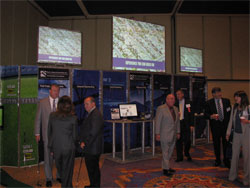 | �
�| Event exhibitors and sponsors contribute to an informative and engaging environment | �
�This year’s meeting was the best yet for the industry-leading construction defect and claims event.
�This year’s seminar concluded on May 13, 2011 with the Construction Defect Community Charitable Foundation Golf Tournament, held at Strawberry Farms Golf Course.
�The Disneyland Hotel in Anaheim, California was the place where more than 1,500 attendees convened for two days of professional development activities and seminars that included CLE workshops and panel discussions of special interest to legal and insurance professionals concerned with construction defect and claims litigation. Key events included “Challenges for Experts in Construction Defect Claims and Litigation,” “Keeping Up with Construction Defect Coverage,” and “Tips for Avoiding the ‘Perfect Storm’ in Handling of Wrap Claims.”
� �  | �
�| Supporting the golf tournament at the 15th hole | �
�This year’s Ollie award was given to George D. Calkins II, Esq. The West Coast Casualty Jerrold S. Oliver Award of Excellence was named in honor of the late Judge Jerrold S. Oliver, and recognizes an individual who is outstanding or has contributed to the betterment of the construction community.
�In addition to being the most comprehensive professional development seminar in the area of construction defects, this year’s seminar was equally valuable as a networking opportunity for members of the industry. People participated in professional development events during the day and then continued networking in the evening at numerous social events. The Lawn Party as well as the legendary Wood, Smith, Henning & Berman events were very well attended. Additional valuable networking events were hosted by a number of industry professionals at the House of Blues, and Tortilla Joe’s.
�As of this writing the 2011, West Coast Casualty's Construction Defect Seminar has applied for or has already received the following continuing education accreditation in the following areas;
�Read the full story…
�For more information about next year’s event, visit West Coast Casualty.