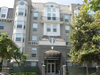
New Apartment Tower on the Rise in Seattle
September 13, 2012 — CDJ Staff
The Seattle Times reports that groundbreaking is planned for a forty-story tower in Seattle. The building process will take at least five years, during which time, according to the paper, there will be nearly eight thousand new apartments in Seattle. The planned tower will add another 386 units to that.
�The developer, Holland Partner Group, has four other apartments buildings planned or in construction currently, which will account for more than a thousand of the units being added to the city’s apartment stock.
Read the full story…
No-Show Contractor Can’t Hide from Construction Defect Claim
June 19, 2012 — CDJ Staff
The failure of R. J. Haas to produce documents or make himself available for deposition has worn out the patience of the US District Court in San Jose. Judge Howard Lloyd issued a ruling inProbuilders Specialty Ins. Co. v. Valley Corp. (N.D. Cal., 2012).
Probuilders issued an insurance policy covering Haas for their work on the construction of a single-family home for Ty and Karen Levine. The Levines sued Haas for “shoddy and incomplete work.” Probuilders contends that Haas “made material misrepresentations with respect to verifying that the subcontractors had insurance.” Since November 2011, Haas has been without legal counsel in this matter.
Despite Probuilder’s attempts, the court noted that “Hass any not provided any documents in response to the plaintiff’s three sets of requests for production of documents.” Haas also “has refused to make himself available for deposition.” Haas was first scheduled for deposition in September, 2011. Subsequently, Haas has rescheduled his deposition repeatedly, postponing it to January 4, then February 13, and then agreed to be deposed “before the then-scheduled March 15 mediation,” after which he said he would “be unavailable to be deposed before April.
The court noted that although Haas “hay have had legitimate reasons for wishing to continue his deposition, such as illness and his attempt to retain new counsel,” however, the court concluded that “Haas has had ample time to retain new counsel and prepare for deposition.
The court also found fault with Haas’s objections to certain terms in the Request for Admissions, among them “named,” “independent contractor,” and “work,” noting that Haas called these “vague and ambiguous.” The court called it “quibbling,” and noted that the federal courts disfavor this. Later in the decision, the court made it clear that Haas “is obligated under the Federal Rules of Civil Procedure to respond to discovery requests.” And concludes, “that he has apparently been seeking to retain new counsel for over five months does not give him license to ignore plaintiff’s discovery requests entirely.
The court granted Probuilders the option of filing a motion for sanctions. Mr. Haas did not attend or participate.
Read the court’s decision…
Record-Setting Construction in Fargo
November 7, 2012 — CDJ Staff
Prairie Business reports that Fargo is experiencing the most new construction it has ever seen, totaling $434 million in value, which exceeds the previous high in 2006 of $428 million. Many of the construction starts are for single family homes, although there is also an increase in construction of apartments and townhomes.
The Home Builders Association of Fargo-Moorhead also noted that there was also a large of remodeling projects. Terry Becker, the president of the HBA, said that “remodeling is just huge right now.”
Read the full story…
District Court’s Ruling Affirmed in TCD v American Family Mutual Insurance Co.�
May 10, 2012 — CDJ Staff
In the case, TCD, Inc. v American Family Mutual Insurance Company, the district court’s summary judgment was in favor of the defendant. In response, the Plaintiff, TCD, appealed “on the ground that the insurance company had no duty to defend TCD under a commercial general liability (CGL) insurance policy.” The appeals court affirmed the decision.
�The appeals ruling provides a brief history of the case: “This case arises out of a construction project in Frisco, Colorado. The developer, Frisco Gateway Center, LLC (Gateway), entered into a contract with TCD, the general contractor, to construct a building. TCD entered into a subcontract with Petra Roofing and Remodeling Company (Petra) to install the roof on the building. The subcontract required Petra to "indemnify, hold harmless, and defend" TCD against claims arising out of or resulting from the performance of Petra’s work on the project. The subcontract also required Petra to name TCD as an additional insured on its CGL policy in connection with Petra’s work under the subcontract.”
�Furthermore, “TCD initiated this case against Petra and the insurance company, asserting claims for declaratory judgment, breach of insurance contract, breach of contract, and negligence. The district court entered a default judgment against Petra, and both the remaining parties moved for summary judgment. The court granted summary judgment on the entirety of the action, in favor of the insurance company, concluding that the counterclaims asserted by Gateway against TCD did not give rise to an obligation to defend or indemnify under the CGL policy.”
�The appeals court rejected each contention made by TCD in turn. First, “TCD contend[ed] that Gateway’s counterclaims constitute[d] an allegation of ‘property damage,’ which is covered under the CGL policy.” The appeals court disagreed. Next, “TCD argue[d] that [the court] should broaden or extend the complaint rule, also called the ‘four corners’ rule, and allow it to offer evidence outside of the counterclaims to determine the insurance company’s duty to defend in this case.” The appeals court was not persuaded by TCD’s argument.
�The judgment was affirmed. Judge Roman and Judge Miller concur.
� Read the court’s decision…
�
The Hidden Dangers of Construction Defect Litigation
March 28, 2012 — David M. McLain, Colorado Construction Litigation
David M. McLain, writing at Colorado Construction Litigation, has an interesting blog post republishing his article in Common Interests magazine, the monthly periodical of the Rocky Mountain Chapter of the Community Associations Institute. In his article, he touches on a number of pitfalls in construction defect litigation, including the potential conflicts of interests facing HOAs. He also considers the problems homeowners can face, including both “strong-arm tactics” taken by attorneys to compel homeowners to join the lawsuit, or situations in which the interests of the HOA do not match those of the homeowners. He writes:
�There is also a conflict of interest with individual owners who attempt to opt out of the case. This can lead to shocking strong-arm tactics on the part of plaintiffs’ attorneys. In one instance, a plaintiffs’ attorney sent a letter to an individual homeowner that stated that as a 1/58th owner of the common elements, if he refused to go along with the suit, and there was ultimately a finding in favor of the HOA which was in any way limited by his refusal to participate, he would be personally liable for 1/58th of the HOA’s total damages. In another instance, a different plaintiffs’ attorney sent a letter to a homeowner who wanted the builder to perform warranty repairs, informing the owner that if he let the builder perform any repairs, the attorney would bill the HOA according to the fee agreement entered by the HOA board (without knowledge or consent of non-board members) and that the HOA would assess the homeowner for that expense. These are just two examples of conflicts which may arise between the HOA board and individual homeowners when the HOA pursues CD cases.
�Another example of a conflict which will arise as a result of CD litigation occurs post-settlement. When an HOA settles for less than 100% of the amount necessary to fund all repairs outlined by its experts, plus attorneys’ fees and litigation costs, there will obviously be a shortfall in the amount necessary to fix the development. The HOA board must then choose to impose a special assessment to cover the shortfall or to make some, but not all, of the repairs outlined by its experts. In choosing the latter, the conflict arises with respect to which homes get fixed and which do not. In this situation, the HOA board has acted as the attorney-in-fact for the individual owners by bringing claims on their behalf, and has compromised those claims without their knowledge or consent.
Read the full story…
�Reprinted courtesy of David M. McLain of Higgins, Hopkins, McClain & Roswell, LLC. Mr. McClain can be contacted at mclain@hhmrlaw.com.
Battle of “Other Insurance” Clauses
March 23, 2011 —
Tred R. Eyerly -
Insurance Law Hawaii - March 23, 2011
The New York Court of Appeals considered the impact of competing “other insurance” provisions located in both a CGL policy and a D&O policy. See Fieldston Property Owners Assoc., Inc. v. Hermitage Ins. Co., Inv., 2011 N.Y. LEXIS 254 (N.Y. Feb. 24, 2011).
�In the underlying case, Fieldston’s officers were charged with making false statements and fraudulent claims with respect to a customer's right to access its property from adjacent streets. Suit was eventually filed against Fieldston and its officers, alleging several causes of action including injurious falsehood. Damages were sought.
�Fieldston’s CGL policy was issued by Hermitage. The “other insurance” provision stated, “If other valid and collectible insurance is available to the insured for a loss we cover . . . our obligations are limited,” but also stated it would share with all other insurance as a primary policy.
�Read the full story...�Reprinted courtesy of Tred R. Eyerly, Insurance Law Hawaii. Mr. Eyerly can be contacted at te@hawaiilawyer.com
Bill Seeks to Protect Legitimate Contractors
December 20, 2012 — CDJ Staff
The California construction industry sees Senate Bill 863 as a needed help to legitimate construction businesses. The bill introduces regulations that will help shut down fraudulent contractors and help reduce workers’ compensation fraud. John Upshaw of the Independent Roofing Contractors of California described the revenue lost to California and other states as “phenomenal,” saying that “we need to continue the coordinated efforts if we are to see true workers’ compensation reform.”
Read the full story…
Water Damage Covered Under Efficient Proximate Cause Doctrine
August 2, 2012 — Tred Eyerly, Insurance Law Hawaii
A U.S. District Court in Washington found coverage in what it described as a text book study of the efficient proximate cause rule. Hiller v. Allstate Pro. & Cas. Ins. Co., 2012 U.S. Dist. LEXIS 84862 (E.D. Wash. June 19, 2012).
The Hillers purchased a newly constructed home in December 2006. They also purchased an all-risk homeowner's policy from Allstate.
In July 2010, the Hillers discovered that the carpet in the basement of the residence was saturated with water. Allstate was immediately notified. Hiller began an investigation to attempt to determine the source of the water. He poured water into a downspout drain at the northwest corner of the residence. This caused water to leak into the northwest corner of the home's basement.
An area was excavated around the northwest downspout drain. The end of the drain pipe was partially blocked by rocks and had been wrapped with fabric landscaping material. Further, a “T” pipe installed at the foot of the drain was directing water toward the house's concrete foundation. Hiller notified Allstate that the problems with the drain was due to construction defects and the system was designed to fail.
Allstate denied the claim. Based upon Hiller's information, coverage was excluded under the policy's surface water, subsurface water, inherent vice, and latent defect exclusions.
Read the full story…
Reprinted courtesy of Tred R. Eyerly, Insurance Law Hawaii. Mr. Eyerly can be contacted at te@hawaiilawyer.com
A Lien Might Just Save Your Small Construction Business
April 4, 2011 — Douglas Reiser in the Builders Counsel Blog
Many owners incorrectly believe that payment to the general contractor gets the owner off the hook for payment to subcontractors and suppliers. This assumption sometimes fosters the irresponsible owner, who fails to ensure that everyone is getting paid. Fortunately for those contractors further down the contracting chain, this assumption is incorrect.
�Suppliers and subcontractors can file a lien to secure payment for their labor and materials. A filing party must offer proper notice (if applicable) and file an adequate and timely lien in the County where the work is performed. You can read our earlier posts on these topics by following this link.
�A lien notice and a lien put an owner on notice that your business has provided labor and/or materials for the improvement of the owner’s property (See RCW 60.04.031 for more info). If the owner fails to take care to ensure that your business is paid the law mandates that the owner may have to pay twice.
�Read the full story...
�Reprinted courtesy of Douglas Reiser of Reiser Legal LLC. Mr. Reiser can be contacted at info@reiserlegal.com
Home Builder Doesn’t See Long Impact from Hurricane
November 7, 2012 — CDJ Staff
No one needs to tell Toll Brothers about the impact of Hurricane Sandy. The Wall Street Journal reports that the home building company lost power as a result of the storm. Martin Connor, the company’s CFO, told the Journal that he did not expect the hurricane to have a big effect on sales. Luckily for the company, many of its large projects are either sufficiently completed to provide shelter or too early in the process to be affected by the storm. “This type of weather event has limited impact on the market. It may move settlements later, and may defer people a weekend or two until they go out shopping. But it doesn’t have a long impact.”
Read the full story…
Fourteen More Guilty Pleas in Las Vegas Construction Defect Scam
June 19, 2012 — CDJ Staff
The ongoing case over claims that a group fixed homeowner board elections in order to supply the conspirators with a stream of construction defect cases and repairs has lead to fourteen guilty pleas. The judge recently issued charges against fifteen of the accused; one defendant did not join in the group as he was recovering from pneumonia. The prosecutors have asked the judge to delay sentencing, as the investigation is continuing. Prosecutors note that another dozen people may be indicted.
Along with an earlier group who plead guilty, this brings the total number of guilty pleas in the case to twenty-five. All have promised to cooperate with authorities.
The case has also involved four deaths, although authorities have not suspected foul play in the deaths. Nancy Quon, one of the four, was the construction defect attorney suspected to be at the center of the conspiracy.
Read the full story…
One to Watch: Case Takes on Economic Loss Rule and Professional Duties
June 28, 2011 — Douglas Reiser, Builders Counsel
According to the Supreme Court of Washington Blog, The Supreme Court heard oral argument in Jackowski v. Hawkins Poe on Thursday, June 16, 2011. The court’s synopsis of the case can be found on the Washington State Court website.
�In short, two home purchasers brought a lawsuit against the home’s sellers, the sellers’ agent and the purchasers’ own agent, alleging claims of fraud, fraudulent concealment, negligent misrepresentation and breach of common law and statutory duties. The trial court dismissed the buyers’ claims on the basis of the economic loss doctrine and Division II reversed, opining that the ELR does not apply to professional duties. The Supreme Court will now look at applying the Independent Duty Doctrine established last year, and whether professional duties (those of the real estate agents) should be reviewed under a different light.
Read the full story…
�Reprinted courtesy of Douglas Reiser of Reiser Legal LLC. Mr. Reiser can be contacted at info@reiserlegal.com
The Colorado Court of Appeals Rules that a Statutory Notice of Claim Triggers an Insurer’s Duty to Defend.�
October 23, 2012 — David M. McLain, Higgins, Hopkins, McLain & Roswell
Gene and Diane Melssen d/b/a Melssen Construction (“Melssen”) built a custom home for the Holleys, during which period of time Melssen retained a CGL insurance coverage from Auto Owners Insurance Company. Soon after completion of the house, the Holleys noticed cracks in the drywall and, eventually, large cracks developed in the exterior stucco and basement slab. Thereafter, the Holleys contacted Melssen, the structural engineer, an attorney, and Auto-Owners, which assigned a claims adjuster to investigate the claim.
�In April 2008, the Holleys sent Melssen a statutory notice of claim pursuant to C.R.S. § 13-20-803.5 (“NOC”). In this NOC, the Holleys claimed approximately $300,000 in damages related to design and construction defects. The Holleys also provided a list of claimed damages and estimated repairs, accompanied by two reports from the Holleys’ consultant regarding the claimed design and construction defects. In June 2008, Melssen tendered the defense and indemnity of the claim to Auto-Owners. While Auto-Owners did not deny the claim at that time, it did not inspect the property or otherwise adjust the claim. Thereafter, in October 2008, Auto-Owners sent Melssen a letter denying coverage on the basis that the damage occurred outside of the applicable policy period.
�Ultimately, Melssen settled the claims against it for $140,000.
� Read the full story…
�Reprinted courtesy of David McLain, Higgins, Hopkins, McLain & Roswell, LLC. Mr. McLain can be contacted at mclain@hhmrlaw.com
�
No Choice between Homeowner Protection and Bankrupt Developers?
February 10, 2012 — CDJ Staff
Donna DiMaggio Berger, writing in the Sun Sentinel argues those may be the only current choices in Florida. A recent court case, Lakeview Reserve HOA v. Maronda Homes has caused a swift response from the legislators. Ms. Berger notes that the construction defect bill, HB 1013, “would take away a homeowner’s rights to pursue a developer for defects to the driveways, roads, sidewalks, utilities, drainage areas and other so-called ‘off-site’ improvements.” The alternative? She notes that applying the Maronda decision would “bankrupt developers who don’t build defect-free roads and sidewalks.”
Read the full story…
The Year 2010 In Review: Design And Construction Defects Litigation
February 25, 2011 — Candace Matson, Harold Hamersmith, and Helen Lauderdale -
Construction & Infrastructure Law Blog - February 25, 2011
This article is the first in a series summarizing construction law developments for 2010
�1. Centex Homes v. Financial Pacific Life Insurance Co., 2010 U.S. Dist. LEXIS 1995 (E.D. Cal. 2010)
�After settling numerous homeowners’ construction defect claims — and more than ten years after the homes were substantially completed — a home developer brought suit against one of the concrete fabrication subcontractors for the development seeking indemnity for amounts paid to the homeowners, as well as for damages for breach of the subcontractor’s duties to procure specific insurance and to defend the developer against the homeowners’ claims. The subcontractor brought a motion for summary adjudication on the ground the developer’s claims were barred by the ten year statute of repose contained in Code of Civil Procedure Section 337.15.
The District Court agreed the developer’s claim for indemnity was barred by Section 337.15. And it held that because the damages recoverable for breach of the subcontractor’s duty to purchase insurance are identical to the damages recoverable through the developer’s indemnity claim, the breach of duty to procure insurance claim also was time-barred. The District Court, however, allowed the claim for breach of the duty to defend to proceed. The categories of losses associated with such a claim (attorneys’ fees and other defense costs) are distinct from the damages recoverable through claims governed by Section 337.15 (latent deficiency in the design and construction of the homes and injury to property arising out of the latent deficiencies).
� �2. UDC — Universal Development v. CH2M Hill, 181 Cal. App. 4th 10 (6th Dist. Jan. 2010)
��Indemnification clauses in construction agreements often state that one party to the agreement — the “indemnitor” — will defend and indemnify the other party from particular types of claims. Of course, having a contract right to a defense is not the same as actually receiving a defense. Any indemnitor attempting to avoid paying for defense costs can simply deny the tender of defense with the hope that when the underlying claim is resolved the defense obligations will be forgotten. In the past, when parties entitled to a defense — the “indemnitees” — had long memories and pressed to recover defense costs, indemnitors attempted to justify denying the tender by claiming their defense obligations coincided with their indemnity obligations and neither arose until a final determination was made that the underlying claim was one for which indemnity was owed.
��Read the full story...
�Reprinted courtesy of Candace Matson, Harold Hamersmith, and Helen Lauderdale, Sheppard Mullin Richter & Hampton LLP. Ms. Matson can be contacted at cmatson@sheppardmullin.com, Mr. Hamersmith can be contacted at hhamersmith@sheppardmullin.com, and Ms. Lauderdale can be contacted at hlauderdale@sheppardmullin.com.
Southern California Lost $8 Billion in Construction Wages
August 17, 2011 — CDJ Staff
Los Angeles and Orange Counties are first on a list no area wants to be on. According to the Sacramento Bee, reporting on data from the U.S. Bureau of Economic Analysis, LA and Orange Counties saw an $8 billion drop in construction wages in 2010, as compared to 2006. In 2006, the region saw payrolls of $26.8 billion, but in 2010, that was reduced to $18.5 billion.
�This was not the largest percentage change. Of the metropolitan areas with the largest declines in construction earnings, Las Vegas saw a $3.6 billion drop, however that represented half of their 2006 totals of $7.2 billion. Conversely, a $3.3 billion drop in the New York area represented only 10% of what had been $33.8 billion in payroll in 2006.
Read the full story…
Court Rejects Anti-SLAPP Motion in Construction Defect Suit
September 1, 2011 — CJD Staff
The California Court of Appeals has upheld the denial of an anti-SLAPP motion in Claredon American Insurance Company v. Bishop, Barry, Howe, Haney & Ryder. This case was triggered by a water intrusion problem at a condominium complex, the Terraces at Emerystation, built and sold by Wareham Development Corporation. The insurer, Claredon, retained Risk Enterprise Management as the third party claims administrator. REM retained the law firm Bishop, Barry, Howe, Haney & Ryder. The construction defect case was settled in 2007 and the condo owners moved back by early 2008.
Due to issues with the claims settlement, Claredon filed against REM for “professional negligence, indemnity, apportionment and contribution,” with a cross-complaint that the cross-defendants negligently defended the developer, Wareham.
In response, the cross-defendants filed a motion to strike the cross-complaint under the anti-SLAPP statute. The trial court denied this motion and now this has been upheld by the appeals court.
The court noted that “The fundamental thrust of the cross-complaint is not protected litigation-related speech and petitioning activity undertaken on another’s behalf in a judicial proceeding.”
Read the court’s decision…
Insurer Unable to Declare its Coverage Excess In Construction Defect Case
January 6, 2012 — CDJ Staff
The Ninth Circuit Court of Appeals has upheld a summary judgment in the case of American Family Mutual Insurance Co. v. National Fire & Marine Insurance Co. Several other insurance companies were party to this case. In the earlier case, the US District Court of Appeals for Arizona had granted a summary judgment to Ohio Casualty Group and National Fire & Marine Insurance Company. At the heart of it, is a dispute over construction defect coverage.
The general contractor for Astragal Luxury Villas, GFTDC, contracted with American Family to provide it with a commercial liability policy. Coverage was issued to various subcontractors by Ohio Casualty and National Fire. These policies included blanket additional insured endorsements that provided coverage to GFTDC. The subcontractor policies had provisions making their coverage excess over other policies available to GFTDC.
The need for insurance was triggered when the Astragal Condominium Unit Owners Association filed a construction defect claim in the Arizona Superior Court. CFTDC filed a third-party claim against several subcontractors. The case was settled with American Family paying the settlement, after which it filed seeking reimbursement from the subcontractor’s insurers. The court instead granted summary judgment in favor of Ohio Casualty and National Fire.
American Family appealed to the Ninth Circuit for a review of the summary judgment, arguing that the “other insurance” clauses were “mutually repugnant and unenforceable.” The Ninth Circuit cited a case from the Arizona Court of Appeals that held that “where two policies cover the same occurrence and both contain ‘other insurance’ clauses, the excess insurance provisions are mutually repugnant and must be disregarded. Each insurer is then liable for a pro rate share of the settlement or judgment.”
The court noted that unlike other “other insurance” cases, the American Family policy “states that it provides primary CGL coverage for CFTDC and is rendered excess only if there is ‘any other primary insurance’ available to GFTDC as an additional insured.” They note that “the American Family policy purports to convert from primary to excess coverage only if CFTDC has access to other primary insurance as an additional insured.”
In comparison, the court noted that “the ‘other insurance’ language in Ohio Casualty’s additional insured endorsement cannot reasonably be read to contradict, or otherwise be inconsistent with, the ‘other primary insurance’ provision in the American Family policy.” They find other reasons why National Fire’s coverage did not supersede American Family’s. In this case, the policy is “written explicitly to apply in excess.”
Finally, the Astragal settlement did not exhaust American Family’s coverage, so they were obligated to pay out the full amount. The court upheld the summary dismissal of American Family’s claims.
Read the court’s decision…