No Resulting Loss From Deck Collapsing Due to Rot
July 10, 2012 — Tred Eyerly, Insurance Law Hawwaii
The Washington Supreme Court reversed the Court of Appeals’ decision that the ensuing loss provision provided coverage for a deck that collapsed due to rot and decay. Sprague v. Safeco Ins. Co. of Am., 2012 Wash. LEXIS 375 (Wash. May 17, 2012). Our prior post on the Court of Appeals’ decision is here.
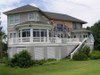
The Sprague’s home had a deck supported by six "fin walls." The fin walls were encased in a foam and stucco coating. Twenty years after they purchased the home, it was discovered that the fin walls were in an advanced state of decay. Engineers discovered that construction defects caused the supports to rot. The deck was in danger of imminent collapse.
Safeco denied coverage. The all-risk policy did not exclude collapse, but did exclude coverage for losses causes by mold, wet or dry rot.
Read the full story…
Reprinted courtesy of Tred R. Eyerly, Insurance Law Hawaii. Mr. Eyerly can be contacted at te@hawaiilawyer.com
Another Guilty Plea In Nevada Construction Defect Fraud Case
April 25, 2012 — CDJ Staff
The eleventh defendant has entered a guilty plea in the ongoing federal investigation of construction defect fraud in the Las Vegas area. Mahin Quintero plead guilty to producing a false authentication feature, a misdemeanor. Ms. Quintero’s part in the scheme was to falsely authenticate signatures on loan documents for straw buyers. Ms. Quintero stated in court that she had been ordered to destroy her notary book three years ago. According to her plea bargain, the straw buyers did not appear in front of her when she notarized their signatures. As part of the scheme, the straw buyers would take control of homeowners associates, sending construction defect complaints and repairs to favored firms.�
Read the full story…
�
Granting Stay, Federal Court Reviews Construction Defect Coverage in Hawaii
January 6, 2012 — Tred Eyerly, Insurance Law Hawaii
The federal district court ultimately stayed a construction defect case, but offered comments on the current status of coverage disputes for such defects in Hawaii. See National Union Fire Ins. Co. of Pittsburgh, Pa. v. Simpson Mfg. Co., 2011 U.S. Dist. LEXIS 128481(D. Haw. Nov. 7, 2011).
National Union filed a complaint for declaratory relief to establish it had no duty to defend or to indemnify Simpson Manufacturing Company in four actions pending in the Hawaii state courts. The state court actions concerned allegedly defective hurricane strap tie hold downs that were manufactured and sold by Simpson. The hurricane ties allegedly began to prematurely corrode and rust, causing cracking, spalling and other damage to homes.
National Union contended the underlying allegations did not constitute "property damage" caused by an "occurrence," as defined in the policies.
Read the full story…
Reprinted courtesy of Tred R. Eyerly, Insurance Law Hawaii. Mr. Eyerly can be contacted at te@hawaiilawyer.com
Tampa Condo Owners Allege Defects�
October 23, 2012 — CDJ Staff
Owners in the Bel Mare towers have filed a lawsuit alleging that the building have construction defects that could lead to problems during periods with high winds. The Tampa Bay Business Journal reports that the condo association has sued the developer, the general contractor, the architects, the structural engineers, and subcontractors.
� Read the full story…
�
Timing of Insured’s SIR Payment Has No Effect on Non-Participating Insurer’s Equitable Contribution to Co-Insurer
April 25, 2012 — Aarti Kewalramani, Gatzke Dillon & Balance LLP
In a case of first impression, the California Court of Appeal, Fourth District, Division One, examined whether a non-participating insurer can evade its defense and indemnity obligations because the insured only paid the policy’s self-insured retention ("SIR") as part of a settlement. In Axis Surplus Lines Insurance Company v. Glencoe Insurance LTD. (April 11, 2012, D058963) __ Cal.App.4th __ [2012 WL 11903203], the critical issue for the Court was whether an insurer, with full notice and continued investigation of a claim, can "hide behind the SIR requirement in its policy." The Court declined to "sanction such gamesmanship."
�The dispute involved an equitable contribution claim between two insurers. Axis Surplus Insurance Company provided commercial general liability insurance to Pacifica Pointe L.P. During the same time period, Glencoe Insurance Ltd. provided an owner-controlled insurance policy (i.e., wrap policy) to Pacifica Pointe L.P. Both policies included provisions requiring co-carriers to split the defense and indemnity on equal shares. Pacifica was sued in a construction defect lawsuit, involving alleged resultant damages to condominiums it converted and sold. Pacifica tendered the claim to both Axis and Glencoe. While Axis agreed to defend Pacifica, subject to a reservation of rights, Glencoe declined to participate until Pacifica satisfied the $250,000 SIR on the policy. Glencoe continued to monitor the litigation from the sidelines.
�Axis and Pacifica settled the underlying construction defect lawsuit for $1 million. Pacifica advised Glencoe of the settlement, and received Glencoe’s approval to contribute its $250,000 SIR towards the settlement. Axis contributed $750,000 towards the settlement. After the settlement, Axis sued Glencoe for declaratory relief and equitable contribution, to recover a portion of the defense and indemnity it paid. The trial court found in favor of Axis and allocated Glencoe 60% of the settlement payment. Glencoe appealed.
�On appeal, the Court scrutinized whether Glencoe, as the non-participating insurer, had a legal obligation to provide a defense and indemnity to the insured, despite the timing of the SIR’s satisfaction. The Court determined that in an equitable contribution action, the participating insurer has the burden of proving merely the potential for coverage under the non-participating insurer’s policy. On this showing, the burden of proof shifts to the non-participating insurer to prove the absence of actual coverage under its policy. The Court emphasized that the timing of the SIR’s payment was inconsequential to either insurer’s burden. Because Glencoe admitted coverage existed under its policy, the Court affirmed the trial court’s decision.
�As a result, the result ultimately turned on whether the non-participating carrier had full notice of the claim and cannot use the timing of the satisfaction of the SIR to shield itself from an equitable contribution claim from the participating co-carrier.
� Published courtesy of Aarti Kewalramani of Gatzke Dillon & Balance LLP. Ms. Kewalramani can be contacted at akewalramani@gdandb.com.
�
Construction on the Rise in Washington Town
June 16, 2011 — CDJ Staff
The Kitsap Sun reports that Gig Harbor, a town in the area near Tacoma, Washington, has had a 60% increase in building permit applications as compared to 2010. May, 2011 had as many permits issued for single-family residences in Gig Harbor as were issued for all of 2010. Additionally, a Safeway shopping center on Point Fosdick is described by Dick Bower, Gig Harbor Building and Fire Safety Director, as “a huge project and it’s going to bring in quite a bit of revenue.” He called the increase in building “economic recovery at the grassroots level.”
�Bower said that the building officials in other towns have also seen upswings in construction. He anticipates more activity in the future.
�Read the full story…
Park District Sues over Leaky Roof
August 2, 2012 — CDJ Staff
The Glen Ellyn Park District has filed suit against multiple firms over the leaks in the Ackerman Sports and Fitness Center. The district alleges at least twenty leaks can be found throughout the facility. In order to prevent further damage, they have put in a system of “buckets, tarps and flexible piping.”
According to the Chicago Daily Herald, the park district has most recently added the project construction manager, the building designer, and insurer that issued a performance bond on the builder. T.A. Bowman Constructors, the builder of the project, sued the park district. They were first name in the district’s countersuit.
The park district isn’t waiting for the outcome of the suit to repair the roof. Instead, they are using existing funds to pay for roof repairs.
Read the full story…
Florida: No Implied Warranties for Neighborhood Improvements
July 10, 2012 — CDJ Staff
A new law in Florida ends suits from homeowners associations from suing over damages from off-site improvements on the basis of implied warranties. Rob Samouch, writing for the Naples Daily News quotes House Biill 1013: “There is no cause of action in law or equity available to a purchaser of a home or to a homeowners’ association based upon the doctrine or theory of implied warranty of fitness and merchantability or habitability for damages to off-site improvements." The off-site improvements are defined as: "The street, road, driveway, sidewalk, drainage, utilities, or any other improvement or structure that is not located on or under the lot on which a new home is constructed.”
Mr. Samouch notes that “there are no statutory warrant rights in homeowner associations of fitness and merchantability or habitability like there is for condominium associations.” He predicts that the Florida legislature will have to address this issue “once new homeowners start screaming and yelling to them about their shoddy infrastructure for which they have no legal remedy.”
The bill took effect on July 1, 2012 and applies to “all cases accruing before, pending on, or filed after July 1, 2012.”
Read the full story…
BUILD Act Inching Closer To Reality
July 8, 2011 — Douglas Reiser, Builders Counsel
A select group of Senators have launched a marketing campaign for the BUILD Act. If this is the first you are hearing about the BUILD Act, do not fret. The Act still has a long way to go, but if successful it would bring a national infrastructure bank.
�I have been fascinated with the concept of a national infrastructure bank for quite some time. The idea has been around since the Clinton years ? and perhaps beyond. The Act’s purpose is to create a national bank (American Infrastructure Financing Authority) to provide loans and loan guarantees to encourage private investment in upgrading America’s infrastructure. For a number of years, we have seen similar legislation float around Congress. But, none of those initiatives have gained as much traction as BUILD.
Read the full story…
�Reprinted courtesy of Douglas Reiser of Reiser Legal LLC. Mr. Reiser can be contacted at info@reiserlegal.com
Vegas Hi-Rise Not Earthquake Safe
July 12, 2011 — CDJ Staff
If an earthquake hit Las Vegas, the Harmon Tower would not withstand it. A report from Weidlinger Associates told MGM Resorts that “in a code-level earthquake, using either the permitted or current code specified loads, it is likely that critical structural members in the tower will fail and become incapable of supporting gravity loads, leading to a partial or complete collapse of the tower.” The inspection came at the request of county officials, according to the article in Forbes.
�According to Ronald Lynn, directory of the building division in the county’s development services division, “these deficiencies, in their current state, make the building uninhabitable.” The county is concerned about risks to adjacent buildings.
�MGM Resorts is currently in litigation, separate from the stability issues, with Perini Corp., the builders of Harmon Tower.
� Read the full story…
New Jersey Court Rules on Statue of Repose Case
May 26, 2011 — CDJ Staff
A three-judge panel issued a per curium ruling on May 23 in Fairview Heights Condo. v. Investors (N.J. Super., 2011), a case which the members of a condominium board argued: “that the judge erred by: 1) dismissing plaintiff’s claims against RLI based upon the statute of repose; 2) dismissing the breach of fiduciary duty claims against the Luppinos based upon a lack of expert opinion; 3) barring the testimony of Gonzalez; and 4) barring the May 23, 1989 job site report.” The court rejected all claims from the condominium board.
The court found that the building must be unsafe for the statute of repose to apply. They noted, “the judge made no findings on whether the water seepage, or the property damage caused by such seepage, in any way rendered the building, or any of the units, unsafe.” Further, “without a specific finding on the question of whether the defects had rendered the building ‘unsafe,’ defendants were not entitled to the benefit of the ten-year statute of repose.“
On the second point, the court also upheld the lower court’s findings regarding the management company:
“The report submitted by Berman establishes that the EIFS product was defective in its design and would therefore have failed from the outset. The defects in that product were, according to Berman, not prone to repair or other mitigation. Therefore, even if defendants did not appropriately inspect or repair the EIFS, their failure to do so would have had no impact on the long-term performance of the EIFS exterior cladding. As plaintiff failed to raise a genuine issue of material fact on these questions, the judge properly granted summary judgment to the Luppinos on plaintiff’s breach of fiduciary duty claim.”
On the final two points, the judges noted “plaintiff maintains that the judge committed reversible error when he excluded the Gonzalez certification and the 1989 job site report prepared by Raymond Brzuchalski.” They saw “no abuse of discretion related to the exclusion of the Gonzalez certification, and reject plaintiff’s arguments to the contrary.” Of the job site report, they found, “no abuse of discretion in the judge's finding that the Brzuchalski 1989 job site report did not satisfy the requirements of N.J.R.E.803(c)(6).”
Read the court’s decision
LEED Certified Courthouse Square Negotiating With Insurers, Mulling Over Demolition
June 6, 2011 — Douglas Reiser in the Builders Counsel Blog
Apparently, Courthouse Square is still unresolved. The County hasnow hired an attorney to handle its insurance claim against Affiliated FM. Is there a lawsuit coming?
�Right now, no lawsuit is expected. According to officials, the insurer has been acting in good faith. But, its been quite a while since Salem officials learned that the Courthouse Square building had significant concrete issues that would result in probable demolition of the LEED certified building.
�If you have yet to hear about Courthouse Square, let me fill you in briefly. The Salem building was substantially completed in 2000 and LEED certified by the US Green Building Council in 2002. The project cost more than $30 Million to complete and the building was revered for its innovation as a crowning achievement for city leaders.
�But, structural problems in the building’s core were discovered as early as 2002, writes Chris Cheatham of Green Building Law Update. Final tests earlier in the year, determined that the building had to be vacated. The building has been clear since July 2010.
�Read the full story…
� �Reprinted courtesy of Douglas Reiser of Reiser Legal LLC. Mr. Reiser can be contacted at info@reiserlegal.com
Contractor Liable for Soils Settlement in Construction Defect Suit
February 10, 2012 — CDJ Staff
The California Court of Appeals ruled on January 9 in Burrow v. JTL Dev. Corp., a construction defect case in which houses suffered damage due to improperly compacted soil, upholding the decision of the lower court.
� Turf Construction entered into a deal with JTL to develop a parcel they acquired. A third firm, Griffin Homes, withdrew from the agreement “when a geotechnical and soils engineering firm reported significant problems with soil stability on 14 of the lots.” Turf Construction then took over compacting and grading the lots. Turf “had never compacted or graded a residential tract before.” Robert Taylor, the owner of Turf, “testified he knew there was a significant problem with unstable soils.”
� After homes were built, the plaintiffs bought homes on the site. Shortly thereafter, the homes suffered damage from soil settlement “and the damage progressively worsened.” They separately filed complaints which the court consolidated.
� During trial, the plaintiff’s expert said that there had been an inch and a half in both homes and three to five inches in the backyard and pool areas. “He also testified that there would be four to eight inches of future settlement in the next fifteen to twenty years.” The expert for Turf and JTL “testified that soil consolidation was complete and there would be no further settlement.”
� Turf and JTL objected to projections made by the plaintiffs’ soil expert, William LaChappelle. Further, they called into question whether it was permissible for him to rely on work by a non-testifying expert, Mark Russell. The court upheld this noting that LaChappelle “said that they arrived at the opinion together, through a cycle of ‘back and forth’ and peer review, and that the opinion that the soil would settle four to eight inches in fifteen to twenty years was his own.”
� Turf and JTL contended that the court relied on speculative damage. The appeals court disagreed, stating that the lower court based its award “on evidence of reasonably certain damage.”
� Turf also that it was not strictly liable, since it did not own or sell the properties. The court wrote that they “disagree because Turf’s grading activities rendered it strictly liable as a manufacturer of the lots.” The court concluded that “Turf is strictly liable as a manufacturer of the lots.”
� Judge Coffee upheld the decision of the lower court with Judges Yegan and Perren concurring.
Read the court’s decision…
Eleventh Circuit Asks Georgia Supreme Court if Construction Defects Are Caused by an "Occurrence"
December 20, 2012 — Tred Eyerly, Insurance Law Hawaii
The Eleventh Circuit certified a question to the Georgia Supreme Court, asking whether property damage can constitute an "occurrence" under a CGL policy where its effects are not felt on "other property." HDI-Gerling Am. Ins. Co. v. Morrison Homes, Inc., 2012 U.S. App. Ct. LEXIS 23813 (11th Cir. Nov. 19, 2012).
The general contractor, Taylor Morrison Services, Inc., was covered by a CGL policy issued by Gerling. The policy excluded "expected or intended injury," contractual liability," and business risk exclusions. Morrison was sued by homeowners in a class action suit. Morrison had allegedly omitted four inches of gravel required beneath the base of the concrete foundations by the Uniform Building Code. Thereafter, the houses sustained water intrusion, cracks in the floors and driveways, and warped and buckling flooring.
Gerling defended, but sued Morrison for a declaratory judgment.
Read the full story…
Reprinted courtesy of Tred R. Eyerly, Insurance Law Hawaii. Mr. Eyerly can be contacted at te@hawaiilawyer.com
Allowing The Use Of a General Verdict Form in a Construction Defect Case Could Subject Your Client to Prejudgment Interest
August 16, 2012 — Heather Anderson, Higgins, Hopkins, McLain & Roswell, LLC
A recent opinion from the Colorado Court of Appeals is a cautionary tale concerning the calculation of pre-judgment interest. See Hendricks v. Allied Waste Transportation, Inc., 2012 WL 1881004 (Colo. App. 2012). The Hendricks sued Allied after one of its drivers backed into the corner of their home with an Allied garbage truck. At trial, a jury awarded the Hendricks $160,100 in damages. Although the jury was instructed on the cost of repairs, diminution in value, and non-economic damages, the parties agreed to a general verdict form that did not ask the jury to specify the types of damages awarded. Id. at *1. The Hendricks sought to amend the judgment to include prejudgment interest and costs, which the trial court granted.
Allied appealed, arguing that the trial court erred by awarding the Hendricks prejudgment interest from the date their property was damaged. Id. at *7. The Colorado Court of Appeals found no error, and affirmed.
Read the full story…5
Reprinted courtesy of Heather Anderson, Higgins, Hopkins, McLain & Roswell, LLC. Ms. Anderson can be contacted at anderson@hhmrlaw.com
Virginia Chinese Drywall “property damage” caused by an “occurrence” and number of “occurrences”
August 4, 2011 — CDCoverage.com
In Dragas Management Corp. v. Hanover Insurance Co., No. 2:10cv547 (E.D. Va. July 21, 2011), claimant residential home general contractor and developer DMC filed for arbitration against insured drywall supply and install subcontractor Porter-Blaine seeking damages for (1) the replacement of defective Chinese drywall, and (2) the repair of resulting property to other components of the DMC homes and homeowners’ personal property in seventy-four homes. Porter-Blaine’s CGL insurer Citizens and excess insurer Hanover defended Porter-Blaine in the DMC arbitration.
Read the full story…
�Reprinted courtesy of CDCoverage.com
Lien Claimant’s Right to Execute against Bond Upheld in Court of Appeals
February 10, 2012 — Douglas Rieser, Builders Counsel
Stonewood v. Infinity Homes is a simple construction dispute over a matter of about $9,000.00. But sometimes these tiny little disputes turn into expensive legal battles over mere procedural quivering. In Stonewood, a small subcontractor won a big victory yesterday when the Divison 1 Court of Appeals upheld its judgment against a lien release bond posted by an owner.
� Infinity Homes contracted with Stonewood Design to lay tile in one of its customer’s homes. Stonewood did the work, but Infinity withheld roughly $9,000.00 of the contract sums for what it alleged were trade damages left on the tile. The two parties were unable to come to an agreement over payment and Stonewood proceeded with a lien under RCW 60.04. It then filed an action to enforce the lien against the homeowner, Infinity and its bonding company.
Read the full story…
� Reprinted courtesy of Douglas Reiser of Reiser Legal LLC. Mr. Reiser can be contacted at info@reiserlegal.com
�
Architect Not Responsible for Injuries to Guests
September 1, 2011 — CDJ Staff
The Texas Court of Appeals has ruled, with one dissent, that the architectural firm that designed a home was not responsible to the injuries caused to guests when a balcony collapsed. Judge David Puryear wrote the majority opinion in Black + Vernooy Architects v. Smith.
Black + Vernooy designed a vacation home for Robert and Kathy Maxfield in 2000. The Maxfields hired a general contractor to build the home. The general contractor hired a subcontractor to build a balcony; however, the subcontractor did not follow the architect’s design in building the balcony.
A year after the house was completed; the Maxfields were visited by Lou Ann Smith and Karen Gravely. The balcony collapsed under the two women. Ms. Gravely suffered a broken finger, a crushed toe, and bruises. Ms. Smith was rendered a paraplegic as a result of the fall. They sued the Maxfields, the general contractor, and the architects for negligence. The Maxfields and the general contractor settled. A jury found that the architects held 10% of the responsibility. The architects appealed the judgment of the district court.
The Appeals Court reversed this judgment, noting that “there has been no allegation that the Architects negligently designed the balcony or that the Architects actually created the defects at issue.” Further, “the Smiths allege that the defect was caused by the construction practices of the contractor and subcontractor when the balcony was not built in accordance with the design plans of the Architects.”
The court found that even though the architects had a duty “to endeavor to guard against defects and deficiencies in the construction of the home and to generally ascertain whether the home was being built in compliance with the construction plans,” this duty did not extend to third parties.
Read the court’s decision…