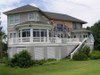
Court Orders House to be Demolished or Relocated
April 26, 2011 — April 26, 2011 Beverley BevenFlorez - Construction Defect Journal
Decision Affirmed in Central Arkansas Foundation Homes, LLC v. Rebecca Choate
�The Arkansas Court of Appeals affirmed the decision by the trial court in Central Arkansas Foundation Homes, LLC v. Rebecca Choate. In the trial case, Central Arkansas Foundation Homes (CAFH) sought payment for a home built for Choate, while Choate alleged that the builders committed multiple construction defects including using the wrong foundation materials and positioning the house in the wrong direction.
�After the house was built, CAFH contacted Choate regarding payment, however, Choate alleged that the finished product did not match the contract. “ After CAFH completed construction, it obtained permanent home financing for Choate and tried to contact her to close the transaction. Choate did not respond until October 2005, when she sent CAFH a list of alleged construction defects, including that the house was facing in the wrong direction; that it was not built on a slab; and that the fireplace, garbage disposal, driveway, and storage area were missing. CAFH replied to Choate in writing, telling her that she had until January 6, 2006, to close on the house or CAFH would sell it. The correspondence enclosed worksheets showing that the amount Choate would owe at closing exceeded $94,000, which included interest that had accrued on the as-yet unpaid construction loan.”
�Initially, the court found in favor of CAFH. “On April 18, 2007, Choate’s attorney withdrew from representing her. Soon thereafter, CAFH’s attorney asked the court to set a final hearing on the case. The attorney purportedly sent Choate a letter by regular mail on May 15, 2007, advising her that the case was set for trial on July 9, 2007. Choate, however, did not appear. CAFH did appear, and its general manager, John Oldner, testified to events leading up to the case and the amount of damages claimed. According to Oldner, the interest on the construction loan had accrued to the point that CAFH now sought $104,965.88 from Choate. The court found in favor of CAFH and entered judgment for that amount, plus attorney fees, on July 18, 2007. The court ruled that CAFH could sell the house and either remit any excess to Choate or look to Choate for the deficiency if the sales price did not cover the judgment.”
�However, Choate successfully argued that she did not receive notice of the trial. A new trial was ordered, and the outcome was quite different. “On June 6, 2008, the circuit court entered judgment for Choate, ruling that the house was not in substantial compliance with the parties’ contract and that the contract should be rescinded. The court found that the house suffered from numerous construction defects, that the contract contemplated a slab rather than a concrete-pier foundation, and that CAFH ignored Choate’s complaints that the house was facing the wrong way. The judgment directed CAFH to hold Choate harmless on the construction loan, to deed Choate’s two acres back to her, and to remove the house from Choate’s property.”
�The Court of Appeals “found that Choate would be unjustly enriched by retaining the benefit of the septic systems and utility lines that CAFH installed on her land. The court therefore awarded $5340 to CAFH as a quantum-meruit recovery for the value of that work. CAFH contends that the award is not sufficient, but we see no clear error.” In the end, the Court of Appeals provided this reason for declining to reverse the trial court’s decision: “The court in this case apparently concluded that the house constructed by CAFH was so fundamentally at odds with Choate’s contractual expectations that she was not unjustly enriched and should simply be, as nearly as possible, returned to the status quo ante. Accordingly, the court ordered the house removed from her property and permitted CAFH to either relocate the house or salvage the house’s materials and unused appliances. We decline to reverse the court’s weighing of the equities in this manner.”
�Read the court’s decision…
MGM Seeks to Demolish Harmon Towers
September 1, 2011 — CJD Staff
Citing public safety concerns and the cost of repair, MGM Resorts International is seeking to demolish the unfinished hotel tower. The company has a few hurdles to go through before they start laying the charges to implode the structure. Any plans would have to be approved by not only Clark County officials, but also the district court has an order blocking any activity during litigation between MGM and the general contractor on the project, Perini Building Company.
Architectural Record reports that MGM states it would take “approximately 18 months to conduct test and come up with an approved, permitted design to fix the Harmon.” MGM feels that repairs would then take another two to three years. Perini contends that they could “provide stamped drawings detailing all necessary repairs within three months.” They attribute MGM’s desire to demolish the building as “buyer’s remorse.”
Read the full story…
Drug Company Provides Cure for Development Woes
November 18, 2011 — CDJ Staff
Vertex Pharmaceuticals is poised to become the holder of Boston’s biggest commercial lease, paying $72.5 million for 1.1 million square feet on Boston’s waterfront. Vertex’s new buildings are still under construction, but the plans have spurred other development in the Fan Pier area, according to the New York Times. The Times quotes Mary A. Burke, a senior economist at the Federal Reserve Bank of Boston that the Vertex project gives “a big push” to the “momentum for economic growth.”
The Fallon Company is building Vertex’s new laboratory and office space. They are separately planning to build a high-rise with 150 luxury condominium units. According to Joseph Fallon, the chief executive and president of the Fallon Company, there is already a waiting list of 50 buyers for the condominiums.
Across the street from the Vertex site, a group including Morgan Stanley and Boston Global Investors is planning a 23-block mixed use project that would include 1.2 million square feet of retail space. Additionally, the New England Development and the Hanover Group is building a 356-unit apartment building at the adjacent Pier 4.
Read the full story…
Contractor Liable for Soils Settlement in Construction Defect Suit
February 10, 2012 — CDJ Staff
The California Court of Appeals ruled on January 9 in Burrow v. JTL Dev. Corp., a construction defect case in which houses suffered damage due to improperly compacted soil, upholding the decision of the lower court.
� Turf Construction entered into a deal with JTL to develop a parcel they acquired. A third firm, Griffin Homes, withdrew from the agreement “when a geotechnical and soils engineering firm reported significant problems with soil stability on 14 of the lots.” Turf Construction then took over compacting and grading the lots. Turf “had never compacted or graded a residential tract before.” Robert Taylor, the owner of Turf, “testified he knew there was a significant problem with unstable soils.”
� After homes were built, the plaintiffs bought homes on the site. Shortly thereafter, the homes suffered damage from soil settlement “and the damage progressively worsened.” They separately filed complaints which the court consolidated.
� During trial, the plaintiff’s expert said that there had been an inch and a half in both homes and three to five inches in the backyard and pool areas. “He also testified that there would be four to eight inches of future settlement in the next fifteen to twenty years.” The expert for Turf and JTL “testified that soil consolidation was complete and there would be no further settlement.”
� Turf and JTL objected to projections made by the plaintiffs’ soil expert, William LaChappelle. Further, they called into question whether it was permissible for him to rely on work by a non-testifying expert, Mark Russell. The court upheld this noting that LaChappelle “said that they arrived at the opinion together, through a cycle of ‘back and forth’ and peer review, and that the opinion that the soil would settle four to eight inches in fifteen to twenty years was his own.”
� Turf and JTL contended that the court relied on speculative damage. The appeals court disagreed, stating that the lower court based its award “on evidence of reasonably certain damage.”
� Turf also that it was not strictly liable, since it did not own or sell the properties. The court wrote that they “disagree because Turf’s grading activities rendered it strictly liable as a manufacturer of the lots.” The court concluded that “Turf is strictly liable as a manufacturer of the lots.”
� Judge Coffee upheld the decision of the lower court with Judges Yegan and Perren concurring.
Read the court’s decision…
Appeals Court Reverses Summary Judgment over Defective Archway Construction
February 10, 2012 — CDJ Staff
A judge has ruled that a plaintiff can go forward with her suit that she was injured by a defective archway during a birthday party. A three-judge panel of the California Court of Appeals issued this ruling on January 23, 2012, in the case of Trujillo v. Cosio.
� Ms. Trujillo attended a birthday party at the home of Maria Cosio and Joel Verduzco. A piñata was hung between a tree and a brick archway. Ms. Trujillo went to get candy that had fallen from the piñata, during which the archway fell on her hand. Subsequent examination of the archway showed that it had not been “properly anchored to the supporting pillars to protect the arch from falling.”
� Ms. Cosio and Mr. Verduzco argued that they could not have been aware of the defective nature of the archway’s construction, as it had been built at the request of the prior property owner. The structure was constructed without building permits. Mark Burns, a civil engineer testifying for the plaintiff, said that “a reasonable property owner would have thoroughly tested the archway to ensure it was capable of withstanding such horizontal forces before allowing children to enter into the area.” Mr. Burns noted that twenty rope pulls would have been sufficient to demonstrate the structure’s instability.
� The trial court rejected Mr. Burn’s statements, finding that the respondents did not have any knowledge of the defect and that a visual inspection should have sufficed. The court noted that this a triable issue, whether visual inspection suffices, or whether the property owners should have done as Mr. Burns suggested and yank a rope twenty times. The court noted that “although a jury may ultimately disagree with Burn’s opinion, it was supported by sufficient foundation and was not speculative.”
� The opinion was written by Judge Flier, with Judges Rubin and Grimes concurring.
Read the court’s decison…
Plaintiff Not Entitled to Further Damages over Defective Decking
August 2, 2012 — CDJ Staff
The Court of Appeal of the State of California, Third Appellate District has rejected an appeal from the successful plaintiff of a construction defect case in Evilsizor v. Calaveras Lumber Company. John Evilsizor hired Scott Hunton to remove and replace the deck at the rear of his home. Subsequently, the deck, which had been constructed with a product called SmartDeck, a product of the subsequently bankrupt US Plastic Lumber, exhibited problems. Hunton made some repairs. Calaveras Lumber offered replacement decking if Evilsizor would pay the difference in price. Mr. Evilsizor hired another contractor to replace the decking and then sued for lost use and compensation for the amount he paid the second contractor. Replacing the deck a second time cost Mr. Evilsizor $113,065.44.
During the trial, the defendant conceded that the planking was defective. It has been recalled by the manufacturer. Additionally, the jury heard testimony from a construction and building codes consultant, Lonne Haughton, however the trial court found that Mr. Haughton did not have sufficient expertise in wood-plastic composite materials. Further, Haughton had been a California contractor for only three years, and though he claimed a college degree, this was “‘a distance learning diploma’ that required no in-class work.” The appeals court upheld the decision that Mr. Haughton was not qualified to testify as an expert about wood-plastic materials.
The court also upheld the trial court’s exclusion of two pieces of evidence. One was a list of SmartDeck sales. However, the witness asked about it was not able “to testify who prepared it or confirm that it had been prepared by a Cascade employee.” Further, “the fact defendant bought and sold SmartDeck was not disputed.” The other was an e-mail in which US Plastics said they had “some bad product in the field.” This e-mail went to Westmark & Associates, and the plaintiff did not establish that it was ever sent to the defendant.
Though the defense has suggested an award of $18,000 plus loss-of-use damages for one year and an additional $4,000 if the jury believed that leftover material from the front deck was used in the rear. As the plaintiff requested $100 per month of loss of use, this would have totaled $34,000. The jury awarded the cost of the decking, $6,275,82. The court cites earlier decision that the amount of the award is “a question of fact to be determined by the jury.”
In conclusion, Mr. Evilsizor was not only unable to receive a larger award, but the court ruled that he must pay the defendant’s cost on appeal.
Read the court's decision…
BUILD Act Inching Closer To Reality
July 8, 2011 — Douglas Reiser, Builders Counsel
A select group of Senators have launched a marketing campaign for the BUILD Act. If this is the first you are hearing about the BUILD Act, do not fret. The Act still has a long way to go, but if successful it would bring a national infrastructure bank.
�I have been fascinated with the concept of a national infrastructure bank for quite some time. The idea has been around since the Clinton years ? and perhaps beyond. The Act’s purpose is to create a national bank (American Infrastructure Financing Authority) to provide loans and loan guarantees to encourage private investment in upgrading America’s infrastructure. For a number of years, we have seen similar legislation float around Congress. But, none of those initiatives have gained as much traction as BUILD.
Read the full story…
�Reprinted courtesy of Douglas Reiser of Reiser Legal LLC. Mr. Reiser can be contacted at info@reiserlegal.com
School District Settles Construction Lawsuit
November 7, 2012 — CDJ Staff
The Franklin County, Pennsylvania Public Opinion reports that an area school is coming to an end with its construction lawsuit. The school district was sued by its contractors for a combined $1.4 million, which the school district withheld when the project was not completed on schedule. Lobar Inc. claimed that the district additionally owed interest and should pay attorney fees. The school claimed that only $1.15 million was due under the contract. Under the settlement, they will be paying $1.136 million.
Read the full story…
Construction Defects as Occurrences, Better Decided in Law than in Courts
December 9, 2011 — CDJ Staff
Construction defect claims are now occurrences for insurance purposes in four states, Arkansas, Colorado, Hawaii, and South Carolina, yet there are still frustrations for commercial general liability policyholders. Business Insurance describes court decisions on whether construction defect claims are covered as “incongruous,” and this drives up coverage and litigation costs. Construction firms often find they are defending themselves on two fronts, both the construction defect claim and also whether their insurance covers it.
Frank Armstrong, the Senior Vice President and National Director of Construction Claims for Willis North America says that the problem starts with the word “occurrence,” as various state courts have different interpretations of the word. “Certain pieces of it don’t fit well, at lest according to some courts in the country, with coverage for construction defect risks.”
Another insurance executive, Julian Ehlich, the Senior Vice President of Claims for Aon Risk Solutions’ construction services group notes that “jurisdictions differ, so policyholders don’t know what they’re going to get.”
Read the full story…
Housing Market on Way to Recovery�
October 23, 2012 — CDJ Staff
Bloomberg News reports that new home purchases neared a two-year high, with July sales being the strongest since April 2010. Economists polled by Bloomberg expected an annual pace of 380,000 sales, the current levels are at 373,000. Strongest sales gains were in the Northeast, with a 20 percent jump. The Midwest and Western regions had small gains, and the South saw a drop of 4.9 percent. As the Northeast’s home prices are highest and the South’s the lowest, the pattern of sales lead to a sharp increase in median sales price.
�Meanwhile, existing stocks of homes continued to deplete, reaching a record low of 38,000 completed homes on the market. In response, builders are constructing new homes at a pace not seen since April 2010, accord to the Commerce Department.
� Read the full story…
�
Nevada Senate Rejects Construction Defect Bill
June 7, 2011 — CDJ Staff
The Las Vegas Sun reports that Assembly Bill 401, the construction defect bill, lost in a vote of 9 to 12. The measure extended the time for construction defect suits to be filed, awarded legal costs only to successful plaintiffs, and set a definition of construction defects. Two Democrats joined the Republicans in the Senate in defeating the bill.
�Read the full story…
Architectural Firm Disputes Claim of Fault
May 27, 2011 — CDJ Staff
Lake-Flato Architects has disputed the arbitration panel’s conclusion that problems with the home of Tom Hanks and Rita Wilson were due to design flaws. The firm settled with the couple for $900,000, however the Idaho Mountain Express reports that David Lake said, “the settlement in the case in no way represents that Lake Flato was responsible for faulty design.” The Express reported that “the arbitrators found that problems at the home were attributable to design errors that did not take into account the cold winter climate of the Sun Valley area.”
�Read the full story…
Construction Law: Unexpected, Fascinating, Bizarre
April 25, 2012 — CDJ Staff
Guy Randles offers an amusing set of odd construction law cases in the Daily Journal of Commerce, which he describes as “the unexpected, the fascinating and even the bizarre.” He noted that in one case “a whistleblower claimed he was terminated for reporting to the owner that the contractor’s painters had not applied the required coating thickness.” The whistleblower was the project manager and “was responsible for ensuring the proper coating thickness.”
��A less amusing case was that of an architect who was arrested for manslaughter. Gerard Baker “told investigators that the considered the fireplaces to be merely decorative.” Randles notes that “the mansion’s fireplaces were built of wood framing and lined with combustible drywall.” Further, a “gas fireplace even vented into the house’s interior.” Building officials called the house “a death trap.” According to the LA police chief this may be the only case in which building defects lead to a manslaughter charge.
� Read the full story…
�
Denver Court Rules that Condo Owners Must Follow Arbitration Agreement
November 7, 2012 — CDJ Staff
Prior to initiating a construction defect lawsuit, the Glass House Residential Association voted to invalidate the arbitration agreement that had been written into its declaration and bylaws by the developer and general contractor. After the association started their construction defect claims, the developer and general contractor argued that the case must go to arbitration, as the arbitration clause contained a provision that it could not be altered without the agreement of the developer and general contractor.
The Denver District Court has ruled against that association, determining that the res triction was not in violation of Colorado condominium law. And, as a post from Polsinelli Shughart PC on JDSupra notes, the Colorado Common Interest Ownership Act encourages the use of arbitration procedures to settle disputes. The CCIOA does prohibit “certain restrictions on the homeowners association’s ability to amend the condominium declarations,” however, preserving an arbitration agreement is not one of them.
Read the full story…
Construction Law Alert: A Specialty License May Not Be Required If Work Covered By Another License
March 7, 2011 — By
Steve Cvitanovic of
Haight Brown & Bonesteel, LLP.Contractors should always be sure that they understand the licensing in any Subcontract or Prime Contract before entering into any agreement. However, on March 3, 2011, in the case of Pacific Casson & Shoring, Inc. v. Bernards Bros., Inc. 2011 Cal.App.Lexis 236, the Court of Appeal determined that if a specialty license is subsumed within another license, the specialty license may not be required.
�Bernards entered into a subcontract with Pacific to excavate, backfill, grade and provide geotechnical design parameters for a hospital. The Prime Contract required the bidder to maintain a Class C-12 specialty earthwork license. However, Pacific only held a Class A general engineering license which it turns out was suspended during the performance of the work. Pacific sued Bernards for nonpayment of $544,567, but the lawsuit was dismissed because the trial court found that Pacific (1) lacked a C-12 license, and (2) Pacific’s Class A license was suspended for failure to pay an unrelated judgment. Pacific was also ordered to disgorge $206,437 in prior payments.
�The Court of Appeal reversed and remanded. The Court of Appeal agreed with Pacific and held that a C-12 specialty license was not required despite the Prime Contract. The Court of Appeal found that the C-12 specialty license would have been “superfluous” since it was fully encompassed within the Class A requirements. However, the Court of Appeal also remanded the case for further
�Read the full story...
�Reprinted courtesy of Steve Cvitanovic of Haight Brown & Bonesteel, LLP.
Florida County Suspends Impact Fees to Spur Development
November 18, 2011 — CDJ Staff
Hernando County, just north of Tampa on Florida’s west coast, has suspended impact fees for a year, hoping to spur development. Hernando Today reports that the move drew applause from the audience at the county commissioners meeting. Many of those in attendance were builders or members of the Greater Hernando Chamber of Commerce.
Not all were convinced. Frankie Burnett, the mayor of Brooksville, told the commissioners that his city council were not convinced that this would spur development. “Development should pay its fair share, even in slow economic times.” Burnett’s letter to the board warned that “if lowering impact fees succeeded in stimulating more residential overbuilding, it would only further depress the current real estate market.”
Read the full story…
Ensuing Losses From Faulty Workmanship Must be Covered�
May 10, 2012 — Tred Eyerly, Insurance Law Hawaii
Coverage for damages resulting from faulty workmanship in the construction of an apartment complex was at issue in The Bartram, LLC v. Landmark Am. Ins. Co., 2012 U.S. Dist. LEXIS 44535 (N.D. Fla. March 30, 2012).
�The owner of the apartments, Bartram, had primary coverage and three layers of excess coverage. Each contract excluded loss from faulty workmanship. The policies provided, however, "if loss or damage by a Covered Cause of Loss results, we will pay for that resulting loss or damage."
�Bartram contended water intrusion occurred because of faulty workmanship, which caused damage to the buildings’ exterior and interior finishes, wood sheathing, framing, balcony systems, drywall ceilings and stucco walls. This damage was separate from the work needed to simply fix the faulty workmanship. Therefore, Bartram argued, the ensuing losses that resulted from the water intrusion was covered.
�The insurer argued the ensuing loss exception was not applicable if the ensuing loss was directly related to the original excluded loss.
� Read the full story…
��Reprinted courtesy of Tred R. Eyerly, Insurance Law Hawaii. Mr. Eyerly can be contacted at te@hawaiilawyer.com
��
Insurer Not Entitled to Summary Judgment on Construction Defect Claims
February 10, 2012 — Tred Eyerly, Insurance Law Hawaii
The insurer unsuccessfully moved for summary judgment, contending it had no obligation to defend two related underlying construction defect cases. Amerisure Ins. Co. v. R.L.Lantana Boatyard, Ltd., 2012 U.S. Dist. LEXIS 2466 (S.D. Fla. Jan. 9, 2012).
� An engineering report noted design construction defects and deficiencies in visible, physical improvements at The Moorings at Lantana Condominium. In two lawsuits, The Moorings sued the developer, R.L. Lantana Boatyard ("RLLB"), and the contractor, Current Builders of Florida.
� Current Builders was insured by Amerisure. RLLB was named as an additional insured under the Amerisure policy.
Read the full story…
� � � Reprinted courtesy of Tred R. Eyerly, Insurance Law Hawaii. Mr. Eyerly can be contacted at te@hawaiilawyer.com
�