Construction Defect Not a RICO Case, Says Court
August 4, 2011 — CDJ Staff
The US District Court of North Carolina has rejected an attempt by a homeowner to restart her construction defect claim by turning it into a RICO lawsuit. Linda Sharp, the plaintiff in the case of Sharp v. Town of Kitty Hawk, attempted to amend a claim under the Racketeer Influenced and Corrupt Organizations Act (RICO) and argued that her case belonged in the federal courts.
Ms. Sharp sued in November, 2010 claiming construction defects. She sued in federal court, although the court noted that as she and most of the defendants are citizens of North Carolina, the state court would have been the appropriate jurisdiction. Further, the court noted that one federal claim Sharp made was dismissed with prejudice, leaving only the state law claims. These the court dismissed without prejudice, declining to exercise jurisdiction over North Carolina law.
�After the dismissal, Ms. Sharp attempted to amend her complaint after the deadline. To do so, according to the court, she would be required to obtain consent from defendants or leave of the court. She did neither.
�In his opinion, Judge W. Earl Britt rejected her motion for leave to amend. He also granted the defendants’ motion to dismiss. The clerk was directed to close the case.
� Read the court’s decision…
Ensuing Loss Provision Does Not Salvage Coverage
August 2, 2012 — Tred Eyerly, Insurance Law Hawaii
The Minnesota Court of Appeals affirmed the trial court's decision finding no coverage due to exclusions from the all-risk policy for losses related to mold, rot and condensation. Koskovich v. Am Family Mut. Ins. Co., 2012 Minn. App. Unpub. LEXIS 581 (Minn. Ct. App. June 25, 2012).
In 1978, the insureds purchased a home that was built in 1904. From 1991 to 1995, they remodeled, which included rotating the house 45 degrees, removing a wing and adding a new section. Polypropylene vapor barriers were installed, with pinholes for ventilation.
In 2008, water was observed on an interior floor. An investigation revealed that the sheathing under the siding and the house's framing were wet and rotten, requiring removal and replacement of the siding and studs. Repairs were made and a claim was submitted to American Family Mutual Insurance Company.
American's structural engineer inspected and determined that moisture was likely caused by condensation of water vapor where the vapor barrier was held tight to the sheathing and by inward water migration from wet siding during rainy periods through the vapor-barrier perforations. The structural engineer opined that, although the home's framing was deteriorated and structurally compromised, it did not appear as though the home was in imminent danger of collapse.
American denied coverage.
Read the full story…
Reprinted courtesy of Tred R. Eyerly, Insurance Law Hawaii. Mr. Eyerly can be contacted at te@hawaiilawyer.com
Exact Dates Not Needed for Construction Defect Insurance Claim
March 1, 2012 — CDJ Staff
The Texas Court of Appeals reversed the decision of the trial court in Vines-Herrin Custom Homes v Great American Lloyds Insurance Company on December 21, 2011. Vines-Herrin Custom Homes built a single-family home in Plano, Texas in 1999. They obtained a commercial general liability policy from Great American, later purchasing coverage from Mid-Continent, which the decision describes as “a sister company of Great American.”
�While the home was under construction, Emil G. Cerullo sought to purchase it. At the time, it was under contract to another buyer. Two months later, Vines-Herrin told Cerullo that the deal had “fell through.” Cerullo bought the house with modifications from the original plan. Upon moving in, Cerullo began having water intrusion and other problems. “Cerullo noticed water gathering on window sills and damage to the sheetrock and baseboard.” Additional problems followed, including cracks, leaks, “and in early 2002, the ceiling and roof began to sag.”
�Cerullo sued Vines-Herrin, claiming negligent construction. Vines-Herrin filed a claim seeking defense and indemnification under the insurance policies. Coverage was denied and Vines-Herrin filed suit to require coverage and also bringing claims for “breach of the duty of good faith and fair dealing, breach of contract, and DTPA and insurance code violations.”
�In May, 2006 Vines-Herrin stated that it had no more defense funds and went into arbitration with Cerullo. The underlying construction defect action was settled for about $2.5 million. As part of the settlement, “Cerullo became the rightful owner of all remaining claims, rights, and causes of action against” Vines-Herrin’s insurers. He then joined the coverage lawsuit.
�The non-jury trial was held under the controlling law of the time which “imposed a duty to defend only if the property damage manifested or became apparent during the policy period.” The court concluded in Cerullo’s favor. During the post-judgment motions, the Texas Supreme Court rejected the manifestation rule. Under this ruling, the trial court set aside its judgment and found in favor of the insurance companies. The trial court noted that although “the Residence was covered by an uninterrupted period of insurance (which began before the Residence was constructed) and that the damages to the Residence manifested during the uninterrupted period of insurance coverage,” “Mr. Cerullo failed to allege the date when actual physical damage to the property occurred.”
�The first claim by Cerullo and Vines-Herrin was that the “Final Judgment” occurred in October 2004, and that all proceedings thereafter were void. The court rejected this as the “final judgment” is not “final for the purposes of an appeal unless it actually disposes of every pending claim and party or unless it clearly and unequivocally states that it finally disposes of all claims and all parties.” Despite the use of the word “final,” the trial court’s decision did not do this.
�The second issue was the application of the Texas Supreme Court case Don’s Building Supply Inc. v. OneBeacon Insurance. In this case, framing rot due to defective stucco was not discovered until after the end of the policy period. The Supreme Court noted that “the key date is when injury happens, not when someone happens on it.”
�The appeals court found that the trial court misapplied the Don’s Building Supply decision. Rather than an exact date, “so long as that damage occurred within the policy period, coverage was provided.” The appeals court noted that “Cerullo alleged the house was constructed in 1999 and he purchased it in May 2000.” “By April of 2001, Cerullo noticed that the windowsills in the study were showing signs of leakage and water damage.” As the court put it, “the petitions then alleged a litany of defects.”
�The court noted that coverage by Great American was in effect from November 9, 1999 to November 9, 2000. In May of 2000, the house suffered “substantial flooding from a rainstorm that caused damage.” This was during the policy period. “As a matter of law, actual damages must occur no later than when they manifest.”
�The court concluded that as damage manifested during the period of coverage, so must have the damage. The court ruled that “contrary to the trial court’s determination otherwise, the evidence showed Great American’s duty to indemnify was triggered, and expert testimony establishing the exact date of injury was not required to trigger the duty.”
Read the court’s decision…
Guilty Pleas Draw Renewed Interest In Nevada’s Construction Defect Laws
December 9, 2011 — CDJ Staff
A report this week by David McGrath Schwarz of the Las Vegas Sun suggests that Nevada’s construction defect laws will be a point of much contention in upcoming legislative sessions. The report cites renewed interest in the state’s construction defect laws due to ongoing federal investigations of construction defect attorney Nancy Quon and construction company owner Leon Benzer. Guilty pleas have been entered by at least ten individuals including an attorney, property managers, straw purchasers, and former HOA board members.
The article suggests that Nevada’s Chapter 40 laws are easily manipulated to the detriment of Nevada’s homebuilding industry. Construction industry lobbyists have tried unsuccessfully to change the laws in past legislative sessions.
The Sun’s article speculates that the building industry might be able to gain legislative concessions due to the volume of guilty pleas and what it refers to as examples of Chapter 40 abuses. ”With federal authorities collecting guilty pleas, the construction industry has prime examples of the system being abused, and how lucrative it can be for attorneys.”
Read the full story…
Construction Company Head Pleads Guilty to Insurance and Tax Fraud
December 20, 2012 — CDJ Staff
The former head of Orients Construction Company and of Melrose Construciton Company, Herlindo Garcia-Merlos, has entered a guilty plea to charges that the gave false informoation to his insurer, New Jersey Manufacturers Insurance Group, for more than three years in order to lower his workers compensation payments. Mr. Garcia-Merlos was able to underpay by more than $315,000 as a result of this deception.
Mr. Garcia-Merlos additionally failed to file tax returns for his companies and underreported his wages on his own tax returns. The State of New Jersey is seeking an eight-year prison term and restitution of more than $400,000.
Read the full story…
Death of Construction Defect Lawyer Ruled a Suicide
June 19, 2012 — CDJ Staff
The Clark County Coroner’s Office has concluded that Nancy Quon, the construction defect attorney implicated in the wide-ranging HOA scandal, died by her own hand. The cause of death was a combination of anti-anxiety and insomnia medication mixed with alcohol. Quon survived an earlier incident in which she took GHB and her apartment was set on fire. Quon denied that it was a suicide attempt.
Read the full story…
Amerisure Case to be Heard by Texas Supreme Court
August 16, 2012 — CDJ Staff
The Fifth Circuit Court of Appeals has withdrawn its decision in Ewing Construction Company Inc. v. Amerisure Insurance Company, according to Insurance Developments. The Fifth Circuit had concluded that “a contractor’s obligation to perform its contact in a workmanlike manner constituted an ‘assumption of liability.’” Two questions have now been certified to the Texas Supreme Court. The dissent in the case argued the majority had misread Texas Supreme Court precedent. The court will now have the opportunity to clarify this matter.
Read the full story…
Former New York Governor to Head Construction Monitoring Firm
September 13, 2012 — CDJ Staff
David Paterson, who succeeded Eliot Spitzer as Governor of New York, has started a new venture after leaving the Governor’s office in construction integrity monitoring. WNYC reports that Paterson will be the majority owner of Icon Compliance Services, LLC, which will both conduct investigations and work with law enforcement officials. Paterson says that in government projects “often concessions are made for political reasons in the public sector and then you never really get a product that you paid for.”
�Paterson will be working with a former vice president of Bovis Construction, Brian Aryai, who is also a former U.S. Treasury Agent. Aryai said that “it is astounding that some of the fraud that has come to the surface in the recent past,” and describes it as “almost laughable they were not detected.” Aryai tipped federal prosecutors that Bovis had been over billing on projects for at least a decade.
� Read the full story…
Ohio “property damage” caused by an “occurrence.”
May 18, 2011 — May 18, 2011 - CDCoverage.com
In JTO, Inc. v. State Automobile Mut. Ins. Co., No. 2010-L-062 (Ohio Ct. App. March 25, 2011), general contractor JTO was sued by hotel project owner Marriott for breach of contract and warranties seeking damages for the repair of construction defects resulting in moisture penetration property damage to interior components. JTO filed a third party complaint against subcontractor Farizel and also tendered its defense as an additional insured under Farizel’s State Auto CGL policy.
�Read the full story…
�Reprinted courtesy of CDCoverage.com
�
�Census Bureau, HUD Show Declines in Residential Construction
�May 17, 2011 – CDJ Staff
�The U.S. Census Bureau and the Department of Housing and Urban Development released their summary of residential construction for April 2011 on May 17.
�Building permits for privately owned housing units were down 4% from last month and 12% from last year. Similarly, privately-owned housing starts were down 10% from March and 23% below the previous year.
�For further details, read the Census Bureau/HUD report
Hawaii Building Codes to Stay in State Control
March 1, 2012 — CDJ Staff
The Hawaii State Senate voted down Senate Bill 2692. Had it been passed, the State Building Code Council would have been abolished and building codes would have become the responsibility of county governments. The bill was opposed by the Insurance Institute for Business and Home Safety. Their director of code development, Wanda Edwards said that the bill “would have undermined key components that are essential to an effective state building code regime.”
Read the full story…
2011 West Coast Casualty Construction Defect Seminar – Recap
June 1, 2011 — CDJ Staff
� 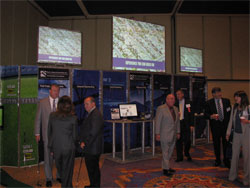 | �
�| Event exhibitors and sponsors contribute to an informative and engaging environment | �
�This year’s meeting was the best yet for the industry-leading construction defect and claims event.
�This year’s seminar concluded on May 13, 2011 with the Construction Defect Community Charitable Foundation Golf Tournament, held at Strawberry Farms Golf Course.
�The Disneyland Hotel in Anaheim, California was the place where more than 1,500 attendees convened for two days of professional development activities and seminars that included CLE workshops and panel discussions of special interest to legal and insurance professionals concerned with construction defect and claims litigation. Key events included “Challenges for Experts in Construction Defect Claims and Litigation,” “Keeping Up with Construction Defect Coverage,” and “Tips for Avoiding the ‘Perfect Storm’ in Handling of Wrap Claims.”
� �  | �
�| Supporting the golf tournament at the 15th hole | �
�This year’s Ollie award was given to George D. Calkins II, Esq. The West Coast Casualty Jerrold S. Oliver Award of Excellence was named in honor of the late Judge Jerrold S. Oliver, and recognizes an individual who is outstanding or has contributed to the betterment of the construction community.
�In addition to being the most comprehensive professional development seminar in the area of construction defects, this year’s seminar was equally valuable as a networking opportunity for members of the industry. People participated in professional development events during the day and then continued networking in the evening at numerous social events. The Lawn Party as well as the legendary Wood, Smith, Henning & Berman events were very well attended. Additional valuable networking events were hosted by a number of industry professionals at the House of Blues, and Tortilla Joe’s.
�As of this writing the 2011, West Coast Casualty's Construction Defect Seminar has applied for or has already received the following continuing education accreditation in the following areas;
�Read the full story…
�For more information about next year’s event, visit West Coast Casualty.
Water Is the Enemy
August 16, 2012 — CDJ Staff
So says Melissa Mitchell, writing in the blog of Community Association Consultants. She cites the nightmare scenario of “an unseen presence lurking behind the walls.” Not a horror movie, but water intrusion, which she notes can cause hundreds of thousands of dollars in damage. Eric Hoff, of Western Architectural, is quoted that “it only takes a hole one-eighth inch diameter in a building’s exterior to allow the intrusion of 35 gallons of water over twelve months.” Destructive testing on a building in in the Pacific Northwest revealed that water intrusion had lead to structural failure of the building. The wet wood had made a home for carpenter ants. Repairs exceeded $100,000.
Mitchell notes that “deferred maintenance can be costly” and cites the importance of preventative maintenance or the development of a maintenance plan. She concludes that “if you own or are responsible for maintaining a condominium complex, apartment building or commercial structure, it’s simply good business sense to have a building envelope assessment conducted by experts in the field.”
Read the full story…
Contractor Convicted of Additional Fraud
November 18, 2011 — CDJ Staff
A Pennsylvania contractor in prison for fraud has been convicted with insurance fraud. The York Daily Record reports that Steven D. Gebhart was already in jail for fraud for about $350,000 for work he either failed to finish or even start or by using substandard materials and practices when he was convicted of insurance fraud. Gebbert’s offices were destroyed in a fire that was later determined to be arson. He was not charged with this, but instead for overestimating his losses to the insurance company. Sentencing for the fraud charge will be on December 21.
Read the full story…
Does the New Jersey Right-To-Repair Law Omit Too Many Construction Defects?
January 6, 2012 — CDJ Staff
A post on the blog of Liberty Building Forensics Group find fault with the New Jersey Home Warranty and Builders’ Registration Act for not being stringent enough. The poster notes the coverage given under the bill. In the first year, builders are responsible to remedy faulty workmanship and materials and major structural defects. While other protections expire in the first or second year, there is a ten year coverage of major construction defects.
The blogger finds fault with the exclusion New Jersey law places on these claims, arguing that “due to the stringent definition of ‘major construction defects,” the warranty affords no coverage unless the house is practically collapsing.” The bill excludes leaks, cracks, and mold, and further limits claims if the homeowner has failed to inform the builder or insurer of defects, failure to maintain the home, and alterations made by the homeowner.
The intent of the New Jersey law is given as “requiring that newly constructed homes conform to certain construction and quality standards as well as to provide buyers of new homes with insurance-backed warranty protection in the event such standards are not met.” It’s argued in the piece that it instead serves to “strip homeowners of any meaningful means of recovery for discovered construction defects.”
Read the full story…
Contractors with Ties to Trustees Reaped Benefits from LA Community College Modernization Program
March 3, 2011 — Original reporting by Gale Holland, Michael Finnegan and Doug Smith, Los Angeles Times
In the latest installment of the “Billions To Spend” series of investigative reports focused on construction defects, management, and cost issues relevant to LACC’s Community College Modernization Projects, the LA Times examines the costs associated with the various layers of construction management and benefits that accrued to contractors with ties to LACC trustees.
�The reporting by the Times is seemingly critical of the project’s utilization of “body shops” an industry term for companies that function as employers of record. The article segment published today cites a number of circumstances wherein their utilization appears to have escalated costs substantially.
�“To gauge the cost of the staffing system, The Times reviewed thousands of pages of financial records from April 2007, when URS began managing the program, to July 2010. Reporters identified two dozen contractors serving as conduits for pay and benefits for employees they did not supervise.
�At least 230 people were employed in this manner, at a total cost of about $40 million, the records show.
�Approximately $18 million of the total was paid to the employees, according to the Times analysis. The remaining $22 million went to profit and overhead for contractors, the records indicate.
�For employees on its own payroll, the district says that medical and other benefits increase compensation costs 40% above base salaries. So if the district had employed its construction staff directly, the total cost for the period studied would have been $25 million instead of $40 million, a savings of $15 million, The Times calculated.”
�Read Full Story...
Florida Property Bill Passes Economic Affairs Committee with Amendments
April 14, 2011 — April 14, 2011 Beverley BevenFlorez - Construction Defect Journal
The Florida Property Bill (HBB 803) was passed by the Economic Affairs Committee by a vote of 11-7, according to Property Casualty 360, after adopting nine new amendments. The additions to the bill included limiting notice of claims to a set number of years, extending the statute of limitation on property claims from five years to six years, among others.
�HB 803 and SB 408, the Senate companion bill, focus primarily on residential property insurance. They make changes to the Florida Hurricane Catastrophe Fund, while also promoting increased notification of policy changes to policyholders. Sections of the bills provide minor fixes such as renaming Citizens Property Insurance Corporation to Taxpayer-Funded Property Insurance Corporation. However, other sections of the bills contain more significant policy changes such as sinkhole coverage and hurricane claims.
�The bills’ intent, according to the SunSentinel.com, is to reduce fraudulent claims and to bring new insurers into the insurance market. However, SunSentinel.com also reports that the bills may drastically increase property insurance premiums.
�Read the full Property Casualty 360 article...
�Read the full Sun Sentinel article...
Tacoma Construction Site Uncovers Gravestones
August 11, 2011 — CDJ Staff
The Seattle Times reports that a transit construction project has uncovered about twenty-five gravestones. The area was historically sensitive, as it is in territory once occupied by the Puyallup Tribe. At current report, no human remains have been found and the article cites the project?s archeological consultant as describing the gravestones as “not historically significant.”
Read the full story…
Counterpoint: Washington Supreme Court to Rule on Resulting Losses in Insurance Disputes
September 1, 2011 — Douglas Reiser, Builders Counsel
This is the fourth installment of posts on Vision One v. Philadelphia Indemnity, a Washington Supreme Court case touching on Washington construction and insurance law. After Williams v. Athletic Field got so much coverage, I wished that I had provided a forum for argument on Builders Counsel. While we await that opinion from the Supreme Court, I decided to let a few good writers have at Vision One here on the blog. Last week, attorney Chris Carr weighed in. Today, insurance expert David Thayer returns to give his final impression. David provided an initial peak at the case earlier this year. Thanks to both Chris and David for contributing to the debate.
In August 2011 the Washington Supreme Court will rule on a pair of joined cases that involve critical insurance coverage issues. The outcome of the ruling will impact a large swath of policyholders in Washington State including builders, developers, and homeowners to name a few.
The cases are Vision One vs. Philadelphia Indemnity Insurance and Sprague vs. Safeco. The Vision one case comes from Division Two of the Appellate Court which overturned a lower court decision in favor the plaintiff, Vision One. Division Two decided that the collapse of a concrete pour during the course of construction did not constitute a resulting loss due to faulty workmanship. They further went on to redefine efficient proximate cause in a way that is harmful to policyholders by broadening rather than narrowing the meaning of exclusionary language in Philadelphia’s Builders Risk Policy.
Read the full story…
Reprinted courtesy of Douglas Reiser of Reiser Legal LLC. Mr. Reiser can be contacted at info@reiserlegal.com