Unfinished Building Projects Litter Miami
November 18, 2011 — CDJ Staff
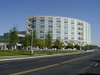
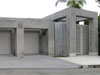
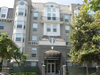
Buildings born in ambitious development plans that were never brought to completion form a grim reminder of the building bust in Miami, according to an article in the Miami Herald. One project started in 2007 as a residential project, later there were hopes to develop it as a hotel. These plans are ten months old with no work done.
Another project was projected as a 30-story office and commercial tower. Four were built before the project was abandoned. The article describes the site as “squalid.” Another project completed the planned 17 stories, but no work has been done beyond constructing the shell. Once planned as luxury condos, the owner owes more than $30,000 in property taxes.
Each of the three sites profiled in the Miami Herald have become dumping grounds for trash. The building skeletons have also become damaged by the elements. Some abandoned projects have been taken over by homeless people. Businesses near the abandoned properties have been hurt. The buildings also represent failed obligations to subcontractors who have put liens on the properties for work they performed but were never paid for.
Read the full story…
Will They Blow It Up?
March 28, 2012 — CDJ Staff
The issues concerning the Harmon Towers building in Las Vegas continue to make their way through the courts. As we noted in a previous piece, Cook County building officials stated that the building could be a hazard if Las Vegas were struck by an earthquake. The question of whether the building will continue to stand is just one of the issues in front of a judge.
�MGM Resorts International argued at a March 13 hearing for permission to implode the Harmon hotel building. They claim that more than 1,700 defects have been discovered in the building and that the building is a public safety hazard. Arguing against demolition, Perini Building Company, the general contractor for the hotel, and its subcontractors are claiming that imploding the building would destroy evidence and prejudice juries in the ongoing construction defect claims. They claim that MGM Resorts wishes to abandon the building due to the economic slowdown. Perini Corp, the contractor for the project, claims that the building can be fixed. Perini claims that MGM’s position in the construction trial would be improved if the building is demolished.
�After Judge Elizabeth Gonzalez heard the four days of testimony on the Harmon Towers building and whether it should be demolished, she scheduled more testimony, with two days in April and an entire week in July. Judge Gonzalez will be deciding whether the building will be torn down, imploded, or left in place.
Read the full story…
�Read the full story…
Save a Legal Fee: Prevent Costly Lawsuits With Claim Limitation Clauses
April 25, 2012 — Douglas Reiser, Builders Cousel
Ever had that lingering problem with a contracting partner that went away for awhile and then came back to bite you ? years later? In Washington, construction contract claims can be raised for up to six years after substantial completion. Six years!? Why would I want to wait that long to find out if I have a problem? You don’t have to.
�Over the past few years, I have discussed the notion of “contractual claim periods” on The Builders Counsel. For today’s Save a Legal Fee column, I cannot think of a better topic. These provisions are specifically intended to save you from unnecessary legal fees that might arise if a problem goes unnoticed for too long.
�Contractual claim periods are simply a way to reduce the amount of time that a contracting party has to raise a claim against its contracting partner. For example, a subcontractor might require that a general contractor raise any claim that it might have ? for defective or incomplete work, injury, damages, etc ? within a particular amount of time or forever lose the ability to raise the claim in a legal proceeding.
� Read the full story…
�Reprinted courtesy of Douglas Reiser of Reiser Legal LLC. Mr. Reiser can be contacted at info@reiserlegal.com
�
A Performance-Based Energy Code in Seattle: Will It Save Existing Buildings?
August 11, 2011 — Douglas Reiser, Builders Counsel
The City of Seattle has one of the most stringent energy codes in the nation. Based upon the Washington State Energy Code (which has been embroiled in litigation over its high standards), the code demands a lot from commercial developers. But, does it prevent developers from saving Seattle?s classic and old buildings? Perhaps.
�The general compliance procedure requires buildings to be examined during the permitting process. This means that buildings are examined before they begin operating. The procedure is not malleable and is applicable to all buildings, old and new, big and small.
�The downside of this procedure is that it eliminates awarding compliance to those buildings exhibiting a number of passive features, such as siting, thermal mass, and renewable energy production. This problem has prevented a number of interesting and architecturally pleasing existing building retrofits from getting off the ground. The cost of complying with the current system can be 20% more, and it might prevent builders from preserving a building?s historical integrity.
Read the full story…
�Reprinted courtesy of Douglas Reiser of Reiser Legal LLC. Mr. Reiser can be contacted at info@reiserlegal.com
Supreme Court of Oregon Affirms Decision in Abraham v. T. Henry Construction, et al.
April 20, 2011 — April 20, 2011 Beverley BevenFlorez - Construction Defect Journal
After reviewing the decision in Abraham v. T. Henry Construction, et al., the Oregon Supreme Court affirmed that a tort claim for property damage arising from construction defects may exist even when the homeowner and the builder are in a contractual relationship.
�When the case was initially filed, the plaintiffs alleged breach of contract and negligence. The defendants moved for summary judgment arguing that one, the claim was barred by the six-year statute of limitations and two, no special relationship (such as one between a doctor and patient) existed. The court agreed with the defendants. However, the Court of Appeals while affirming the trial court’s decision on breach of contract reversed the decision on negligence. The Court of Appeals stated that an administrative or statute rule could establish a standard of care independent from the contract.
�The Oregon Supreme Court gave an example of cases where a tort claim could exist when a contract is present: “If an individual and a contractor enter into a contract to build a house, which provides that the contractor will install only copper pipe, but the contractor installs PVC pipe instead (assuming both kinds of pipe comply with the building code and the use of either would be consistent with the standard of care expected of contractors), that failure would be a breach of contract only. […] If the failure to install the copper pipe caused a reduction in the value of the house, the plaintiff would be able to recover that amount in an action for breach of contract. […] On the other hand, if the contractor installed the PVC pipe in a defective manner and those pipes therefore leaked, causing property damage to the house, the homeowner would have claims in both contract and tort. […] In those circumstances, the obligation to install copper instead of PVC pipe is purely contractual; the manner of installing the pipe, however, implicates both contract and tort because of the foreseeable risk of property damage that can result from improperly installed pipes.”
�Read the court’s decision…
Washington Court Limits Lien Rights of Construction Managers
August 17, 2011 — Douglas Reiser, Builders Counsel
A newly filed, yet unpublished, court opinion opines that a construction manager cannot file a construction lien in Washington state. So, how far reaching is this opinion?
�In the case of Blue Diamond Group Inc. v. KB Seattle 1, Inc., et al, a New York construction manager filed a lien against the Westfield Southcenter Mall in Tukwila, Washington. The lien was filed after the owner of a coffee stand failed to pay Blue Diamond for consulting services used in the construction of a kiosk.
�Blue Diamond served as the owner’s agent, assisting with managing subcontractors, vendors and other tasks. The manager’s tasks also included paying invoices, managing deliveries, setting schedules and other site managerial tasks. Blue Diamond was not registered as a contractor under Washington’s RCW 18.27.
Read the full story…
�Read the court’s decision…
�Reprinted courtesy of Douglas Reiser of Reiser Legal LLC. Mr. Reiser can be contacted at info@reiserlegal.com
Harmon Tower Construction Defects Update: Who’s To Blame?
August 17, 2011 — CDJ Staff
Reporting on the site VegasInc.com, Liz Benton notes that “nobody wants to take the fall for what happened at Harmon.” Work on the Harmon hotel building in Las Vegas’s CityCenter stopped in 2008 after 26 of the planned 49 stories were completed. Lorence Slutzky, a construction law professor at John Marshall Law School and a partner with the Chicago firm Robbins Schwartz Nicholas Lifton & Taylor told Benton that while inspectors and others are complicit, “the real responsibility rests with Perini, which has an obligation to comply with the plan specifications.” Perini’s claim is that they were given faulty design drawings. MGM disputes this.
�Perini has offered to repair the building defects, however MGM has released a statement that they have “zero confidence or trust that Perini can and will properly fix a building it has so badly constructed thus far.” One MGM spokesperson likened these requests from Perini to “the director of ‘Ishar’ demanding a sequel.” “Ishtar,’ cost Columbia Pictures $55 million dollars and earned only $4.2 million in its initial run. Perini claims that MGM halted work because of the economy.
Read the full story…
Excess Carrier Successfully Appeals Primary Insurer’s Summary Judgment Award
December 9, 2011 — Tred R. Eyerly, Insurance Law Hawaii
Although the excess carrier was given inadequate notice of the underlying arbitration, the trial court determined it shared responsibility with the primary carrier for the arbitration award. Finding disputed issues of fact, the Washington Court of Appeals reversed in Am. States Ins. Co. v. Century Surety Co., 2011 Wash. App. LEXIS 2488 (Wash. Ct. App. Oct. 31, 2011).
The primary insurer, American States, issued two liability policies to Professional Home Builders (PHB), a siding contractor. The policies were for successive years, 1998-1999 and 1999-2000. Each policy had annual limits of $1 million per occurrence. PHB also had a commercial excess liability policy for 1999-2000 with Century Surety Company.
PHB was sued by Residential Investment Partners (RIP) for construction defects after moisture entered the building envelope, causing decay and damage. Century’s expert determined the decay started before the 1999-2000 policy period.
RIP and PHB went to arbitration.
Read the full story…
Reprinted courtesy of Tred R. Eyerly, Insurance Law Hawaii. Mr. Eyerly can be contacted at te@hawaiilawyer.com
LEED Certified Courthouse Square Negotiating With Insurers, Mulling Over Demolition
June 6, 2011 — Douglas Reiser in the Builders Counsel Blog
Apparently, Courthouse Square is still unresolved. The County hasnow hired an attorney to handle its insurance claim against Affiliated FM. Is there a lawsuit coming?
�Right now, no lawsuit is expected. According to officials, the insurer has been acting in good faith. But, its been quite a while since Salem officials learned that the Courthouse Square building had significant concrete issues that would result in probable demolition of the LEED certified building.
�If you have yet to hear about Courthouse Square, let me fill you in briefly. The Salem building was substantially completed in 2000 and LEED certified by the US Green Building Council in 2002. The project cost more than $30 Million to complete and the building was revered for its innovation as a crowning achievement for city leaders.
�But, structural problems in the building’s core were discovered as early as 2002, writes Chris Cheatham of Green Building Law Update. Final tests earlier in the year, determined that the building had to be vacated. The building has been clear since July 2010.
�Read the full story…
� �Reprinted courtesy of Douglas Reiser of Reiser Legal LLC. Mr. Reiser can be contacted at info@reiserlegal.com
Housing Prices Up through Most of Country
December 20, 2012 — CDJ Staff
Home prices in October were up more than six percent compared with prices in October 2011. The LA Times noted that some of the strongest gains were in California and Arizona. The Phoenix metropolitan area saw a 24.5% rise in home prices. In California, Riverside and Los Angeles were just above the national average, at 7.3% and 6.4%, contributing to the state’s overall nine percent increase.
The news wasn’t good throughout the entire country, as five states did not see any price increases. Mark Fleming, the chief economist at CoreLogic, a research firm in Irvine, California said that “the housing recovery that started earlier in 2012 continues to gain momentum.
Read the full story…
Plaintiffs In Construction Defect Cases to Recover For Emotional Damages?
March 16, 2011 — March 16, 2011 - Construction Defect Journal Staff
A recent post to the Markusson, Green, Jarvis Blog reports on an important appeals decision which promises to impact construction defect litigation in Colorado.
�The post provides analysis on the recovery of inconvenience damages. The focus of the piece is centered on Hildebrand v. New Vista Homes II, LLC, 08CA2645, 2010 WL 4492356 (Colo. Ct. App. Nov. 10, 2010), wherein it was held that " the plain language of Construction Defect Action Reform Act permits recovery of damages for inconvenience, and that the trial court did not err by allowing inconvenience damages to go to the jury".
�According to the MGJ Blog "The Hildebrand decision is important because it provides Construction Defect Plaintiffs with a foothold for collecting emotional damages. While several questions of law remain as to who or under exactly what circumstances a Plaintiff may recover these types of damages, the Hildebrand case has clearly set forth that emotional damages may be considered as part of actual damages pursuant to CDARA."
�Read Full Story...
Timing of Insured’s SIR Payment Has No Effect on Non-Participating Insurer’s Equitable Contribution to Co-Insurer
April 25, 2012 — Aarti Kewalramani, Gatzke Dillon & Balance LLP
In a case of first impression, the California Court of Appeal, Fourth District, Division One, examined whether a non-participating insurer can evade its defense and indemnity obligations because the insured only paid the policy’s self-insured retention ("SIR") as part of a settlement. In Axis Surplus Lines Insurance Company v. Glencoe Insurance LTD. (April 11, 2012, D058963) __ Cal.App.4th __ [2012 WL 11903203], the critical issue for the Court was whether an insurer, with full notice and continued investigation of a claim, can "hide behind the SIR requirement in its policy." The Court declined to "sanction such gamesmanship."
�The dispute involved an equitable contribution claim between two insurers. Axis Surplus Insurance Company provided commercial general liability insurance to Pacifica Pointe L.P. During the same time period, Glencoe Insurance Ltd. provided an owner-controlled insurance policy (i.e., wrap policy) to Pacifica Pointe L.P. Both policies included provisions requiring co-carriers to split the defense and indemnity on equal shares. Pacifica was sued in a construction defect lawsuit, involving alleged resultant damages to condominiums it converted and sold. Pacifica tendered the claim to both Axis and Glencoe. While Axis agreed to defend Pacifica, subject to a reservation of rights, Glencoe declined to participate until Pacifica satisfied the $250,000 SIR on the policy. Glencoe continued to monitor the litigation from the sidelines.
�Axis and Pacifica settled the underlying construction defect lawsuit for $1 million. Pacifica advised Glencoe of the settlement, and received Glencoe’s approval to contribute its $250,000 SIR towards the settlement. Axis contributed $750,000 towards the settlement. After the settlement, Axis sued Glencoe for declaratory relief and equitable contribution, to recover a portion of the defense and indemnity it paid. The trial court found in favor of Axis and allocated Glencoe 60% of the settlement payment. Glencoe appealed.
�On appeal, the Court scrutinized whether Glencoe, as the non-participating insurer, had a legal obligation to provide a defense and indemnity to the insured, despite the timing of the SIR’s satisfaction. The Court determined that in an equitable contribution action, the participating insurer has the burden of proving merely the potential for coverage under the non-participating insurer’s policy. On this showing, the burden of proof shifts to the non-participating insurer to prove the absence of actual coverage under its policy. The Court emphasized that the timing of the SIR’s payment was inconsequential to either insurer’s burden. Because Glencoe admitted coverage existed under its policy, the Court affirmed the trial court’s decision.
�As a result, the result ultimately turned on whether the non-participating carrier had full notice of the claim and cannot use the timing of the satisfaction of the SIR to shield itself from an equitable contribution claim from the participating co-carrier.
� Published courtesy of Aarti Kewalramani of Gatzke Dillon & Balance LLP. Ms. Kewalramani can be contacted at akewalramani@gdandb.com.
�
Utah Construction Defect Claims Dependant on Contracts
July 10, 2012 — CDJ Staff
An owner who wants to sue a subcontractor directly may find limited ability to do so under Utah court decisions. Writing on the JDSupra site, Stewart O. Peay and Mark O. Morris of Snell & Wilmer discuss the distinction the Utah courts make between contractor (with whom an owner has direct contracts) and subcontractors (with whom an owner does not). In the Utah courts, construction defect claims must be based on contract, rather than tort. With no contract, there is no way to pursue claims against a subcontractor alone.
They note that the Utah couts do not “accept negligence and negligent misrepresentation claims that many other jurisdictions embrace.” They recommend that in setting up contracts for a construction project, owners should ensure that they are provided with “third-party beneficiary rights to purse claims against subs.” They suggest that “the owner may require his generals to include language in the various subcontracts that incorporates some or all of the terms of the prime contract into the subcontracts.” Additionally they suggest that the owner “require the general to include ‘flow down’ provisions in the various subcontracts.”
Read the full story…
Largest Per Unit Settlement Ever in California Construction Defect Case?
October 28, 2011 — CDJ Staff
BusinessWire reports that the Chelsea Court Homeowners Association has settled their construction defect case for $5.4 million. That works out to $169,000 per unit, which BusinessWire describes as “California’s largest per-unit recovery known to be on record to date.”
Most of the money in the settlement is coming from insurance companies for the builder and thirteen subcontractors. Issues included roof and window leaks, deck failures, and unsafe walkways.
Read the full story...
Ensuing Loss Provision Does Not Salvage Coverage�
October 23, 2012 — Tred Eyerly, Insurance Law Hawaii
The insureds' home was built in 1989. In 2006, extensive water damage was found to the house. The insureds notified their carrier, Chubb. The insureds had coverage for all risks unless stated otherwise in the policy or if an exclusion applied.
�Chubb hired an adjustor who determined that defective construction had enabled water to enter the wall and beam systems. Chubb denied coverage under the faulty planning, construction or maintenance exclusion.
� Read the full story…
��Reprinted courtesy of Tred R. Eyerly, Insurance Law Hawaii. Mr. Eyerly can be contacted at te@hawaiilawyer.com
��
Construction Delayed by Discovery of Bones
June 28, 2011 — CDJ Staff
Work stopped on a $7 million construction project in Oak Harbor, Washington, after three sets of Native American remains were found. The Washington State Department of Archaeology and Historic Preservation had suggested that the project employ an archaeologist. City, state, and tribal officials are determining what will happen next. The Seattle Times reports that Jim Slowik, Oak Harbor’s mayor, has asked for a review of why no archaeologist was part of the project.
Read the full story…
Nebraska Man Sentenced for Insurance Fraud in Construction Projects
July 10, 2012 — CDJ Staff
Thomas Herink has been ordered to repay more than $5 million to his victims and will be serving three years of probation after 18 months in jail for defrauding banks and insurance companies, according to a report in the Insurance Journal. Herink falsified financial statements to lenders and insurers so that his company, Golf Services Group Inc. could participate in construction projects.
Read the full story…
More Charges in Las Vegas HOA Scandal
September 13, 2012 — CDJ Staff
The indictments continue in the Las Vegas HOA scandal. A lawyer for the Justice Department told the judge in the case that “we expect several indictments before the end of the year.” According to the Las Vegas Review Journal, “a dozen or more” additional people will be charged in the conspiracy. �
The judge in the case, Senior U.S. District Judge Lloyd George, told prosecutors that he wanted to address the issue of compensation for homeowners. Currently, defendants have agreed to pay $1.5 million to compensate homeowners associations and banks. Vistana homeowners have claimed that the conspirators got the bulk of a $19 million construction defect settlement.
� Read the full story…