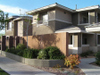
Changes to Arkansas Construction and Home Repair Laws
September 30, 2011 — CDJ Staff
A new law, set to take effect in 2012, lowers the ceiling on when work must be done by a licensed contractor. Through the end of the year, projects costing $20,000 or more had to be done by an Arkansas licensed contractor. As of January 1, 2012, that new limit will be $2,000.
This will apply to all single-family residences and according to Lovely County Citizen, covers “construction, alteration, renovation, repair, modification, improvement, removal, demotion, or addition to a pre-existing structure.” Residential building contractors will be required to have workers compensation insurance, as will home improvement contactors if they take jobs worth more than $20,000.
Morris Dillow, a building inspector in Holiday Island, said, “It will get these scammers out of here who are ripping people off.” He cited the example of a contractor who after getting paid for roof repairs and painting, left the job unfinished.
Read the full story…
Mortar Insufficient to Insure Summary Judgment in Construction Defect Case
January 6, 2012 — CDJ Staff
The US District Court of Nevada issued a summary judgment in the case of R&O Construction Company V. Rox Pro International Group, Ltd. on December 19, 2011. The case involved the installation of stone veneer at a Home Depot location (Home Depot was not involved in the case). R&O’s subcontractor, New Creation Masonry, purchased the stone veneer from Arizona Stone. Judge Larry Hicks noted that “the stone veneer failed and R&O was forced to make substantial structural repairs to the Home Depot store.”
Rox Pro asked the court for a summary judgment, which the court granted only in part. The court looked at two issues in the case, whether the installation instructions constituted a breach of implied warranty of merchantability, and whether there was a breach of an implied warranty of fitness for a particular purpose.
Judge Hicks found that there was a breach of implied warranty of merchantability. The instructions drafted by Real Stone and distributed by Arizona Stone were not sufficient for affixing the supplied stones, according to R&O’s expert, a claim the plaintiffs dispute. “Because there is an issue of material fact concerning the installation guidelines, the court shall deny Arizona Stone’s motion for a summary judgment on this issue.”
On the other hand, the judge did not find that the instructions had any bearing as to whether R&O bought the stone, since the stone was selected by the shopping center developer. This issue was, in the view of the judge, appropriately dismissed.
Read the court’s decision…
Harsh New Time Limits on Construction Defect Claims
April 26, 2011 — April 26, 2011 by Scott F. Sullan, Esq., Mari K. Perczak, Esq., and Leslie A. Tuft, Esq. of
Sullan2, Sandgrund, Smith & Perczak, P.C. in the
HindemanSanchez blogA recent Colorado Supreme Court decision, Smith v. Executive Custom Homes, Inc., 230 P.3d 1186 (Colo. 2010), considerably shortens the time limit for bringing many construction defect lawsuits. Homeowners and homeowner associations risk losing the right to seek reimbursement from builders, developers and other construction professionals unless they carefully and quickly act upon discovery of evidence of any potential construction defect.
�The Statute of Limitations for Construction Defect Claims
�Colorado’s construction defect statute of limitations limits the time for homeowners and homeowners associations to bring lawsuits for construction defects against “construction professionals,” including developers, general contractors, builders, engineers, architects, other design professionals, inspectors and subcontractors. The statute requires homeowners and associations to file suit within two years “after the claim for relief arises.” A claim for relief “arises” when a homeowner or association discovers or reasonably should have discovered the physical manifestation of a construction defect.
�The two-year time limitation applies to each construction defect separately, and will begin to run upon the appearance of a “manifestation” of a construction defect (which may include, for example, a condition as simple as a roof leak or drywall cracks), even if the homeowner or association does not know the cause of the apparent problem.
�The Smith Opinion and its Effect on the Statute of Limitations
�In Smith v. Executive Custom Homes, Inc., the plaintiff homeowner, Mrs. Smith, slipped on ice that had accumulated on her sidewalk because of a leaking gutter and suffered injury. When she first noticed the leak, she reported it to her property manager, who reported it to the builder. The builder attempted to repair the gutter, unbeknownst to Mrs. Smith, and she did not notice further problems until approximately one year after she first observed the leak, when she fell and suffered serious injury. She sued the builder within two years of her injury, but nearly three years after she first learned of the leak.
�The Colorado Supreme Court dismissed Mrs. Smith’s claims as untimely and held that under the construction defect statute of limitations, the two-year period for suing for injuries due to construction defects begins when the homeowner first observes the physical manifestation of the defect, even if the resulting injury has not yet occurred. The court acknowledged that this ruling could result in “unfair results,” especially if a serious and unforeseeable injury occurs more than two years after the first time the homeowner noticed the problem, and as a result the victim is unable to seek redress from those responsible for the defect.
�Read the full story…
�Reprinted courtesy of Scott F. Sullan, Esq., Mari K. Perczak, Esq., and Leslie A. Tuft, Esq. of Sullan2, Sandgrund, Smith & Perczak, P.C., and they can be contacted through their web site.
Fourteen More Guilty Pleas in Las Vegas Construction Defect Scam
June 19, 2012 — CDJ Staff
The ongoing case over claims that a group fixed homeowner board elections in order to supply the conspirators with a stream of construction defect cases and repairs has lead to fourteen guilty pleas. The judge recently issued charges against fifteen of the accused; one defendant did not join in the group as he was recovering from pneumonia. The prosecutors have asked the judge to delay sentencing, as the investigation is continuing. Prosecutors note that another dozen people may be indicted.
Along with an earlier group who plead guilty, this brings the total number of guilty pleas in the case to twenty-five. All have promised to cooperate with authorities.
The case has also involved four deaths, although authorities have not suspected foul play in the deaths. Nancy Quon, one of the four, was the construction defect attorney suspected to be at the center of the conspiracy.
Read the full story…
Association May Not Make Claim Against Builder in Vermont Construction Defect Case�
October 23, 2012 — CDJ Staff
The Vermont Supreme Court issued a ruling on September 28 on Long Trail House Condominium Association. The case was heard by a panel of two Supreme Court justices, Marilyn Skoglund and Brian Burgess, and three justices specially assigned for the case, Kupersmith, Davenport, and Johnson. The decision came down with a 3-2 split; Judges Kupersmith and Johnson joining in a dissent.
�In the underlying case, Stratton Corporation entered into an agreement with Engelberth Construction in which Engelberth would supply “recommendations on construction feasibility, consultation as to the selection of materials and equipment, assistance with zoning requirements and permits, and cooperation with the ‘design team’ to provide valuable engineering services.” Engelberth was not responsible to determine that the drawings and specifications were in accordance with the law and building codes, nor were they responsible “for the design team’s designs, errors, or omissions.”
�Subsequent to the agreement was a construction project which culminated in the incorporation of the Long Trail House Condominium Association. The condominium owners initiated a lawsuit over alleged defects. Stratton, Intrawest, and the association settled claims for $7,025,00 with Stratton and Intrawest both pursuing claims against Engelberth. This case is still unsettled.
�The association progressed on remediation, which cost about $1,500,00 more than was provided by the settlement, and so the association also sued Engelberth. In this case, the court granted a summary judgment to Engelberth, concluding that negligence claim was barred both “by the economic loss rule and that the absence of contractual privity was fatal to the warranty claims.”
�The court upheld both determinations of the lower court. The court noted that “the economic loss rule ‘prohibits recovery in tort for purely economic losses’” and that “in tort law, duties are imposed by law to protect the public from harm.” A negligence claim could only be supported with evidence of “some accompanying physical harm, which does not include economic loss.”
�The association made the claim that the economic loss rule applies only when there is a contractual relationship between the two parties. The court rejected this argument, citing a reference that “economic interests are protected, if at all, by contract principles, rather than tort principles.”
�Nor did the court find it persuasive that a “professional services” exception to the economic loss doctrine applied, noting that the court has rejected this notion in two prior cases. The noted that the association’s losses were purely economic, and their inability to settle those claims with Engelberth did not mean that they had not means of settling them, as they were able to settle these very claims with Stratton and Intrawest.
�The association also raised claims of an implied warranty, resting on the construction contract between Engelberth and Stratton. This was also rejected by the court, noting that Vermont “case law plainly contemplates the existence of contractual privity before a breach of implied warranty claim can be raised.” The court noted that there was neither a contract nor a sale between Engelberth and the association, and thus there were no grounds for an implied warranty. The court concluded that “the Association’s warranty remedy lies against the entity that sold it the condominium units and implicitly warranted through the sale that the units were built in a good and workmanlike manner and that they were suitable for habitation.”
� Read the court’s decision …
�
Conspirators Bilked Homeowners in Nevada Construction Defect Claims
March 28, 2012 — CDJ Staff
Courthouse News has a summary of the current lawsuit over a Nevada conspiracy to defraud homeowners by taking control of homeowner boards and then providing inadequate repairs. Homeowners in eight Las Vegas area communities are involved in the suit, which claims that the conspirators purchased units in the communities and then transferred fractional interests to others to allow them to run for HOA board elections. The suit claims that David Amesbury and his firm helped manipulate the elections.
�Once homeowner boards were controlled by the conspirators, Nancy Quon, the construction defect attorney whose recent death appears to be by suicide, handled the litigation against homebuilders. She would settle out of court, engaging Silver Lining Construction to “do very minor and superficial repairs” to the homes. The remainder of the money was split by the conspirators. The suit also notes that the construction defect claims were “frivolous,” and?in addition to the negative publicity?caused the homes to lose at least 5% of their value.
Read the full story…
$5 Million Construction Defect Lawsuit over Oregon Townhomes
January 6, 2012 — CDJ Staff
A homeowners’ association in Lake Oswego, Oregon has filed a $5 million lawsuit against the developers of the luxury townhomes. The homeowners of Sunset Crossing are suing Centurion Homes and Aspen Townhomes over claims that construction defects have lead to water intrusion and structural damages. The townhomes were built in 2005.
Andy Burns, the lawyer for Phillip and Patricia Gentelmann, the owners of both Centurion Homes and Aspen Townhomes, said the Gentelmanns were “taking these allegations very seriously.” The suit says that the construction violated state and local building codes and that the firms did not repair damage caused by water intrusion.
Read the full story…
Court Rejects Anti-SLAPP Motion in Construction Defect Suit
September 1, 2011 — CJD Staff
The California Court of Appeals has upheld the denial of an anti-SLAPP motion in Claredon American Insurance Company v. Bishop, Barry, Howe, Haney & Ryder. This case was triggered by a water intrusion problem at a condominium complex, the Terraces at Emerystation, built and sold by Wareham Development Corporation. The insurer, Claredon, retained Risk Enterprise Management as the third party claims administrator. REM retained the law firm Bishop, Barry, Howe, Haney & Ryder. The construction defect case was settled in 2007 and the condo owners moved back by early 2008.
Due to issues with the claims settlement, Claredon filed against REM for “professional negligence, indemnity, apportionment and contribution,” with a cross-complaint that the cross-defendants negligently defended the developer, Wareham.
In response, the cross-defendants filed a motion to strike the cross-complaint under the anti-SLAPP statute. The trial court denied this motion and now this has been upheld by the appeals court.
The court noted that “The fundamental thrust of the cross-complaint is not protected litigation-related speech and petitioning activity undertaken on another’s behalf in a judicial proceeding.”
Read the court’s decision…
Is There a Conflict of Interest When a CD Defense Attorney Becomes Coverage Counsel Post-Litigation?
September 1, 2011 — Chad Johnson of Higgins, Hopkins, McLain & Roswell, LLC
In Weitz Co., LLC v. Ohio Cas. Ins. Co., the U.S. District Court for the District of Colorado was asked to rule on a motion to disqualify counsel in an insurance coverage action. 11-CV-00694-REB-BNB, 2011 WL 2535040 (D. Colo. June 27, 2011). Motions to disqualify counsel are viewed with suspicion, as courts “must guard against the possibility that disqualification is sought to ‘secure a tactical advantage in the proceedings.’” Id. at *2 (citing Religious Technology Center v. F.A.C.T. Net, Inc., 945 F. Supp. 1470, 1473 (D. Colo. 1996).
Weitz Company, LLC (“Weitz”) is a general contractor and defendant in an underlying construction defect suit which had concluded before the action bringing rise to this order. In the underlying action, Weitz made third-party claims against subcontractors, including NPW Contracting (“NPW”). Weitz was listed as an additional insured under NPW’s policies with both Ohio Casualty Insurance Company and Mountain States Mutual Casualty Company (collectively “the Carriers”). The Carriers accepted Weitz’s tender of defense under a reservation of rights. However, neither insurance carrier actually contributed to Weitz’s defense costs in the underlying action. At the conclusion of the construction defect action, the parties unsuccessfully attempted to apportion the attorney’s fees and costs. Eventually, Weitz brought suit against the recalcitrant carriers. The Lottner firm, which had previously represented Weitz in the underlying construction defect action, continued to represent Weitz in this coverage action.
Read the full story…
Reprinted courtesy of Higgins, Hopkins, McLain & Roswell, LLC. Mr. Johnson can be contacted at johnson@hhmrlaw.com
Who Is To Blame For Defective — And Still LEED Certified — Courthouse Square?
September 1, 2011 — Douglas Reiser, Builders Counsel
Remember Courthouse Square? I sure do. We have talked about the closed and evacuated LEED certified building a couple of times here on Builders Counsel. Well, it’s back in the news. This time building professionals are pointing fingers — but there is some talk about a fix. Still, its LEED certification remains.
If you read my past articles about Courthouse Square, you can get caught up on this mess. The short of it is that Salem, Oregon had the five-story government building and bus mall completed in 2000 for $34 Million. It was awarded LEED certification during the USGBC’s infancy. Last year, it became public that the building had significantly defective concrete and design. The Salem-Keizer Transit District worked with the City of Salem to shut the building down, and it has not been occupied since.
Last fall, Courthouse Square failed thorough forensic testing leading to a lengthy bout with a number of insurers. The contractors and designers had been hauled into court, but the Transit District was able to settle with the architect and contractors. The only remaining party involved in the lawsuit appears to be the engineering firm, Century West Engineering. Most expert reports have pinned the responsibility for the poor design and materials on Century West’s shoulders.
Read the full story…
Reprinted courtesy of Douglas Reiser of Reiser Legal LLC. Mr. Reiser can be contacted at info@reiserlegal.com
US Courts in Nevada Busy with Yellow Brass
August 2, 2012 — CDJ Staff
Judge Robert C. Jones, the chief judge of the United States District Court of Nevada, and Judge Peggy A. Leen, a magistrate judge with the same court, have issued orders in cases involving allegations of high-zinc yellow brass plumbing components. Judge Jones issued orders on Waterfall Homeowners Association v. Viega, Inc. and Greystone Nevada, LLC v. Anthem Highlands Community Association on July 9, 2012. Judge Leen issued orders on Southern Terrace Homeowners Association v. Viega, Inc. on July 10, and The Seasons Homeowners Association, Inc. v. Richmond American Homes of Nevada, Inc. on July 19.
Chief Judge Jones held an omnibus hearing on Waterfall v. Viega on June 12. During that hearing “Chief Judge Jones had already agreed that the claims against the product manufacturers should be be severed from the majority of the other claims and that discovery should proceed on different tracks.” Judge Leen ordered that the Southern Terrace claims be referred to Chief Judge Jones to determine if it should be consolidated with other yellow brass cases.
Chief Judge Jones’s decision in Greystone Nevada rests on issues of whether the affected homeowners had signed arbitration agreements. The judge found that the “Defendant’s claims that the seven homeowners they have identified are subsequent purchasers who need not arbitrate with Greystone is definitively refuted by the evidence.”
Judge Leen cites the Greystone decision in her ruling on Seasons Homeowners Association v. Richmond American Homes of Nevada. Richmond seeks to compel individual arbitration, stating that “the arbitration clause used singular rather than plural terms, and therefore, class arbitration was foreclosed.” Judge Leen determined that “under Nevada law, a homeowners association has statutory authority to represent homeowners associations in these types of actions. She did, however, accept Richmond’s argument that they could compel arbitration.
The Waterfall order involves an attempt by two homeowners associations to seek a class action against seventeen defendants, the first twelve of whom are described as “the Viega Defendants” and “the Uponor Defendants.” Chief Judge Jones notes that “many of these Defendants have been sued in identical class actions by the same law firms, but with different named defendants.” The homeowner association seek to “represent their own 998 members directly but also wish to represent up to 10,000 homeowner associations representing up to 250,000 similarly situated homeowner members throughout the Las Vega area via this class action.”
The judge has denied the Viega Defendants’ attempt to deny class certification, noting that the plaintiffs “argue that they intend to argue for class certification under Rule 23(b)(3). He also denied the motions by the two groups of the Viega Defendants. The U.S. Viega Defendants sought to be dismissed from the case for a variety of reasons. The judge noted of the claim that the plaintiffs had no injury of fact and are not alleging actual damage is contradicted by the allegations of actual damage made by the plaintiffs. ”They have alleged that the parts are defective and have already begun to corrode in at least a few sample circumstances, even if they have not yet failed.” To the argument that there re not particular claims made against defendants, the judge notes, “it is clear from the Complaint which Defendants are alleged to have manufactured and sold which brands of allegedly defective products, and which Defendants are alleged to have installed them.”
The German Viega firms also sought to be dismissed from the suit, noting that “they have no property, employees, accounts, advertisements, etc. in Nevada and have not sold any products in Nevada.” However, the judge notes that “at least Waterfall, and perhaps Red Bluff, was still under construction when Viega, Inc. became the sole shareholder of Vanguard Industries, Inc.”
Finally, both of Chief Judge Jones’s rulings cite a related case in the U.S. District Court for the District of Minnesota involving a class action settlement for those with F1807 systems. He notes in both these cases that “Plaintiffs disclaimed any claims based upon F1807 components.”
Read the courts' decisions…
Waterfall Homeowners Association v. Viega, Inc.
Greystone Nevada, LLC v. Anthem Highlands Community Association
Southern Terrace Homeowners Association v. Viega, Inc.
The Seasons Homeowners Association, Inc. v. Richmond American Homes of Nevada, Inc.
Des Moines Home Builders Building for Habitat for Humanity
September 13, 2012 — CDJ Staff
A group of Des Moines home builders is building two homes for low-income families. The homes are being constructed to meet the National Association of Home Builders’ emerald standard for green construction. According to the article in the Des Moines Register, the homes will be finished by the end of August.
� Read the full story…
Court Strikes Down Reasonable Construction Defect Settlement
December 20, 2012 — CDJ Staff
The Court of Appeals of Washington has struck down a construction defect settlement between a building owner and the companies she hired to repair the siding, among other repairs to bring the building up to code. Yuan Zhang hired Hawk Construction LLC to do repair work. Hawk, in turn, hired Ready Construction LLC for some aspects of the project. Hawk and Ready were both insured by Capital Specialty Insurance Corporation.
There were several problems with Ready’s work. After removing old siding, they did not protect the building, nor did they remove all of the damaged layers. Ready covered, but did not fix, a mildew problem under the old siding. When new siding was reattached, the nails used were too short to adequately attach it.
After paying for an inspection of the work, Zhang had Hawk and Ready begin the repairs again, but the work was abandoned without being completed. Zhang sued Hawk for breach of contract. Hawk then sued Ready, claiming that “Ready was liable to Hawk to the extent that Hawk was liable to Zhang.” Capitol retained defense for both contractors.
Zhang settled with Hawk, in an agreement that gave her “the right to collect and/or pursue all costs and attorney fees paid by Hawk or its insurance company defending against the Zhang’s claims and pursuing claims against Ready.” Subsequently, she also settled with Ready. Both companies ceased operations.
Zhang had the settlements reviewed by a court, which concluded that the settlements were reasonable. Capital was allowed to appeal, claiming that the settlement included costs that were Zhang’s responsibility. The appeals court did not examine the question of the reasonableness of the settlement, concluding that Capitol’s interests were relevant only to “questions of bad faith, collusion, and fraud.”
In the case of Zhang, the court concluded that the relationship between Zhang and her former contractors was collusive. The court noted that “bad faith or collusion may exist when the evidence indicates a joint effort to create, in a non-adversarial atmosphere, a resolution beneficial to both parties, yet highly prejudicial to the insurer as intervener.” The court noted that both companies had minimal assets which were, in any case, exempted from the agreement. Further, the court found that the agreements failed to determine “what amount of the repairs related to preexisting water damage.” Zhang’s calculation of costs also included her expenses for architectural and engineering services, which the court points out, “where always Zhang’s costs to bear.”
The court concluded that “the overall structure of the settlements is highly probative of collusion, fraud, or bad faith.” Zhang’s agreements with Hawk and Ready allowed her to collect compensation from Hawk and then collect Ready’s compensation to Hawk for their portion of the settlement, allowing Zhang to collect the monies twice. Further, she was allowed to pursue Capitol for Hawk’s attorney expenses, even though Hawk had none. “The right to recover Hawk’s fees merely set up a windfall recovery for Zhang.” The court described the agreements among Zhang, Hawk, and Ready as “precisely the type of manipulation [the law] is intended to preclude.”
Read the court’s decision…
Construction Worker Dies after Building Collapse
November 18, 2011 — CDJ Staff
A Bronx construction worker died when the pillars gave way in the basement where he was working. The two-story commercial building collapsed, burying Mr. Kebbeh under about six feet of rubble. The New York Times reports that firefighters dug him out with their bare hands. Mr. Kebbeh was taken to Jacobi Medical Center where he died. Two other construction workers escaped unharmed.
Read the full story…
More Charges in Las Vegas HOA Construction Defect Scam�
May 10, 2012 — CDJ Staff
VegasInc.com reports that U.S. District Judge James Mahan has unsealed fourteen more criminal cases in the ongoing Las Vegas HOA corruption probe. One of the fourteen is Lisa Kim, whose Platinum Community Services managed communities in which Nancy Quon and Leon Benzer were involved.
�Two attorneys were also named. Brian Jones had previously been named in civil litigation as working to rig HOA elections in favor of the straw buyers. Jeanne Winkler had done legal work for one of the communities and for the developer before her disbarment.
�Eight of the names released were of alleged straw buyers. These individuals are said to have bought fractional shares of homes so they could stand for election on the HOA boards. One of the individuals named, Arnold Meyers, had sued the Jasmine Homeowners Association, claiming that their HOA elections were tainted. Myers claimed that homeowners received postcards stating that he did not own his condo. His suit was dropped after two homeowners claimed that their names had been forged on Meyer’s affidavits.
� Read the full story…
�
Mark Van Wonterghem To Serve as Senior Forensic Consultant in the Sacramento Offices of Bert L. Howe & Associates, Inc.
March 1, 2012 — CDJ Staff
Sacramento, CA — Bert L. Howe and Associates, Inc., is pleased to announce that Mark Van Wonterghem - General Contractor, has joined the firm as Senior Forensic Consultant. Mark will be responsible for leading the firm’s expansion in the newly formed Sacramento headquarters.
�His focus will continue to be working with construction practice groups and claims professionals in the Sacramento and Bay Area markets. He will utilize the resources of the Construction Experts Group at Bert L. Howe & Associates in furthering the litigation support needs attendant to the firm’s Northern California clientele.
�Mr. Van Wonterghem possesses extensive consulting and testimony experience. Through 32 years of experience in the construction industry he leverages extensive practical experience with multiple trades including concrete foundations, walls and flatwork, structural wood and steel framing, finish carpentry, drywall, lath & plaster/stucco, window & door installations, deck coating systems, metal and membrane flashings and above/below grade waterproofing. This trade experience encompasses both the commercial and residential construction sectors and has been vital in his ability to provide concise explanation of construction industry standards, as well as trade-specific standards of care.
�Mr. Van Wonterghem has broad experience with all types of building construction ranging from concrete and steel commercial construction to high-end custom residential construction.
�In connection with the Construction Experts Group at BHA, Mr. Van Wonterghem provides construction consulting and litigation support services to a wide variety of recognized construction claims professionals, owners, and publicly traded builders.
�The firm’s Sacramento offices are located at the Gateway Oaks III office complex, 2520 Venture Oaks Way, Suite 435, Sacramento, CA 95833. Mr. Van Wonterghem can be reached via e mail at mvanwonterghem@berthowe.com or at (800) 783-1822.
Texas covered versus uncovered allocation and “legally obligated to pay.”
April 27, 2011 — April 27, 2011, by CDCoverage.com
In Markel American Ins. Co. v. Lennar Corp., No. 14-10-00008-CV (Tex. Ct. App. April 19, 2011), insured homebuilder Lennar filed suit against its insurer Markel seeking recovery of costs incurred by Lennar to repair water damage to homes resulting from defective EIFS siding. Following a jury trial, judgment was entered in favor of Lennar and against Markel. On appeal, the intermediate appellate court reversed. Applying Texas law, the court first held that Lennar failed to satisfy its burden of allocating damages between covered and uncovered. In a prior decision, the court had held that, while the costs incurred by Lennar for the repair of the resulting water damage
�Read the full story…
�Reprinted courtesy of CDCoverage.com
In Re Golba: The Knaubs v. Golba and Rollison, Debtors
June 19, 2012 — Brady Iandiorio
Now comes another cautionary tale for builders and developers, especially those using single purpose business entities to handle individual construction projects. The United States Bankruptcy Court in Denver, Colorado, through the Honorable Michael Romero, provided an order regarding plaintiffs’ problems with a home they purchased from an entity controlled or represented by defendants. Plaintiffs, Kelvin and Holly Knaub (the “Knaubs”) filed adversary proceedings against debtor Robert Golba in his bankruptcy proceeding and against debtor Greg Rollison in his separate bankruptcy proceeding. The adversary proceedings were partially consolidated to proceed in parallel but not substantively.
The Knaubs purchased a home from Gemm Homes (“Gemm”) in May 2003. Problems stemming from the foundation caused the Knaubs to seek an explanation and ultimately a solution from Gemm and then from Avalon Homes (“Avalon”), which the Knaubs claim is just a continuation of Gemm. Through their complaint, the Knaubs seek relief for 1) damages caused by fraudulent representations and false pretenses under 11 U.S.C. § 523(a)(2)(A), based on Golba’s misrepresentation that Gemm and Rollison were not involved in Avalon; 2) damages caused by actual fraud under § 523(a)(2)(A), based on Golba’s and Rollison’s alleged conspiracy fraudulently to convey the assets of Gemm to the Avalon entities; and 3) damages caused by breach of fiduciary duty under § 523(a)(4), alleging Gemm was an insolvent company which owed a fiduciary duty to its creditors, and alleging Golba participated in transferring Gemm’s assets to Avalon for no consideration. In the Golba action, the third claim for relief was dismissed.
The facts of the case are important and somewhat convoluted. In an effort to make the cases clear, the evidence, allegations, and facts will be laid out in detail below. The Knaubs’ house was purchased from Gemm and soon after both Gemm and Rollison had an engineering company perform an analysis which discovered the foundation was not laid on stable ground.
Read the full story…
Reprinted courtesy of Brady Iandiorio, Higgins, Hopkins, McLain & Roswell, LLC. Mr. Iandiorio can be contacted at iandiorio@hhmrlaw.com