United States District Court Confirms That Insurers Can Be Held Liable Under The CCPA.
June 19, 2012 — Chad Johnson
In D.R. Horton, Inc.-Denver v. The Travelers Indem. Co. of Am., 10-CV-02826-WJM-KMT, 2012 WL 527204 (D. Colo. Feb. 16, 2012), the court was asked to rule on Travelers’[1] motion to dismiss D.R. Horton, Inc. ?Äì Denver’s (“DRH”) claim that Travelers violated the Colorado Consumer Protection Act (“CCPA”).
In the underlying construction defect case (“CD case”), DRH, as the developer and general contractor of a construction project, tendered the defense of the CD case to certain subcontractors and to Travelers as an insurer to those subcontractors. Travelers accepted the duty to defend DRH. DRH hired counsel to defend it, and the attorney fees and costs of suit were billed to Travelers. However, for a period of over five years, Travelers failed to actually pay any portion of the defense of DRH. Finally, on October 31, 2008, Travelers offered checks for payment of only 4% of the costs and fees incurred. DRH then returned the checks to Travelers and provided Travelers with authority to support its position that the amounts in Travelers’ checks were inadequate. Thereafter, Travelers dug its heels in, and resubmitted the same checks.
DRH was then forced to file a coverage action against Travelers for declaratory judgment, breach of contract, bad faith breach of insurance contract, and deceptive trade practices under the CCPA. In its motion to dismiss DRH’s CCPA claim, Travelers’ argued that DRH failed to plead specific facts that Travelers engaged in a deceptive trade practice under C.R.S. § 6-1-105, and DRH failed to plead sufficient facts showing that Travelers’ actions significantly affect the public ?Äì a necessary element of a CCPA claim.
Read the full story…
Reprinted courtesy of Chad Johnson, Higgins, Hopkins, McLain & Roswell, LLC. Mr. Johnson can be contacted at johnson@hhmrlaw.com
Judge Kobayashi Determines No Coverage for Construction Defect Claim�
October 23, 2012 — Tred Eyerly, Insurance Law Hawaii
Judge Kobayashi of the U.S. District Court, District of Hawaii, largely followed earlier precedent established by Judge Mollway in finding no coverage for construction defect claims. See Evanston v. Nagano, 2012 WL 3800320 (D. Hawaii Aug. 31, 2012).
�Evanston issued several liability policies to the insured contractor from 2002 and 2011. The insured entered a contract to build a residence in Honolulu. The homeowners were not happy with their home after the work was completed. They filed suit, alleging that the project was delayed and the construction was "riddled with defects." The complaint included claims for breach of contract and breach of warranties. Negligence was not alleged. Evanston defended, but under a reservation of rights.
�Evanston filed suit for a declaratory judgment and moved for summary judgment.
� Read the full story…
��Reprinted courtesy of Tred R. Eyerly, Insurance Law Hawaii. Mr. Eyerly can be contacted at te@hawaiilawyer.com
��
General Contractor/Developer May Not Rely on the Homeowner Protection Act to Avoid a Waiver of Consequential Damages in an AIA Contract
August 4, 2011 — Higgins, Hopkins, McLain & Roswell, LLC
Recently, in Caribou Ridge Homes, LLC v. Zero Energy, LLC, et al., Case No. 10CV1094, Boulder County District Court Judge Ingrid S. Bakke entered a ruling and order on the Plaintiff’s Motion for Determination of Question of Law Pursuant to C.R.C.P. 56(h) on Issue of Damages. The Order found that the Plaintiff was not a homeowner intended to be protected by the Homeowner Protection Act (the “HPA”) and thus could not pursue its claims for consequential damages against Defendant.
�By way of background, on June 18, 2008, Plaintiff Caribou Ridge Homes, LLC (“Caribou”) entered into a Standard Form Agreement Between Owner and Contractor AIA Document A114-2001 (the “Contract”) with Defendant Zero Energy, LLC (“Zero Energy”). Plaintiff hired Zero Energy to serve as a general contractor for the construction of a single-family home in the Caribou Ridge subdivision in Nederland, Colorado. A provision in the contract contained a mutual waiver of consequential damages (“Waiver”).
Read the full story…
�Reprinted courtesy Higgins, Hopkins, McLain & Roswell, LLC
A Loud Boom, But No Serious Injuries in World Trade Center Accident
March 1, 2012 — CDJ Staff
The Wall Street Journal reports that nearly twenty tons of steel fell forty stories at the World Trade Center site on February 16. One person was checked by medical personnel. One person who works in the Financial District said it was “almost like thunder.” Frank Pensabene, one of the ironworkers on the site said that after “loud boom,” “all hell broke loose.” The steel beams and cables fell onto a flatbed truck, which was not occupied at the time.
Read the full story…
Renovation Contractors: Be Careful How You Disclose Your Projects
December 9, 2011 — Derek J. Lindenschmidt, Colorado Construction Litigation
In Palu and Beyer v. Toney, 2011 WL 2560249 (Bankr. D. Colo.), the United States Bankruptcy Court for the District of Colorado determined that a Colorado District Court order granting summary judgment in favor of plaintiff home buyers was binding on the Bankruptcy Court in the defendant contractor’s bankruptcy proceeding based on issue preclusion.
Pertinent to this column is the subject matter of the summary judgment motion: Colorado’s Seller’s Property Disclosure (Form LC-18-5-04). In the underlying state court action, the plaintiff home buyers filed a motion for summary judgment contending that the defendant contractor represented to them, through the Seller’s Property Disclosure, that there were no present or past conditions involving moisture or water problems, roof problems or leaks, skylight problems, or gutter downspout problems.
In granting plaintiffs’ motion, the state court determined that the defendant contractor made these representations on her Seller’s Property Disclosure despite witnessing water leaking from the skylight onto the floor and being aware of repairs to the roof, skylight, and interior drywall prior to the sale of the property.
Read the full story…
Reprinted courtesy of Derek J. Lindenschmidt of Higgins, Hopkins, McClain & Roswell, LLP. Mr. Lindenschmidt can be contacted at lindenschmidt@hhmrlaw.com
Time to Repair Nevada’s Construction Defect Laws?
February 10, 2012 — CDJ Staff
The Builders Magazine writes that during the previous session of the Nevada legislature, reforms sought by the building industry were stopped by the Speaker of the Nevada Assembly. The new session brings a new speaker and new hope for construction defect reform in Nevada.
� Pat Hickey, a member of the Assembly and a small business owner told The Builders Magazine that “we need to apply pressure on the legislators to fix the law.” He also recommended that people “go to Governor Sandoval and ask for his help.” Builders seeks legislation that will include right to repair and it should “define construction defect in such a way that it allows for a fair process.”
Read the full story…
Builder Cannot Receive Setoff in Construction Defect Case
July 10, 2012 — CDJ Staff
The California Court of Appeals has dismissed an appeal in a San Diego construction defect case. In Smith v. Walters Group, Christopher and Maud Smith sued The Walters Group, a real estate developer, and Galen C. Pavelko, Inc, the builder of their home. Walters had bought five lots and hired Pavelko to build houses on them, selling one of these homes to the Smiths. “After moving in, the Smiths noticed a strong and obnoxious odor permeating the house.” The Smiths sued but were ordered to arbitrate instead, pursuant to a clause in the purchase contract. The Smiths were awarded $1.5 million at arbitration.
Walters requested that the arbitration remain open to determine if Walters was entitled to a setoff for settlements from defendants not involved in the arbitration. During this time, Pavelko made a settlement with the Smiths, which the court found was in good faith. At the same time, the arbitrator “reached the opposite conclusion.” The arbitrator concluded that “only settlements made ‘in good faith before verdict or judgment’ qualified for setoff.”
Walters moved that the trial court “‘correct’ the award,” but the trial court declined to do so and confirmed the award. In the appeal, Walters raised the issue of “whether Pavelko’s settlement occurred ‘before verdict or judgment.’” The appeals court dismissed the appeal, noting that “Walters would not be entitled to a $500,000 setoff if we reversed the trial court’s order determining the Smith-Pavelko settlement was made in good faith because Pavelko’s $500,000 payment was expressly conditioned on such an order.” They add that “were we to reverse the trial court’s order, Pavelko would have no obligation to pay the Smiths the $500,000.” This would then “deprive Walters of the corresponding statutory right to a setoff.”
Read the court’s decision…
2011 West Coast Casualty Construction Defect Seminar – Recap
June 1, 2011 — CDJ Staff
� 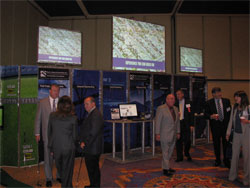 | �
�| Event exhibitors and sponsors contribute to an informative and engaging environment | �
�This year’s meeting was the best yet for the industry-leading construction defect and claims event.
�This year’s seminar concluded on May 13, 2011 with the Construction Defect Community Charitable Foundation Golf Tournament, held at Strawberry Farms Golf Course.
�The Disneyland Hotel in Anaheim, California was the place where more than 1,500 attendees convened for two days of professional development activities and seminars that included CLE workshops and panel discussions of special interest to legal and insurance professionals concerned with construction defect and claims litigation. Key events included “Challenges for Experts in Construction Defect Claims and Litigation,” “Keeping Up with Construction Defect Coverage,” and “Tips for Avoiding the ‘Perfect Storm’ in Handling of Wrap Claims.”
� �  | �
�| Supporting the golf tournament at the 15th hole | �
�This year’s Ollie award was given to George D. Calkins II, Esq. The West Coast Casualty Jerrold S. Oliver Award of Excellence was named in honor of the late Judge Jerrold S. Oliver, and recognizes an individual who is outstanding or has contributed to the betterment of the construction community.
�In addition to being the most comprehensive professional development seminar in the area of construction defects, this year’s seminar was equally valuable as a networking opportunity for members of the industry. People participated in professional development events during the day and then continued networking in the evening at numerous social events. The Lawn Party as well as the legendary Wood, Smith, Henning & Berman events were very well attended. Additional valuable networking events were hosted by a number of industry professionals at the House of Blues, and Tortilla Joe’s.
�As of this writing the 2011, West Coast Casualty's Construction Defect Seminar has applied for or has already received the following continuing education accreditation in the following areas;
�Read the full story…
�For more information about next year’s event, visit West Coast Casualty.
Instant Hotel Tower, But Is It Safe?
March 28, 2012 — CDJ Staff
Broad Sustainable Building has leapfrogged in China’s construction boom by building a thirty-story hotel in just fifteen days in the city of Changsha. According to an article in the Los Angeles Times, most of the building was prefabricated, but most prefabricated buildings require a longer time for assembly. Broad claimed that it cut no corners on safety. However, Zhang Li, a Beijing architect, told the Times that “incredible speed also means incredible risk.”
�At the completion date, the interior was still partially finished. Some rooms were furnished, while others weren’t quite so ready. The hotel will be used to house clients who are visiting Broad and some of its employees.
�Broad called their process “the most profound innovation in human history” and predicted that soon a third of new buildings worldwide would be constructed this way. The company anticipates using the same process to build taller buildings, with hopes of eventually constructing a 150-story building.
�China is currently undergoing a building boom which Zhang attributed to a desire to catch up to the developed world. As a result of this boom, he noted that building inspections are often skipped in China to speed up building.
Read the full story…
Is Construction Heading Off the Fiscal Cliff?
December 20, 2012 — CDJ Staff
After a period of growth, the construction industry lost 20,000 jobs in November, based on the federal jobs data. Damon Scott of New Mexico Business Weekly suggests that contractors may have laid off employees in anticipation of the “fiscal cliff.” Ken Simpson, the chief economist of the National Association of Home Builders said in a press release that “it is discouraging that construction employment is still struggling after three years of expansion in the overall economy.”
Read the full story…
Defect Claims as Occurrences? Check Your State Laws
July 10, 2012 — CDJ Staff
Although four states have defined construction defect claims as occurrences, contractors are still dealing with “coverage gaps for faulty work construction,” says Mike Tsikoudakis in a piece at Business Insurance. He quotes Julian Ehrlich, the senior VP of claims for Aon Risk Services that “one of the interesting and compelling aspects of the issue of coverage for defective construction is that jurisdictions differ, so policyholders don’t know what they’re going to get.” He further notes that “in context of construction defect, the term ‘occurrence’ is ambiguous.”
One problem, as noted by Jeffrey J. Vita, a partner at Saxe Doernberger & Vita, is that construction firms end up needing to simultaneously defend against defect claims and to also file suit to be certain their insurance firms will cover claims. Insurance for construction defect claims is described as “expensive and somewhat limited.” Mr. Vita expects more states to help this situation with new laws, clarifying what is an occurrence.
Read the full story…
Construction Defects Are Occurrences, Says South Carolina High Court
December 20, 2012 — CDJ Staff
The South Carolina Supreme Court has left the legislature’s new, expanded definition of “occurrence” in place, declining to declare it unconstitutional. South Carolina included faulty workmanship as an occurrence in response to a Supreme Court decision, which the court later reversed. One of the parties in that earlier decision, Harleysville Insurance, challenged the new law, claiming that the legislature didn’t have the power to pass a law to overturn a court ruling. The court did not concur.
However, the court did determine that the law was not retroactive and covered only claims filed after the law became effective in May 2011. The Chief Justice of South Carolina noted that “insurance coverage for construction liability lacks clarity, particularly with respect to whether construction defects constitute ‘occurrences’ under construction general insurance policies.”
Read the full story…
Harsh New Time Limits on Construction Defect Claims
April 26, 2011 — April 26, 2011 by Scott F. Sullan, Esq., Mari K. Perczak, Esq., and Leslie A. Tuft, Esq. of
Sullan2, Sandgrund, Smith & Perczak, P.C. in the
HindemanSanchez blogA recent Colorado Supreme Court decision, Smith v. Executive Custom Homes, Inc., 230 P.3d 1186 (Colo. 2010), considerably shortens the time limit for bringing many construction defect lawsuits. Homeowners and homeowner associations risk losing the right to seek reimbursement from builders, developers and other construction professionals unless they carefully and quickly act upon discovery of evidence of any potential construction defect.
�The Statute of Limitations for Construction Defect Claims
�Colorado’s construction defect statute of limitations limits the time for homeowners and homeowners associations to bring lawsuits for construction defects against “construction professionals,” including developers, general contractors, builders, engineers, architects, other design professionals, inspectors and subcontractors. The statute requires homeowners and associations to file suit within two years “after the claim for relief arises.” A claim for relief “arises” when a homeowner or association discovers or reasonably should have discovered the physical manifestation of a construction defect.
�The two-year time limitation applies to each construction defect separately, and will begin to run upon the appearance of a “manifestation” of a construction defect (which may include, for example, a condition as simple as a roof leak or drywall cracks), even if the homeowner or association does not know the cause of the apparent problem.
�The Smith Opinion and its Effect on the Statute of Limitations
�In Smith v. Executive Custom Homes, Inc., the plaintiff homeowner, Mrs. Smith, slipped on ice that had accumulated on her sidewalk because of a leaking gutter and suffered injury. When she first noticed the leak, she reported it to her property manager, who reported it to the builder. The builder attempted to repair the gutter, unbeknownst to Mrs. Smith, and she did not notice further problems until approximately one year after she first observed the leak, when she fell and suffered serious injury. She sued the builder within two years of her injury, but nearly three years after she first learned of the leak.
�The Colorado Supreme Court dismissed Mrs. Smith’s claims as untimely and held that under the construction defect statute of limitations, the two-year period for suing for injuries due to construction defects begins when the homeowner first observes the physical manifestation of the defect, even if the resulting injury has not yet occurred. The court acknowledged that this ruling could result in “unfair results,” especially if a serious and unforeseeable injury occurs more than two years after the first time the homeowner noticed the problem, and as a result the victim is unable to seek redress from those responsible for the defect.
�Read the full story…
�Reprinted courtesy of Scott F. Sullan, Esq., Mari K. Perczak, Esq., and Leslie A. Tuft, Esq. of Sullan2, Sandgrund, Smith & Perczak, P.C., and they can be contacted through their web site.
Contractual Liability Exclusion Bars Coverage
August 2, 2012 — Tred Eyerly, Insurance Law Hawaii
The Fifth Circuit Court of Appeals considered whether coverage existed for a defectively built tennis court in light of a contractual liability exclusion. Ewing Construction Company, Inc. v. Amerisure Ins. Co., 2012 U.S. App. LEXIS 12154 (5th Cir. June 15, 2012).
Ewing Construction Company entered a contract with the School District to construct tennis courts at a school. After completion, the School District complained that the courts were cracking and flaking, rendering them unfit for playing tennis. The School District filed suit, seeking damages for defective construction. It alleged that Ewing breached its contract and performed negligently.
Ewing tendered the underlying lawsuit to Amerisure. Amerisure denied coverage and Ewing filed suit.
Read the full story…
Reprinted courtesy of Tred R. Eyerly, Insurance Law Hawaii. Mr. Eyerly can be contacted at te@hawaiilawyer.com
Joinder vs. Misjoinder in Colorado Construction Claims: Roche Constructors v. One Beacon
July 10, 2012 — David McLain, Higgins, Hopkins, McLain & Roswell, LLC
Often, those practicing in the construction defect field have faced questions concerning the joinder of a party. Recently, the U.S. District Court for the District of Colorado weighed in on the requirements for joinder under the Colorado Rules of Civil Procedure. See Roche Constructors, Inc. v. One Beacon America Ins. Co., 2012 WL 1060000 (D. Colo. 2012). Roche secured a construction contract to build a detention facility for the Lincoln County Sheriff’s Office in Lincoln County, Nebraska. In turn, Roche entered into a subcontract with Dobberstein Roofing Company, Inc. in October 2009 to install the roofing system and other related work at the detention facility. The subcontract agreement required Dobberstein to maintain adequate commercial general liability insurance and to add Roche as an additional insured under the policy. Roche maintained a builder’s risk policy issued by OneBeacon America Insurance Company and Dobberstein secured a certificate of liability insurance underwritten by Transportation Insurance Company (“TIC”). Id. at *1.
Roche alleged that Dobberstein constructed the roofing system in a negligent manner in violation of the subcontract. Roche claims it incurred additional costs to repair structural damage to the roofing system as a result of Dobberstein’s negligent work. In order to cover said damage, Roche tendered insurance claims to OneBeacon and TIC.
Read the full story…
Reprinted courtesy of David McLain, Higgins, Hopkins, McLain & Roswell, LLC. Mr. McLain can be contacted at mclain@hhmrlaw.com
Orange County Home Builder Dead at 93
April 25, 2012 — CDJ Staff
Randall E. Presley was a homebuilder in Southern California for more than thirty years, acting as head of Presley Development Company from 1956 until selling the firm to Lyon Homes in 1987. The two companies merged in 1991 as the Presley Cos. Mr. Presley saw the need in the 1950s to provide people in Southern California with low- to medium-priced quality homes.
�His firm built more than 160 communities and was among the ten largest homebuilding firms in the country, expanding beyond California. Mr. Presley was 93 when he succumbed to pneumonia. He is survived by a wife, three children, seven grandchildren, and 11 great-grandchildren.
� Read the full story…
�
Hilton Grand Vacations Defect Trial Delayed�
October 23, 2012 — CDJ Staff
A settlement agreement between Conti Electric and Westgate Resorts has lead to a delay in starting the trial over construction defect claims and billing disputes over Hilton Grand Vacations a time share tower in Las Vegas. According to the Las Vegas Review-Journal, the dispute includes claims of $23.3 million owed to the general contractor against which the developer has placed $30 million in construction defect claims.
� Read the full story…
�
Florida Property Bill Passes Economic Affairs Committee with Amendments
April 14, 2011 — April 14, 2011 Beverley BevenFlorez - Construction Defect Journal
The Florida Property Bill (HBB 803) was passed by the Economic Affairs Committee by a vote of 11-7, according to Property Casualty 360, after adopting nine new amendments. The additions to the bill included limiting notice of claims to a set number of years, extending the statute of limitation on property claims from five years to six years, among others.
�HB 803 and SB 408, the Senate companion bill, focus primarily on residential property insurance. They make changes to the Florida Hurricane Catastrophe Fund, while also promoting increased notification of policy changes to policyholders. Sections of the bills provide minor fixes such as renaming Citizens Property Insurance Corporation to Taxpayer-Funded Property Insurance Corporation. However, other sections of the bills contain more significant policy changes such as sinkhole coverage and hurricane claims.
�The bills’ intent, according to the SunSentinel.com, is to reduce fraudulent claims and to bring new insurers into the insurance market. However, SunSentinel.com also reports that the bills may drastically increase property insurance premiums.
�Read the full Property Casualty 360 article...
�Read the full Sun Sentinel article...