Construction Law Client Alert: California Is One Step Closer to Prohibiting Type I Indemnity Agreements In Private Commercial Projects
June 15, 2011 — Haight Brown & Bonesteel, LLP
On June 1, 2011 by majority vote, the California Senate passed Senate Bill 474, which would amend Civil Code section 2782, and add Civil Code section 2782.05. The passage of this new law is a critical development for real estate developers, general contractors and subcontractors because it will affect how these projects are insured and how disputes are resolved.
�Civil Code section 2782 was amended in 2007 to prohibit Type I indemnity agreements for residential projects only. Since 2007, various trade associations and labor unions have lobbied to expand those very same restrictions to other projects. These new provisions apply to contracts, entered into after January 1, 2013, that are not for residential projects, and that are not executed by a public entity. The revisions provide that any provision in a contract purporting to indemnify, hold harmless, and defend another for their negligence or other fault is against public policy and void. These provisions cannot be waived.
�A provision in a contract requiring additional insured coverage is also void and unenforceable to the extent it would be prohibited under the new law. Moreover, the new law does not apply to wrap-up insurance policies or programs, or a cause of action for breach of contract or warranty that exists independently of the indemnity obligation.
�The practical impact of this new law is that greater participation in wrap-up insurance programs will likely result. While many wrap-up programs suffer from problems such as insufficient limits, and disputes about funding the self-insured retention, the incentive for the developer or general contractor to utilize wrap-up insurance will be greater than ever before because they will no longer be able to spread the risk of the litigation to the trades and the trade carriers.
�Read the full story…
�Reprinted courtesy of Steve Cvitanovic of Haight Brown & Bonesteel, LLP.
2011 West Coast Casualty Construction Defect Seminar – Recap
June 1, 2011 — CDJ Staff
� 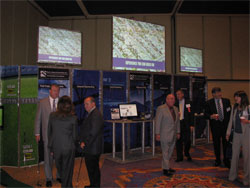 | �
�| Event exhibitors and sponsors contribute to an informative and engaging environment | �
�This year’s meeting was the best yet for the industry-leading construction defect and claims event.
�This year’s seminar concluded on May 13, 2011 with the Construction Defect Community Charitable Foundation Golf Tournament, held at Strawberry Farms Golf Course.
�The Disneyland Hotel in Anaheim, California was the place where more than 1,500 attendees convened for two days of professional development activities and seminars that included CLE workshops and panel discussions of special interest to legal and insurance professionals concerned with construction defect and claims litigation. Key events included “Challenges for Experts in Construction Defect Claims and Litigation,” “Keeping Up with Construction Defect Coverage,” and “Tips for Avoiding the ‘Perfect Storm’ in Handling of Wrap Claims.”
� �  | �
�| Supporting the golf tournament at the 15th hole | �
�This year’s Ollie award was given to George D. Calkins II, Esq. The West Coast Casualty Jerrold S. Oliver Award of Excellence was named in honor of the late Judge Jerrold S. Oliver, and recognizes an individual who is outstanding or has contributed to the betterment of the construction community.
�In addition to being the most comprehensive professional development seminar in the area of construction defects, this year’s seminar was equally valuable as a networking opportunity for members of the industry. People participated in professional development events during the day and then continued networking in the evening at numerous social events. The Lawn Party as well as the legendary Wood, Smith, Henning & Berman events were very well attended. Additional valuable networking events were hosted by a number of industry professionals at the House of Blues, and Tortilla Joe’s.
�As of this writing the 2011, West Coast Casualty's Construction Defect Seminar has applied for or has already received the following continuing education accreditation in the following areas;
�Read the full story…
�For more information about next year’s event, visit West Coast Casualty.
Injured Construction Worker Settles for Five Hundred Thousand
October 28, 2011 — CDJ Staff
An upstate New York man who was injured when an unsecured truss fell off the railings of a scissor lift has settled for $500,000. As the accident happened at the building site for a casino for the Seneca Nation, attorneys for the construction firm had argued that New York labor laws were inapplicable as the injury happened on Seneca Nation land. The state appeals court ruled that as none of the parties involved were Native Americans, it was not internal to the affairs of the Seneca Nation.
Read the full story...
Homeowner Loses Suit against Architect and Contractor of Resold Home
June 14, 2011 — CDJ Staff
The California Court of Appeals in the case of Kizor v. Architects ruled that Mr. Kizor could not make construction defect claims against the architect and contractor of his home, as the defects had caused significant damage to the former owners, and it was they, not Kizor, who could have asserted those claims.
�The background of the case was that John and Miranda Redig hired BRU Architects to design a home. During construction in 2000, they wrote to the roofing supplier complaining about leaks. The leaks were caulked, but the roof continued leaking during rains. The Redigs sold their house to Kizor in 2002, with an addendum to the sale contract protecting themselves from liability for further problems with the roof. “Seller has no responsibility for the condition of the roof and stucco and buyer absolves seller of any liability in connection therewith.”
�In 2006, Kizor sued the architects, contractor, and subcontractor. The defendants moved for summary judgment which was granted. Kizor appealed, and in this current court case, appeal was denied.
�Read the court’s decision
Product Exclusion: The Big Reason Behind The Delay of LEED 2012
July 10, 2012 — Douglas Reiser, Builders Counsel
By now, you have probably heard that the USGBC has decided to delay implementation of its previously named “LEED 2012” rating system. What you might not know is exactly why this is happening. Rest assured that the decision was not made willy nilly ?Äì LEED 2012 had many industrial groups running for the hills.
I have spent the past few weeks reading a number of articles on the backlash. LEED 2012 was intended to create a seismic shift; it was not a mere update. A strict focus on reduction of chemicals, created mass panic that a large number of material providers’ products would essentially be banned from green projects ?Äì meaning most local, state and federal projects.
Read the full story…
Reprinted courtesy of Douglas Reiser of Reiser Legal LLC. Mr. Reiser can be contacted at info@reiserlegal.com
Delays in Filing Lead to Dismissal in Moisture Intrusion Lawsuit
September 9, 2011 — CDJ Staff
The Alabama Court of Civil Appeals has upheld a summary judgment in the case of Franklin v. Mitchell. Walter Mitchell, doing business as Southern Classic Construction built a new home for the Franklins. The Franklins moved into the home in October 2001. In April 2006 they discovered sagging floors in both the bathroom and kitchen. They contacted Mitchell who suggested the flooring might be defective. The Franklins spent eight months attempting to contact the flooring manufacturer.
In March 2007, the Franklins had the home inspected. The sagging was determined to be due to a loss of strength in the decking because of condensation from the air conditioning system. Air returns were not properly sealed and drawing moisture into the structure. There was mold on the decking and floor joints.
When Mitchell was contacted by the Franklins, he told them his one-year warranty had expired but had the HVAC subcontractor, Southern Mechanical Heating & Air (owned by Mitchell’s father, Jim Mitchell), look at the situation. SMHA replaced and braced subfloors. Later, they entered the crawl space to tape ducts, seal the air return, and insulate the air vent housing. The Franklins were not satisfied with the repairs, as not all the ducts were taped, nor were the air vent housings insulated.
Franklin complained to Walter Mitchell who again cited his one-year warranty. Jim Mitchell said he would not report complaints to his insurer, stating that the repairs were unnecessary, that the work had been done correctly in the first place, and it was only done at the request of Walter Mitchell.
In February 2009, the Franklins sued Walker Mitchell. Mitchell denied the claims, citing in part the statute of limitations. Mitchell also filed complaints against three subcontractors, including his father’s firm. Mitchell received a summary judgment as the case started after Alabama’s six-year statute of limitations.
The appeals court rejected the Franklin’s argument that the claim of damage did not start until they were aware it was due to a construction defect. The court noted that as Walter Mitchell was licensed as a “residential home builder, the statute the Franklins cite did not apply, as it concerns architects, engineers, and licensed general contactors.”
Nor did they feel that Mitchells’ claim that his warranty had expired were sufficient to override the statute of limitations, quoting an earlier case, “Vague assurances do not amount to an affirmative inducement to delay filing suit.” Their claim of subsequent negligent repairs was rejected because Mitchell did not direct the specific actions taken by his father’s firm.
Read the court’s decision…
Battle of “Other Insurance” Clauses
March 23, 2011 —
Tred R. Eyerly -
Insurance Law Hawaii - March 23, 2011
The New York Court of Appeals considered the impact of competing “other insurance” provisions located in both a CGL policy and a D&O policy. See Fieldston Property Owners Assoc., Inc. v. Hermitage Ins. Co., Inv., 2011 N.Y. LEXIS 254 (N.Y. Feb. 24, 2011).
�In the underlying case, Fieldston’s officers were charged with making false statements and fraudulent claims with respect to a customer's right to access its property from adjacent streets. Suit was eventually filed against Fieldston and its officers, alleging several causes of action including injurious falsehood. Damages were sought.
�Fieldston’s CGL policy was issued by Hermitage. The “other insurance” provision stated, “If other valid and collectible insurance is available to the insured for a loss we cover . . . our obligations are limited,” but also stated it would share with all other insurance as a primary policy.
�Read the full story...�Reprinted courtesy of Tred R. Eyerly, Insurance Law Hawaii. Mr. Eyerly can be contacted at te@hawaiilawyer.com
Preparing For the Worst with Smart Books & Records
November 7, 2012 — Douglas Reiser, Builders Counsel
Contractors are often too caught up in keeping the wheel of business churning to recognize deficiencies in how their records are managed. Working hard and working often tend to leave little time for consideration of your documents. But all too often I see the unthinkable, a contractor gets into trouble and has to call on its surety for help. At that point, you might finally get your first dose of reality about your records ?Äì and it can cost you.
Read the full story…
Reprinted courtesy of Douglas Reiser of Reiser Legal LLC. Mr. Reiser can be contacted at info@reiserlegal.com
United States District Court Confirms That Insurers Can Be Held Liable Under The CCPA.
June 19, 2012 — Chad Johnson
In D.R. Horton, Inc.-Denver v. The Travelers Indem. Co. of Am., 10-CV-02826-WJM-KMT, 2012 WL 527204 (D. Colo. Feb. 16, 2012), the court was asked to rule on Travelers’[1] motion to dismiss D.R. Horton, Inc. ?Äì Denver’s (“DRH”) claim that Travelers violated the Colorado Consumer Protection Act (“CCPA”).
In the underlying construction defect case (“CD case”), DRH, as the developer and general contractor of a construction project, tendered the defense of the CD case to certain subcontractors and to Travelers as an insurer to those subcontractors. Travelers accepted the duty to defend DRH. DRH hired counsel to defend it, and the attorney fees and costs of suit were billed to Travelers. However, for a period of over five years, Travelers failed to actually pay any portion of the defense of DRH. Finally, on October 31, 2008, Travelers offered checks for payment of only 4% of the costs and fees incurred. DRH then returned the checks to Travelers and provided Travelers with authority to support its position that the amounts in Travelers’ checks were inadequate. Thereafter, Travelers dug its heels in, and resubmitted the same checks.
DRH was then forced to file a coverage action against Travelers for declaratory judgment, breach of contract, bad faith breach of insurance contract, and deceptive trade practices under the CCPA. In its motion to dismiss DRH’s CCPA claim, Travelers’ argued that DRH failed to plead specific facts that Travelers engaged in a deceptive trade practice under C.R.S. § 6-1-105, and DRH failed to plead sufficient facts showing that Travelers’ actions significantly affect the public ?Äì a necessary element of a CCPA claim.
Read the full story…
Reprinted courtesy of Chad Johnson, Higgins, Hopkins, McLain & Roswell, LLC. Mr. Johnson can be contacted at johnson@hhmrlaw.com
An Upward Trend in Commercial Construction?
March 28, 2012 — Melissa Dewey Brumback, Construction Law North Carolina
Year-end economic indicators demonstrate that private commercial construction may be increasing in 2012, primarily as demand grows for new projects built in the United States.
�According to an article in Businessweek, the Architecture Billings Index held at 52 in December, indicating a modest expansion in the market. The American Institute of Architects said that the commercial and industrial component of the number climbed to 54.1 in December, the highest in 10 months.
�The monthly survey of U.S.-based architecture firms is one of the main indicators of nonresidential construction, and these numbers suggest that modest improvement may be on the horizon.
�The information is confirmed by data from the Census Bureau that shows that spending on lodging, office, commercial and manufacturing buildings grew 8.2 percent in November to $9.2 billion from a year ago. These types of commercial and industrial projects are historically canaries in the mine and are usually the first part of the industry to improve as the economy expands.
Read the full story…
��Reprinted courtesy of Melissa Dewey Brumback of Ragsdale Liggett PLLC. Ms. Brumback can be contacted at mbrumback@rl-law.com.
Vegas Hi-Rise Not Earthquake Safe
July 12, 2011 — CDJ Staff
If an earthquake hit Las Vegas, the Harmon Tower would not withstand it. A report from Weidlinger Associates told MGM Resorts that “in a code-level earthquake, using either the permitted or current code specified loads, it is likely that critical structural members in the tower will fail and become incapable of supporting gravity loads, leading to a partial or complete collapse of the tower.” The inspection came at the request of county officials, according to the article in Forbes.
�According to Ronald Lynn, directory of the building division in the county’s development services division, “these deficiencies, in their current state, make the building uninhabitable.” The county is concerned about risks to adjacent buildings.
�MGM Resorts is currently in litigation, separate from the stability issues, with Perini Corp., the builders of Harmon Tower.
� Read the full story…
One to Watch: Case Takes on Economic Loss Rule and Professional Duties
June 28, 2011 — Douglas Reiser, Builders Counsel
According to the Supreme Court of Washington Blog, The Supreme Court heard oral argument in Jackowski v. Hawkins Poe on Thursday, June 16, 2011. The court’s synopsis of the case can be found on the Washington State Court website.
�In short, two home purchasers brought a lawsuit against the home’s sellers, the sellers’ agent and the purchasers’ own agent, alleging claims of fraud, fraudulent concealment, negligent misrepresentation and breach of common law and statutory duties. The trial court dismissed the buyers’ claims on the basis of the economic loss doctrine and Division II reversed, opining that the ELR does not apply to professional duties. The Supreme Court will now look at applying the Independent Duty Doctrine established last year, and whether professional duties (those of the real estate agents) should be reviewed under a different light.
Read the full story…
�Reprinted courtesy of Douglas Reiser of Reiser Legal LLC. Mr. Reiser can be contacted at info@reiserlegal.com
Nevada Supreme Court Reverses Decision against Grader in Drainage Case
June 30, 2011 — CDJ Staff
The Nevada Supreme Court has issued an opinion in the case of Rayburn Lawn & Landscape Designers v. Plaster Development Corporation, reversing the decision of the lower court and remanding the case for a new trial.
�The case originated in a construction defect suit in which Plaster Development Corporation was sued by homeowners. Plaster filed a third-party complaint against its subcontractor, Reyburn. The testimony of Reyburn’s owner was considered to be admission of liability and so the court limited the scope of Reyburn’s closing argument and did not allow the jury to determine the extent of Reyburn’s liability. Reyburn appealed.
�Plaster, in their case, cited California’s Crawford v. Weather Sheild MFG, Inc. The court held the application of these standards, but noted that the “an indemnitor’s duty to defend an indemnitee is limited to those claims directly attributed to the indemnitor’s scope of work and does not include defending against claims arising from the negligence of other subcontractors and the indemnittee’s own negligence.”
�On the matter of law against Reyburn, the court concluded, “Given the conflicting evidence at trial as to whether Reyburn’s work was implicated in the defective retaining walls and sidewalls, and viewing the evidence and inferences in Reyburn’s favor, we conclude that a reasonable jury could have granted relief in favor of Reyburn.” The Nevada Supreme Court conduced that the district court should not have granted Plaster’s motion for judgement.
�Further, the Nevada Supreme Court found that the district court should have apportioned the fees and costs to those claims directly attributed to Reyburn’s scope of work, “if any,” and should not have assigned all attorney costs and court fees to Reyburn.
� Read the court’s decision…
Another Las Vegas Tower at the Center of Construction Defect Claims
November 7, 2012 — CDJ Staff
Accusations are coming from both sides over construction defects at a Las Vegas tower, only this time, it’s not the Harmon Towers, it’s Hilton Grand Vacations, which is part of the Planet Hollywood Resort. The project was originally dubbed PH Towers Westgate, and it was developed by Westgate Resorts, which is suing the contractor, Tutor-Saliba for $10 million over late completion and construction defects.
Among the defects Westgate is claiming are cracked floor tiles in the valet lobby and cracks and delamination of the pool deck. Tutor-Saliba argues that the failure of the valet lobby floor is due to Westgate specifying only 1/16th inch-wide grouting, instead of the specified ¬º inch, and Westgate’s refusal to allow expansion joints on the pool deck has lead to problems there. Westgate’s attorney, Robert Schumacher, attributes the problems to “shoddy construction practices.”
According to the article in the Las Vegas Review Journal, plans were only 60 percent complete when construction began, leading to “thousands of change orders.” Despite not meeting an August completion deadline, Tutor-Saliba is claiming it is owed a $1.5 million bonus nevertheless.
Read the full story…
El Paso Increases Surety Bond Requirement on Contractors
April 25, 2011 — April 25, 2011 Beverley BevenFlorez - Construction Defect Journal
The city of El Paso has recently increased surety bonds required of contractors from $10,000 to $50,000, according to the El Paso Times. Proponents of the increase believe it was necessary to protect homeowners from fly-by-night builders, while opponents argue that the increase will have an adverse effect on an industry in that is already suffering due to the economic slowdown.
�Arguments for and against the increase have been flooding the blogosphere with their views. Christian Dorobantescu on the Small Business Entrepreneur Blog claims that “only about 15% of the city’s 2,500 contractors had been able to secure a higher bond to remain eligible for work after the new requirements were announced.” However, insurance companies have a different take. “From a surety broker standpoint, most contractors will be able qualify for the bond; some will just have to pay higher premium rates to obtain it,” a recent post on the Surety1 blog argues.
�While the increased bond may help homeowners deal with construction defect claims, it is not clear what effect it will have on builders in El Paso.
�Read more from the El Paso Times…
�Read more from the Small Business Entrepreneur Blog…
�Read more from the Surety1 Blog…
Foundation Arbitration Doesn’t Preclude Suing Over Cracks
March 28, 2012 — CDJ Staff
The Louisiana Court of Appeals has reversed the decision of a lower court, allowing a construction defect case to go through. In Greer v. Town Construction Company, the Greers hired Town Construction to build a home in Baton Rouge. The business relationship went sour, with disputes over “costs, change orders, workmanship, and timeliness issues.”
�Town Construction filed an arbitration claim for the unpaid contract balance. In the counterclaim, the Greers made claims of mold and mildew problems, and wall cracks that they attributed to a “structural defect in the foundation.” In arbitration, Town Construction was awarded the full contract balance plus extra costs and interest, while the Greers were awarded for their structural claims.
�Three years later, the Greers found additional cracks and filed a suit against Town Construction. Town Construction argued that the Greer’s lawsuit should be dismissed, as the claims had already been through the arbitration process. The district court agreed with Town Construction and dismissed the suit.
�The appeals court noted that the Greers would have no ground for a suit if the arbitration was a “valid and final judgment,” and went on to note that there was no evidence in the trial record that the arbitration met this qualification. The court noted that although it was clear that both parties had agreed to the decisions of the arbiter, under Louisiana law, arbitration is not final until it has been “rendered by a court with jurisdiction over subject mater and over parties.”
�The court remanded the case to the lower court, noting that “the district court is obligated to first determine whether a valid arbitration award is in existence and had been confirmed before considering the merits of the exception. The court noted that their decision “should not be read to express any opinion as to the merits of the claims or as to the propriety of damages sought in the Greer’s lawsuit.”
Read the court’s decision…
�
Contractor Convicted of Additional Fraud
November 18, 2011 — CDJ Staff
A Pennsylvania contractor in prison for fraud has been convicted with insurance fraud. The York Daily Record reports that Steven D. Gebhart was already in jail for fraud for about $350,000 for work he either failed to finish or even start or by using substandard materials and practices when he was convicted of insurance fraud. Gebbert’s offices were destroyed in a fire that was later determined to be arson. He was not charged with this, but instead for overestimating his losses to the insurance company. Sentencing for the fraud charge will be on December 21.
Read the full story…
When Does a Claim Against an Insurance Carrier for Failing to Defend Accrue?
November 7, 2012 — David McLain, Colorado Construction Litigation
The following is an update on our December 20, 2010 article regarding United States Fire Insurance Company v. Pinkard Construction Company, Civil Action No. 09-CV-01854-MSK-MJW, and its underlying dispute, Legacy Apartments v. Pinkard Construction Company, Case No. 2003 CV 703, Boulder County Dist. Ct. That article can be found here.
The present action, St. Paul Fire and Marine Insurance Co., et al. v. The North River Insurance Co., et al., Civil Action No. 10-CV-02936-MSK-CBS, encompasses the coverage battle that ensued between Pinkard’s insurers, Travelers Indemnity Company of America (“Travelers”) and United States Fire Insurance Company (“USFI”), following the settlement of Legacy’s construction defect claims against Pinkard. A short history of the underlying facts is as follows:
In 1995, Pinkard constructed the Legacy Apartments housing complex in Longmont, Colorado. Following construction, Legacy notified Pinkard of water leaks associated with various elements of construction. Legacy ultimately filed suit against Pinkard in 2003, and would go on to clarify and amend its defect claims in 2004, 2006, and again in 2008. Following Pinkard’s notification of Legacy’s claims, USFI provided a defense to Pinkard, but Travelers refused to do so, on the purported basis that Legacy’s allegations did not implicate property damage under the terms of Travelers’ policy.
Read the full story…
Reprinted courtesy of David M. McLain, Higgins, Hopkins, McLain & Roswell, LLC. Mr. McLain can be contacted at mclain@hhmrlaw.com