Damron Agreement Questioned in Colorado Casualty Insurance v Safety Control Company, et al.
February 10, 2012 — CDJ Staff
Safety Control and EMC appealed the judgment in Colorado Casualty Insurance Company versus Safety Control Company, Inc., et al. (Ariz. App., 2012). The Superior Court in Maricopa County addressed “the validity and effect of a Damron agreement a contractor and its excess insurer entered into that assigned their rights to sue the primary insurer.” Judge Johnsen stated, “We hold the agreement is enforceable but remand for a determination of whether the stipulated judgment falls within the primary insurer’s policy.”
� The Opinion provides some facts and procedural history regarding the claim. “The Arizona Department of Transportation (“ADOT”) hired DBA Construction Company (“DBA”) to perform a road-improvement project on the Loop 101 freeway. Safety Control Company, Inc. was one of DBA’s subcontractors. As required by the subcontract, Safety Control purchased from Employer’s Mutual Casualty Company (“EMC”) a certificate of insurance identifying DBA as an additional insured on a policy providing primary coverage for liability arising out of Safety Control’s work.”
� A collision occurred on site, injuring Hugo Roman. Roman then sued ADT and DBA for damages. “Colorado Casualty tendered DBA’s defense to the subcontractors, including Safety Control. Safety Control and EMC rejected the tender. Roman eventually settled his claims against DBA and ADOT. DBA and ADOT stipulated with Roman for entry of judgment of $750,000; Roman received $75,000 from DBA (paid by Colorado Casualty) and $20,000 from ADOT, and agreed not to execute on the stipulated judgment. Finally, DBA, ADOT and Colorado Casualty assigned to Roman their rights against the subcontractors and other insurers.”
� Colorado Casualty attempted to recover what “it had paid to defend DBA and ADOT and settle with Roman. However, Roman intervened, and argued that “Colorado Casualty had assigned its subrogation rights to him as part of the settlement agreement.” The suit was not dismissed, but the Superior Court allowed Roman to intervene. “Roman then filed a counterclaim against Colorado Casualty and a cross-claim against the subcontractors.”
� All claims were settled against all of the defendants except Safety Control and EMC. “The superior court ruled on summary judgment that EMC breached a duty to defend DBA and that as a result, ‘DBA was entitled to settle with Roman without EMC’s consent as long as the settlement was not collusive or fraudulent.’ After more briefing, the court held the stipulated judgment was neither collusive nor procured by fraud and that EMC therefore was liable to Roman on the stipulated judgment and for his attorney’s fees. The court also held Safety Control breached its subcontract with DBA by failing to procure completed-operations insurance coverage and would be liable for damages to the extent that EMC did not satisfy what remained (after the other settlements) of the stipulated judgment and awards of attorney’s fees.” Safety Control and EMC appealed the judgment.
� Four reasons were given for the decision of the ruling. First, “the disagreement between Roman and Colorado Casualty does not preclude them from pursuing their claims against EMC and Safety Control.” Second, “the settlement agreement is not otherwise invalid.” Third, “issues of fact remain about whether the judgment falls within the EMC policy.” Finally, “Safety Control breached the subcontract by failing to procure ‘Completed Operations’ coverage for DBA.”
� In conclusion, the Superior Court affirmed in part, reversed in part, and remanded . “Although, as stated above, we have affirmed several rulings of the superior court, we reverse the judgment against EMC and remand for further proceedings consistent with this Opinion to determine whether the stipulated judgment was a liability that arose out of Safety Control’s operations. In addition, we affirm the superior court’s declaratory judgment against Safety Control but remand so that the court may clarify the circumstances under which Safety Control may be liable for damages and may conduct whatever further proceedings it deems appropriate to ascertain the amount of those damages. We decline all parties’ requests for attorney’s fees pursuant to A.R.S. § 12-341.01 without prejudice to a request for fees incurred in this appeal to be filed by the prevailing party on remand before the superior court.”
Read the court’s decision…
Construction Defects Lead to Demolition of Seattle’s 25-story McGuire Apartments Building
March 16, 2011 — March 16, 2011 Construction Defect Journal Staff
According to a story published last Thursday in Seattle PI: " The 25-story McGuire Apartments, at Second Avenue and Wall Street, would cost more to fix than the building is worth, according to its owners. Its most serious defect involves steel cables that are corroding inside of concrete slabs because the ends weren’t properly treated with a rust-proof coating and a pocket in the edge of the concrete that wasn’t properly sealed"
�The report by Aubrey Cohen outlines the demolition plans which are expected to take between 12 and 18 months, and will utilize robotic Brokk Machines. The demolition plan calls for one story at a time to be demolished, with the debris to be trucked offsite. Demolition plans aim to minimize disruption to residents and businesses in the area by Limiting work 7 a.m. to 6 p.m. on weekdays and 9 a.m. to 6 p.m. Saturdays with "impact and percussive activities" limited to 8 a.m to 5 p.m weekdays.
�Read More...
Insurer Able to Refuse Coverage for Failed Retaining Wall
October 28, 2011 — CDJ Staff
The Eleventh District of the US Court of Appeals has ruled in the case of Nix v. State Farm Fire & Casualty Company. In this case, the Nixes filed a claim after a portion of the retaining wall in their home collapsed and their basement flooded. State Farm denied the claim “on the ground that the policy excluded coverage for collapses caused by defects in construction and for damage caused by groundwater.”
The court reviewed the Nixes’ policy and found that State Farm’s statement did specifically exclude both of these items. In reviewing the lower court’s ruling, the appeals court noted that State Farm’s expert witness, Mark Voll, determined that the retaining wall “lacked reinforcing steel, as required by a local building code, and could not withstand the pressure created by groundwater that had accumulated during a heavy rainfall.” Additionally, a french drain had been covered with clay soil and so had failed to disperse the groundwater.
The Nixes argued that the flooding was due to a main line water pipe, but their opinions were those of Terry Nix and the contractor who made temporary repairs to the wall. “Those opinions were not admissible as lay testimony. Neither Nix nor the contractor witnessed the wall collapse or had personal knowledge about the construction of the Nixes’ home.”
The lower court granted a summary judgment to State Farm which has been upheld by the appeals court.
Read the court’s decision…
Bill Seeks to Protect Legitimate Contractors
December 20, 2012 — CDJ Staff
The California construction industry sees Senate Bill 863 as a needed help to legitimate construction businesses. The bill introduces regulations that will help shut down fraudulent contractors and help reduce workers’ compensation fraud. John Upshaw of the Independent Roofing Contractors of California described the revenue lost to California and other states as “phenomenal,” saying that “we need to continue the coordinated efforts if we are to see true workers’ compensation reform.”
Read the full story…
2011 West Coast Casualty Construction Defect Seminar – Recap
June 1, 2011 — CDJ Staff
� 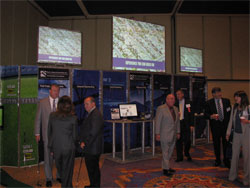 | �
�| Event exhibitors and sponsors contribute to an informative and engaging environment | �
�This year’s meeting was the best yet for the industry-leading construction defect and claims event.
�This year’s seminar concluded on May 13, 2011 with the Construction Defect Community Charitable Foundation Golf Tournament, held at Strawberry Farms Golf Course.
�The Disneyland Hotel in Anaheim, California was the place where more than 1,500 attendees convened for two days of professional development activities and seminars that included CLE workshops and panel discussions of special interest to legal and insurance professionals concerned with construction defect and claims litigation. Key events included “Challenges for Experts in Construction Defect Claims and Litigation,” “Keeping Up with Construction Defect Coverage,” and “Tips for Avoiding the ‘Perfect Storm’ in Handling of Wrap Claims.”
� �  | �
�| Supporting the golf tournament at the 15th hole | �
�This year’s Ollie award was given to George D. Calkins II, Esq. The West Coast Casualty Jerrold S. Oliver Award of Excellence was named in honor of the late Judge Jerrold S. Oliver, and recognizes an individual who is outstanding or has contributed to the betterment of the construction community.
�In addition to being the most comprehensive professional development seminar in the area of construction defects, this year’s seminar was equally valuable as a networking opportunity for members of the industry. People participated in professional development events during the day and then continued networking in the evening at numerous social events. The Lawn Party as well as the legendary Wood, Smith, Henning & Berman events were very well attended. Additional valuable networking events were hosted by a number of industry professionals at the House of Blues, and Tortilla Joe’s.
�As of this writing the 2011, West Coast Casualty's Construction Defect Seminar has applied for or has already received the following continuing education accreditation in the following areas;
�Read the full story…
�For more information about next year’s event, visit West Coast Casualty.
State Farm Too Quick To Deny Coverage, Court Rules
July 22, 2011 — CDJ Staff
On July 13, 2011, Judge Sarah S. Vance of the US District Court issued a rule in the case of Travelers Cas. & Surety Co. of Am. v. Univ. Facilities, Inc. (E.D. La., 2011). In this case, Stanley Smith Drywall was contracted by Capstone Building Corporation to “perform undisclosed work at the facility believed to involve the installation of drywall.” The project involved the design and construction of student residences for the Southeastern Louisiana University in Hammond, Louisiana. In May, 2009, University Facilities, Inc. (UFI) sued Capstone Development Corporation and Capstone On-Campus Management.
�State Farm insured Stanley Smith Drywall and they sought a declaration that they have no duty: “(1) to insure Stanley Smith or CBC, or (2) to defend or indemnify any party against UFI's claims in the pending arbitration.” State Farm contends “(1) there is no "occurrence" to trigger coverage under the policy; (2) only breach of contract claims are asserted; (3) there is no property damage alleged; and (4) various coverage limitations and exclusions apply to prevent coverage.’
�The court concluded that “whether State Farm has a duty to defend in the arbitration must be determined by considering the claims asserted in the arbitration.” However, the arbitration claims were not made part of the record. There, “, the Court cannot determine as a matter of law State Farm's duty to defend on the present record.” The same was true of State Farm’s duty to indemnify. “Stanley Smith and CBC assert that State Farm's motion for summary judgment was filed before any discovery was conducted in the arbitration proceeding or in this case. The Court finds that State Farm has failed to develop the record sufficiently to establish that there is no genuine issue of material fact as to its duty to indemnify Stanley Smith or CBC in the arbitration.’
�The court denied State Farm’s motion for a summary judgment on its duty to defend and indemnify.
� Read the court’s decision…
Injured Construction Worker Settles for Five Hundred Thousand
October 28, 2011 — CDJ Staff
An upstate New York man who was injured when an unsecured truss fell off the railings of a scissor lift has settled for $500,000. As the accident happened at the building site for a casino for the Seneca Nation, attorneys for the construction firm had argued that New York labor laws were inapplicable as the injury happened on Seneca Nation land. The state appeals court ruled that as none of the parties involved were Native Americans, it was not internal to the affairs of the Seneca Nation.
Read the full story...
Vegas Hi-Rise Not Earthquake Safe
July 12, 2011 — CDJ Staff
If an earthquake hit Las Vegas, the Harmon Tower would not withstand it. A report from Weidlinger Associates told MGM Resorts that “in a code-level earthquake, using either the permitted or current code specified loads, it is likely that critical structural members in the tower will fail and become incapable of supporting gravity loads, leading to a partial or complete collapse of the tower.” The inspection came at the request of county officials, according to the article in Forbes.
�According to Ronald Lynn, directory of the building division in the county’s development services division, “these deficiencies, in their current state, make the building uninhabitable.” The county is concerned about risks to adjacent buildings.
�MGM Resorts is currently in litigation, separate from the stability issues, with Perini Corp., the builders of Harmon Tower.
� Read the full story…
School Sues over Botched Pool�
October 23, 2012 — CDJ Staff
The Daily American reports that the Somerset Area School District has alleged that the contractor who repaired and renovated the district’s swimming pool “botched” the job. Now the school has filed a civil case in the Somerset County Court of Common Pleas. The contractor, Wilson Construction Co. would prefer the matter to be settled in binding arbitration.
�The school district alleges that the surface installed by Wilson Construction cracked and bubbled due to improper installation. The manufacturer of the waterproofing system, Dryvit Systems, tested the installation and concluded it was an installation failure instead of a product defect. Dryvit told the district that the exterior walls would have be removed.
�The school district paid Wilson Construction $591,081 for their work. In their lawsuit, they are seeking $594,596 to cover the cost of draining the pool and repairing it.
� Read the full story…
�
Washington Court Limits Lien Rights of Construction Managers
August 17, 2011 — Douglas Reiser, Builders Counsel
A newly filed, yet unpublished, court opinion opines that a construction manager cannot file a construction lien in Washington state. So, how far reaching is this opinion?
�In the case of Blue Diamond Group Inc. v. KB Seattle 1, Inc., et al, a New York construction manager filed a lien against the Westfield Southcenter Mall in Tukwila, Washington. The lien was filed after the owner of a coffee stand failed to pay Blue Diamond for consulting services used in the construction of a kiosk.
�Blue Diamond served as the owner’s agent, assisting with managing subcontractors, vendors and other tasks. The manager’s tasks also included paying invoices, managing deliveries, setting schedules and other site managerial tasks. Blue Diamond was not registered as a contractor under Washington’s RCW 18.27.
Read the full story…
�Read the court’s decision…
�Reprinted courtesy of Douglas Reiser of Reiser Legal LLC. Mr. Reiser can be contacted at info@reiserlegal.com
Bar to Raise on Green Standard
November 7, 2012 — CDJ Staff
Next June, members of the U.S. Green Building Council will be voting on changes to the LEED green building standard. “The bar is getting raised,” said Navad Malin of BuildingGreen, a consulting and publishing firm, in an article in USA Today. Under the proposed guidelines, builders would have to project energy and water use for five years as part of the certification process. However, if the occupants aren’t as green as the builders anticipated, the buildings will not lose their certification.
The new rules will include higher energy standards, award points for avoiding potentially hazardous materials, and even determine what kind of plumbing items can be used.
Read the full story…
Construction Firm Charged for Creating “Hail” Damage
June 19, 2012 — CDJ Staff
A Burlington County, Pennsylvania judge has sentenced a firm and its employee for insurance fraud. In the scam, representatives of Precision Builders visited homes after hailstorms and advised homeowners that they could get new roofs and sidings covered by insurance. Many of the homeowners noted that they had not noticed any hail damage.
After homeowners filed claims, employees of Precision Builders would visit the homes and damage the roofs and sidings consistent with the adjusters’ reports.
One employee of Precision Builders, Dominik Sadowski, has pleaded guilty to third-degree insurance fraud. He has been sentenced to four years probation and 100 hours of community service. Another defendant, Marcin Gradziel, is alleged to have visited and damaged properties. He has plead not guilty.
Read the full story…
Arbitrator May Use Own Discretion in Consolidating Construction Defect Cases
September 1, 2011 — CJD Staff
The Mississippi Court of Appeals has ruled in the case of Harry Baker Smith Architects II, PLLC v. Sea Breeze I, LLC. Sea Breeze contracted with Harry Baker Smith Architects II, PLLC (HBSA) to design a condominium complex, which would be built by Roy Anderson Corporation. All parties agreed to arbitration.
Subsequently, Sea Breeze alleged defects and sought arbitration against the architectural firm and started a separate arbitration proceeding against the contractor. The special arbitrator appointed by the American Arbitrators Association determined that it would be proper to consolidate the two actions “since they arose from a common question of fact or law.” HBSA filed in chancery court seeking injunctive relief and a reversal of the decision. Sea Breeze and Roy Anderson filed a motion to compel the consolidated arbitration.
The court noted that the special arbitrator “established that the contract between Sea Breeze and Roy Anderson expressly allowed for consolidation of the two cases.” Further, the arbitrator “concluded that HBSA expressly agreed to consolidation by written consent through its 2008 letter, through which it insisted upon Roy Anderson’s involvement ‘in any mediation and/or arbitration.’”
The court concluded that the chancery court “did not have the power to fulfill HBSA’s request.” The court affirmed the chancery court’s judgment.
Read the court’s decision…
Minnesota Starts Wide-Ranging Registration of Contractors
July 10, 2012 — CDJ Staff
Minnesota has replaced its Independent Contractor Exemption Certificate program with the Contractor Registration Pilot Project, according to an article in the Martindale-Hubble Legal Library by Michael B. Lapicola. Mr. Lapicola notes that “it will be a violation of the law to contract with or perform construction services for another person without first being registered with the Pilot Project, or to contract with or pay another person to perform construction services if the other person is not registered with the Pilot Project. There are, however, quite a few exceptions, including those who are currently registered with the earlier program. Additionally, independent contractors who do not register can avoid the fine (up to $2,000) by registering within thirty days of fines being levied. Individuals and firms that do not perform building construction or improvements are exempt from the hiring aspects of the statute.
Minnesota’s goal is to “assist state agencies to investigate employee misclassification in the building industry.” Employees of construction firms do not individually register. Rather, the intent of the of law is to stop those who would “require any individual through coercion, misrepresentation or fraudulent means to adopt independent contractor status” or to “knowingly misrepresent or misclassify an individual as an independent contractor.”
Read the full story…
Home Repair Firms Sued for Fraud
September 30, 2011 — CDJ Staff
The Illinois Attorney General has filed a lawsuit in Cook County Circuit Court alleging that two connected firms took money from homeowners and then failed to perform the contracted work. One of the three defendants, Chris Bidigare, was an owner of agent of both Fairway Construction and Maintenance Services, LLC, and Rock Construction Management, LLC.
In once case, according to the article on the OakPark Patch, one homeowner provided a $111,000 down payment, only to have the company cancel the job and refuse to return the money. One homeowner was told by Fairway that she should contact their insurance provider. The insurance provider told her that Fairway’s insurance had been cancelled due to non-payment.
The suit seeks to bar the three defendants from working in home repair in Illinois.
Read the full story…
US Courts in Nevada Busy with Yellow Brass
August 2, 2012 — CDJ Staff
Judge Robert C. Jones, the chief judge of the United States District Court of Nevada, and Judge Peggy A. Leen, a magistrate judge with the same court, have issued orders in cases involving allegations of high-zinc yellow brass plumbing components. Judge Jones issued orders on Waterfall Homeowners Association v. Viega, Inc. and Greystone Nevada, LLC v. Anthem Highlands Community Association on July 9, 2012. Judge Leen issued orders on Southern Terrace Homeowners Association v. Viega, Inc. on July 10, and The Seasons Homeowners Association, Inc. v. Richmond American Homes of Nevada, Inc. on July 19.
Chief Judge Jones held an omnibus hearing on Waterfall v. Viega on June 12. During that hearing “Chief Judge Jones had already agreed that the claims against the product manufacturers should be be severed from the majority of the other claims and that discovery should proceed on different tracks.” Judge Leen ordered that the Southern Terrace claims be referred to Chief Judge Jones to determine if it should be consolidated with other yellow brass cases.
Chief Judge Jones’s decision in Greystone Nevada rests on issues of whether the affected homeowners had signed arbitration agreements. The judge found that the “Defendant’s claims that the seven homeowners they have identified are subsequent purchasers who need not arbitrate with Greystone is definitively refuted by the evidence.”
Judge Leen cites the Greystone decision in her ruling on Seasons Homeowners Association v. Richmond American Homes of Nevada. Richmond seeks to compel individual arbitration, stating that “the arbitration clause used singular rather than plural terms, and therefore, class arbitration was foreclosed.” Judge Leen determined that “under Nevada law, a homeowners association has statutory authority to represent homeowners associations in these types of actions. She did, however, accept Richmond’s argument that they could compel arbitration.
The Waterfall order involves an attempt by two homeowners associations to seek a class action against seventeen defendants, the first twelve of whom are described as “the Viega Defendants” and “the Uponor Defendants.” Chief Judge Jones notes that “many of these Defendants have been sued in identical class actions by the same law firms, but with different named defendants.” The homeowner association seek to “represent their own 998 members directly but also wish to represent up to 10,000 homeowner associations representing up to 250,000 similarly situated homeowner members throughout the Las Vega area via this class action.”
The judge has denied the Viega Defendants’ attempt to deny class certification, noting that the plaintiffs “argue that they intend to argue for class certification under Rule 23(b)(3). He also denied the motions by the two groups of the Viega Defendants. The U.S. Viega Defendants sought to be dismissed from the case for a variety of reasons. The judge noted of the claim that the plaintiffs had no injury of fact and are not alleging actual damage is contradicted by the allegations of actual damage made by the plaintiffs. ”They have alleged that the parts are defective and have already begun to corrode in at least a few sample circumstances, even if they have not yet failed.” To the argument that there re not particular claims made against defendants, the judge notes, “it is clear from the Complaint which Defendants are alleged to have manufactured and sold which brands of allegedly defective products, and which Defendants are alleged to have installed them.”
The German Viega firms also sought to be dismissed from the suit, noting that “they have no property, employees, accounts, advertisements, etc. in Nevada and have not sold any products in Nevada.” However, the judge notes that “at least Waterfall, and perhaps Red Bluff, was still under construction when Viega, Inc. became the sole shareholder of Vanguard Industries, Inc.”
Finally, both of Chief Judge Jones’s rulings cite a related case in the U.S. District Court for the District of Minnesota involving a class action settlement for those with F1807 systems. He notes in both these cases that “Plaintiffs disclaimed any claims based upon F1807 components.”
Read the courts' decisions…
Waterfall Homeowners Association v. Viega, Inc.
Greystone Nevada, LLC v. Anthem Highlands Community Association
Southern Terrace Homeowners Association v. Viega, Inc.
The Seasons Homeowners Association, Inc. v. Richmond American Homes of Nevada, Inc.
Statutes of Limitations May be the Colorado Contractors’ Friend
April 18, 2011 — April 18, 2011 Beverley BevenFlorez - Construction Defect Journal
Albert Wolf, a principal in Wolf Slatkin & Madison P. C., has written an interesting article on statutes of limitations in construction defect claims in Colorado. While Wolf states that in most cases, “construction defect claims against construction industry participants (contractors, subcontractors, architects, engineers, etc.) requires that suits be started within two years after construction defects have been or should have been—in the exercise of reasonable diligence (care)—discovered,” if a project used the AIA General Conditions (AIA Document A2010) before the 2007 edition, the “statutes of limitations begin to run (accrue) at either substantial completion or breach by the contractor (installation of defective work), depending on the circumstances.”
�“That’s a huge difference,” Wolf writes in his article. “For example, if the structural defect caused by faulty foundation work is not discovered or discoverable until walls begin to exhibit cracking more than two years after the building is completed, the owner’s claim against the contractor may be barred if the AIA provision is applied.”
�Read the full story...
Faulty Workmanship Causing Damage to Other Property Covered as Construction Defect
September 30, 2011 — Tred Eyerley, Insurance Law Hawaii
In yet another recent construction defect case, the Illinois Court of Appeal found for coverage. See Milwaukee Mut. Ins. Co. v. J.P. Larsen, Inc., 2011 Ill. App. Ct. LEXIS 872 (Ill. Ct. App. Aug. 15, 2011).
Weather-Tite, Inc. hired Larson as a subcontractor to apply sealant to windows installed by Weather-Tite in a condominium building. The windows subsequently leaked and caused water damage. The homeowner’s association sued Weather-Tite for breach of express and implied warranties. Weather-Tite filed a third-party complaint against Larsen alleging that, if it was liable to the association for breach of warranty, Larsen was liable for contribution as a joint tortfeasor. Weather-Tite and Larsen both tendered defenses to Milwaukee Insurance. The tenders were denied and Milwaukee Insurance filed suit to determine rights under the policy.
Cross-motions for summary judgment were filed by all parties. The trial court granted Milwaukee Insurance’s summary judgment motion as to Weather-Tite, but granted Larsen’s cross-motion against Milwaukee Insurance.
On appeal, the appellate court considered whether the underlying pleadings alleged facts demonstrating "property damage" resulting from an "occurrence" within the terms of the policy.
Read the full story…
Reprinted courtesy of Tred R. Eyerly, Insurance Law Hawaii. Mr. Eyerly can be contacted at te@hawaiilawyer.com