Construction Defects Leave Animal Shelter Unusable�
October 23, 2012 — CDJ Staff
The Press Democrat reports that the Healdsburg Animal Shelter is proceeding in its lawsuit against the architect, general contractor, and subcontractors of its unfinished new facility. Shelter officials described the building as “effectively uninhabitable,” and the board has suggested that the building might have to be demolished. The chair of the shelter board told donors that “your investment is protected.”
�The defects in the building include cracked concrete slabs and gaps around windows. However, even without these defects, the shelter alleges that the architect failed to correct design flaws.
� Read the full story…
�
Loose Bolts Led to Sagging Roof in Construction Defect Claim
February 10, 2012 — CDJ Staff
Though the sagging roof is neither leaking nor a safety hazard, the town of Waynesville, North Carolina is suing the builder of its new fire station, as reported in the Smoky Mountain News. The engineers who examined the roof found a substantial number of loose bolts in the roof trusses. Additionally, the trusses themselves have become bent.
� Tom Galloway, Waynesville’s Town Manager said “it needs to be remedied and fixed.” He said that the builder, Construction Logic, “never indicated a willingness to fix the roof.” The town is seeking the cost of repair, which Galloway estimated could be $400,000, and an additional $30,000 in damages. The suit states that Construction Logic failed to follow the plan specifications for the roof.
Read the full story…
2011 West Coast Casualty Construction Defect Seminar – Recap
June 1, 2011 — CDJ Staff
� 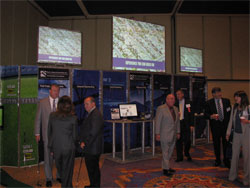 | �
�| Event exhibitors and sponsors contribute to an informative and engaging environment | �
�This year’s meeting was the best yet for the industry-leading construction defect and claims event.
�This year’s seminar concluded on May 13, 2011 with the Construction Defect Community Charitable Foundation Golf Tournament, held at Strawberry Farms Golf Course.
�The Disneyland Hotel in Anaheim, California was the place where more than 1,500 attendees convened for two days of professional development activities and seminars that included CLE workshops and panel discussions of special interest to legal and insurance professionals concerned with construction defect and claims litigation. Key events included “Challenges for Experts in Construction Defect Claims and Litigation,” “Keeping Up with Construction Defect Coverage,” and “Tips for Avoiding the ‘Perfect Storm’ in Handling of Wrap Claims.”
� �  | �
�| Supporting the golf tournament at the 15th hole | �
�This year’s Ollie award was given to George D. Calkins II, Esq. The West Coast Casualty Jerrold S. Oliver Award of Excellence was named in honor of the late Judge Jerrold S. Oliver, and recognizes an individual who is outstanding or has contributed to the betterment of the construction community.
�In addition to being the most comprehensive professional development seminar in the area of construction defects, this year’s seminar was equally valuable as a networking opportunity for members of the industry. People participated in professional development events during the day and then continued networking in the evening at numerous social events. The Lawn Party as well as the legendary Wood, Smith, Henning & Berman events were very well attended. Additional valuable networking events were hosted by a number of industry professionals at the House of Blues, and Tortilla Joe’s.
�As of this writing the 2011, West Coast Casualty's Construction Defect Seminar has applied for or has already received the following continuing education accreditation in the following areas;
�Read the full story…
�For more information about next year’s event, visit West Coast Casualty.
Preparing for Trial on a Cause of Action for Violation of Civil Code section 895, et seq.�
May 10, 2012 — Samir R. Patel, Esq., Lorber, Greenfield, & Polito, LLP
In 2002, the California Legislature enacted the Right to Repair Act (hereinafter “SB-800”), as codified in Title VII of the Civil Code. As set forth in Civil Code section 895, et seq., SB-800 established a set of standards for residential construction, and provides a statutory protocol to address alleged violations of those standards. SB-800 applies to all new single family homes sold after January 1, 2003, and it created its own cause of action governed completely by its own terms, in that in order to state a cause of action under SB-800, a plaintiff may only allege a violation of the Act. (Civ. Code, § 938.) Under Civil Code sections 896, 897, 943, and 944, the Legislature made it clear that it intended to create a single cause of action for construction defects in homes that fall under the purview of SB-800. By passing SB-800, the Legislature eliminated multiple and often redundant or conflicting causes of action, burdens of proof, statutes of limitations, and types of damages that were common in construction defect actions prior to the enactment of the same.
�Civil Code section 895, et seq. has significantly changed the landscape of construction defect lawsuits. Yet, for years, the only attention given to the statutes focused solely on the codified pre-litigation process that requires plaintiffs and builders to meet and confer regarding defects and attempt a process to repair the alleged defects before litigation is pursued. A major impediment to the implementation of the pre-litigation procedures has often been that the statutes specifically state that the information obtained during the pre-litigation process is admissible at trial. Hence, through use of the pre-litigation process, plaintiffs’ counsel can engage in a builder funded fishing expedition and later use the information obtained to advance their litigation goals. As such, many builders have chosen to opt out of codified pre-litigation process altogether, an option which the builder can elect within their Purchase and Sale Agreements.
�Recently, counsel for builders throughout California have turned their attention to the “exclusive remedy” aspect of SB-800 by seeking, often successfully, to limit plaintiffs to a single cause of action for violation of SB-800. Civil Code section 943 makes clear that a cause of action for violation of SB-800 performance standards is a plaintiff’s sole remedy for a residential construction defect action. Civil Code section 943 states:
�Except as provided in this title, no other cause of action for a claim covered by this title or for damages recoverable under 944 is allowed. (Civ. Code, § 943.) Â
�The question remains: what is the benefit of requiring plaintiffs to trim down their complaint and eliminate their tried and true common law causes of action, and requiring them to pursue only a single cause of action for violation of SB800?
�The construction standards enumerated within SB-800 include fifty-plus functionality standards. On their face, any benefit to pursuing a construction defect action under a single cause of action for violation of SB-800 initially appears trivial at best, in light of the fact that a jury may be very confused with the complexity of the functionality standards set forth within the Civil Code. Nevertheless, Title VII of the Civil Code actually contains numerous provisions that builders can utilize to their benefit throughout the process of construction defect litigation, including during preparation for trial.
�First and foremost, counsel for builders can assert numerous affirmative defenses that will be beneficial if the matter proceeds to trial. These affirmative defenses, as codified in Civil Code section 945.5, include mitigation, in whole or in part, for damages caused by: an unforeseen act of nature; a homeowner’s failure to allow reasonable and timely access for inspections and repair under the pre-litigation procedures; the homeowner’s failure to follow the builder’s recommendations and commonly accepted homeowner maintenance obligations; ordinary wear and tear; misuse; abuse; or neglect. Builders should include these affirmative defenses within their responsive pleadings and as trial approaches, prepare appropriate motions in limine and request special jury instructions regarding the same. As frustrated builders and their attorneys are well aware, many construction defect suits result from a homeowner’s failure to properly maintain their property in a manner that is consistent with normal maintenance procedures and guidelines. Furthermore, within the ten year statute of limitations for most defects, ordinary wear and tear is often attributable to numerous deficiencies alleged by plaintiffs. The affirmative defense for a homeowner’s failure to allow inspections and repairs is also vital, as plaintiffs’ counsel may encourage a homeowner to forego the repair and seek monetary damages, allowing plaintiffs’ counsel to ultimately obtain their share of attorney’s fees. Therefore, the SB-800 statutes provide the builder with recourse and distinctive mitigation defenses that were previously and confusingly mixed into tort and contract related defenses. These affirmative defenses can also be utilized by counsel during the cross-examination of plaintiff homeowners and expert witnesses. Defense counsel should fully grasp these defenses and utilize them as defense themes throughout litigation.
�As a plaintiff is limited to a single cause of action for violation of SB-800, if defense counsel has failed to properly eliminate excessive tort and contract causes of action prior to trial, a motion for summary adjudication, or at the very least, a motion for judgment on the pleadings should be brought to limit the introduction of evidence outside of a single cause of action for violation of SB-800. Practical judges are always looking for ways to streamline and expedite trials, and they are currently ruling that SB-800 is the exclusive remedy available to plaintiffs. In fact, plaintiffs’ firms in SB-800 matters are now voluntarily limiting their complaints to this one cause of action.
�Special jury instructions can also be crafted to limit a jury’s computation of damages pursuant to Civil Codesection 944, which provides the method for computing damages within a construction defect action, as follows:
�If a claim for damages is made under this title, the homeowner is only entitled to damages for the reasonable value of repairing any violation of the standards set forth in this title, the reasonable cost of repairing any damages caused by the repair efforts, the reasonable cost of repairing and rectifying any damages resulting from the failure of the home to meet the standards, the reasonable cost of removing and replacing any improper repair by the builder, reasonable relocation and storage expenses, lost business income if the home was used as a principal place of a business licensed to be operated from the home, reasonable investigative costs for each established violation, and all other costs or fees recoverable by contract or statute. (Civ. Code, § 944.) [Emphasis added.]
�Civil Code section 944 specifically prohibits recovery for damages outside the scope of its explicit language as it states “the homeowner is only entitled to ... damages for the reasonable value of repairing any violation of the standards set forth in this title....” [Emphasis added.] The statute ultimately provides a “reasonableness” standard for the computation of damages that did not exist when computing damages on traditional common law tort and contract claims. Therefore, defense counsel should prepare special jury instructions to limit evidence of damages introduced at trial to the reasonable value of repairing any violation of the standards, and to exclude any evidence of damages beyond the reasonableness standard. Defense counsel should seize the opportunity to utilize the theme of “reasonableness” when attacking plaintiffs’ allegations and plaintiffs’ proposed repair methodology throughout the discovery process and at trial.
�Defense counsel may also prepare a motion in limine or special jury instruction regarding the limitation of evidence regarding defects that did not cause resultant damage. Civil Code section 897 states:
�Intent of Standards
�The standards set forth in this chapter are intended to address every function or component of a structure. To the extent that a function or component of a structure is not addressed by these standards, it shall be actionable if it causes damage. (Civ. Code, § 897.) [Emphasis added.]
�Defense counsel can argue that the introduction of any evidence supporting a claim for construction-related deficiencies that are not enumerated within Civil Code section 896, or for deficiencies where no damage has occurred is prohibited and must be excluded at trial. This requirement of resultant damages is familiar as the general rule was previously established in Aas v. Superior Court (2000) 24 Cal.4th 627, in which the California Supreme Court held that there is no tort recovery for construction defects that have not actually caused property damage. The legislature effectively codified this rule within Civil Code section 897.
�A motion in limine can also be crafted to limit expert testimony to the standards enumerated in Civil Code section 896, and to deficiencies that caused damage pursuant to Civil Code 897. The motion in limine can be based upon Civil Code section 943 and the fact that claims for defects in homes which were sold after January 1, 2003 may only be pursued under a single cause of action for violation of SB-800. As such, expert testimony should be controlled by the standards set forth in Civil Code section 896. Furthermore, throughout a construction defect matter, defense counsel should ensure that their experts are well versed with the standards and that they can provide testimony that utilizes the same. Defense counsel’s knowledge of the standards will also be helpful during the cross-examination of plaintiffs’ expert witnesses.
�If, despite the efforts of defense counsel, the complaint still has numerous causes of action, or if only some homes fall under the purview of SB-800 while others do not, defense counsel can utilize a motion to bifurcate trial. The motion’s basis is that a cause of action for violation of SB-800 will require the introduction of evidence regarding the violations of the fifty-plus standards, and the tort and contract-based claims would also require the introduction of a wide range of evidence to prove each cause of action. For example, in order to prove the tort causes of action, plaintiffs must prove elements such as: duty, breach, proximate and actual causation, and that the builder placed the homes into the stream of commerce. (See Richards v. Stanley (1954) 43 Cal.2d 60, 63; Kriegler v. Eichler Homes, Inc. (1969) 269 Cal.App.2d 224, 227.) On the contract causes of action, plaintiffs must prove the existence of a valid written contract for the sale of the home, including proof regarding the existence of basic contractual elements such as offer, acceptance, and consideration. (Civ. Code, § 1624 subd. (a); Roth v. Malson (1997) 67 Cal.App.4th 552, 557.) Defense counsel can argue that exposing the jury to elements that may or may not be applicable to all of the homes in the action will complicate and confuse the jury. Thus, concurrently exposing the jury to the SB-800 claims and the non-SB-800 claims will necessitate undue consumption of time, and create the substantial danger of undue prejudice of confusing the issues or misleading the jury.
�One of the most important and relevant features of the SB-800 statutes is that they include shortened statutes of limitation as to certain enumerated defects. The codified statutes of limitations apply from the date of “close of escrow,” and are much more definitive than statutes of limitations regarding tort and contract claims. Therefore, they can be utilized within a motion for summary adjudication in cases where only one or a few defects are alleged. For example, under Civil Code section 896, et seq., there is a five year limitation on paint (Civ. Code, § 896, subd. (g)(1)); a four year limitation on plumbing fixtures (Civ. Code, § 896, subd. (e)); a three year limitation on landscaping (Civ. Code § 896, subd. (g)(12)); and a one year limitation on irrigation systems and drainage (Civ. Code, § 896, subd. (g)(7)). The non-SB-800 claims are subject to a four year statute of limitation for patent defects and a ten year statute of limitation for latent defects. (See Code of Civ. Proc., §§ 337.1, 337.15.) The contrast between the statute of limitations for the SB-800 claims and non-SB-800 claims can complicate a matter at trial, further establishing the necessity to limit plaintiffs to a single cause of action for violation of SB-800. Hence, defense counsel should also utilize a motion to bifurcate the statute of limitations issues from the issue of liability if a question of fact exists. If successful on the motion to bifurcate, plaintiff’s counsel will be barred from the introducing evidence at trial regarding a defect where the statute of limitations has run.
�Defense counsel should also seek to simplify the construction standards for the jury. Ultimately, by drafting jury instructions and a special verdict form that is easy to navigate, counsel can promote an easy interpretation of the standards enumerated within the Civil Code. The best route for drafting a special verdict form is to draft it as a check-list, similar to a traditional real estate walk-through check-list. By incorporating the shortened statutes of limitations into the special verdict form, defense counsel can effectively frame the case for the jury. The special verdict form should also allow the jury to easily eliminate any claim for damages that is mitigated, in whole or in part, through the codified affirmative defenses. Defense counsel should also consider drafting a trial brief that effectively and simplistically provides the trial court judge with an understanding of the specific defects before the court, and simultaneously notes which Civil Code standards are implicated and the scope of the same. If the trial judge is not well versed in construction defect litigation, defense counsel should be all the more careful in breaking down the parameters and limitations codified within SB-800 for the court.
�The strategies outlined within this article are only a few tactics that can be utilized to defend a construction defect suit. Depending on the defect allegations within any particular case, defense counsel should become intimately familiar with Title VII of the Civil Code and use all aspects of the same to their advantage. If not, plaintiffs’ counsel will have the advantage during “court-house step” settlement discussions and at trial.
� Printed courtesy of Samir R. Patel, Esq. of Lorber, Greenfield, & Polito, LLP. Mr. Patel can be contacted at spatel@lorberlaw.com.
�
District Court Awards Summary Judgment to Insurance Firm in Framing Case
August 4, 2011 — CDJ Staff
In the case of Continental Western Insurance Company v. Shay Construction Inc., Judge Walker Miller has granted a summary judgment against Shay Construction and their co-defendant, Milender White Construction Company.
�Shay was the framing subcontractor for Milender White on what the court described as “a major construction project in Grand County, Colorado.” Two of Shay’s subcontractors, Wood Source Inc. and Chase Lumber Company furnished materials, labor, and equipment to Shay. They subsequently sued for nonpayment and sought to enforce mechanic’s liens, naming both Shay and Milender as defendants. Milender White alleged that Shay had “breached its obligation under its subcontracts with Milender White.”
�Shay’s insurance provider, Continental Western, stated that its coverage did not include “the dispute between Shay, its subcontractors, particularly the cross claims asserted by Milender White.” Shay then sued Continental Western, alleging breach of contract and statutory bad faith.
�The court, however, has found with Continental Western and has granted them a summary judgment. They found “no genuine issue as to any material fact.” The judge did not side with Continental Western on their interpretation of the phrase “those sums that the insured becomes legally obligated to pay as damages.” The court found that the Colorado courts have not limited this to tort actions only. However, as Milender’s cross claim included claims of faulty workmanship on the part of Shay, Judge Miller found for Continental.
Read the court’s decision…
Loss Caused by Seepage of Water Not Covered
July 10, 2012 — Tred Eyerly, Insurance Law Hawaii
The anti-concurrent clause in a homeowner’s policy barred coverage for damage caused by hidden seepage. Boazova v. Safety Ins. Co., 2012 Mass. LEXIS 462 (Mass. May 29, 2012).
The insured had a concrete patio built along the rear wall of her house at a grade higher than the home’s foundation. Years later, severe deterioration was discovered in the floor joists, wall studs and other parts of the home. The insured held a homeowner’s policy with Safety. An inspector hired by Safety determined the deterioration was caused by the placement of the concrete patio slab adjacent to the wall of the house, allowing water to seep onto the top of the foundation.
Safety denied coverage because the damage was caused by a combination of surface water, deterioration, settling and improper construction of the concrete patio.
Read the full story…
Reprinted courtesy of Tred R. Eyerly, Insurance Law Hawaii. Mr. Eyerly can be contacted at te@hawaiilawyer.com
Manhattan Developer Breaks Ground on $520 Million Project
November 18, 2011 — CDJ Staff
Rebuilding an area of Midtown West that has been condemned for decades, the Gotham Organization has broken ground on a 1,200-unit project that will include housing for a variety of household incomes and a school. One unit of the project will be affordable housing for families of annual incomes up to $40,000. Another will be for middle-income households. Additionally, there will be a 31-story tower with 550 luxury units.
The site CityBiz quotes Mayor Michael Bloomberg, as saying that the project “will grow our economy by creating 2,900 construction-related jobs.” The president of the Gotham Organization, David L. Picket notes that it will “create hundreds of new jobs, generate millions of dollars in revenue for the construction industry, contribute towards the building of a new primary, and provide homes to thousands of New Yorkers.”
Read the full story…
Water District Denied New Trial in Construction Defect Claim
August 16, 2012 — CDJ Staff
The United District Court in Tampa, Florida has rejected the motion by Tampa Bay Water for a new trial in their claims that HDR Engineering negligently designed the C.W. Bill Young Regional Reservoir. The claims went to a jury trial, at the end of nineteen days, the jury deliberated for four hours, finding for HDR Engineering. In rejecting Tampa Bay’s motion, the judge noted that “on close examination, TBW’s contentions have little to do with the factual determinations of the jury, which evidently concluded that TBW did not meet its burden of proof, an unsurprising conclusion, considering HDR’s evidence and the weaknesses in TBW’s evidence.”
The court cited an earlier decision that “a new trial may be granted where the jury’s ‘verdict is against the great, not merely the greater weight of the evidence.’” However, the court found that the jury’s verdict “was well supported by the evidence” and that “TBW’s case showed signs of weakness at virtually every turn.” TBW’s expert “changed his opinion late in the case concerning the culpability of the contractor.” As a result, “Brumund’s change in opinions effectively bolstered HDR’s faulty construction defense.”
TBW also raised claims a pre-trial order prevented it “from introducing evidence that HDR did not fulfill its contractual quality control responsibilities” and that evidentiary rulings prevented “TBW from introducing evidence concerning quality control.” However, TBW dismissed its claims over quality control, then “attempted no less than three times during ?Ķ testimony to introduce evidence of the purpose of the quality control requirement and quality control assurance.”
TBW also contended “that it was precluded from introducing evidence that HDR’s inspectors never reported that the protective layer exceeded three feet after inspecting the work as part of HDR’s quality control duties.” The court noted that “TBW asked these very questions of HDR’s Engineer of Record.” The court also found that testimony regarding photographs of the construction was properly excluded as TBW never entered the photos into evidence.
TBW had made an argument for a jury view. Prior the trial “after discussion, and to their credit, the parties agreed to a jointly-prepared helicopter ‘flyover’ video.” The court noted that “the size and physical characteristics of the reservoir were adequately and effectively depicted in the video.” The hazards the jury did not, then, have to encounter included the narrow, unpaved rim of the reservoir, snakes, and alligators.
Read the court’s decision…
California Posts Nation’s Largest Gain in Construction Jobs
March 28, 2012 — CDJ Staff
California added about 8,900 construction jobs in January, 2012, as compared to December, 2011, leading the nation in the number of added construction jobs. Thirty-four other states also saw added construction jobs. A year prior, only twenty-eight states added construction jobs. The Associated General Contractors of America analyzed the monthly report from the Labor Department. Ken Simonson, the chief economist for the Associated General Contractors of America noted that “the gains this January partly reflect very mild weather this winter and exceptionally cold and snowy conditions a year before.”
Read the full story…
Celebrities Lose Case in Construction Defect Arbitration
May 26, 2011 — CDJ Staff
An arbitration panel has ruled that problems with the Idaho home of actors Tom Hanks and Rita Wilson were not due to construction defects but rather to “poor design and bad architectural advice.” The couple had settled with the architectural firm, Lake Flato of San Antonio, Texas for $900,000 and was subsequently seeking $3 million from Storey Construction of Ketchum, Idaho.
Problems with the couple’s home “included leaking roofs, inadequate drainage, fireplaces that did not vent properly and an inadequate air-conditioning system. In 2003, sliding snow from the roof damaged kitchen windows and roof components.”
The arbitration panel, according to the report in the Idaho Mountain Express and Guide, noted that “Hanks and Wilson were responsible for the full $167,623 cost of arbitration, but further denied a Storey Construction counterclaim that alleged Hanks and Wilson filed their claim out of malice.”
Read the full story…
Construction Defects Not Occurrences under Ohio Law
November 7, 2012 — CDJ Staff
Concluding the “claims of defective construction or workmanship brought by a property owners are not claims for ‘property damage’ caused by an ‘occurrence’ under a commercial general liability policy,” the Supreme Court of Ohio has ruled in Westfield Insurance Co. v. Custom Agri Systems, Inc. In the underlying case, Custom Agri Systems, Inc. built a grain bin as a subcontractor to Younglove Construction, LLC. Younglove had been contracted by PSD Development, which withheld payment, claiming it had suffered damages due to defects in Custom Agri System’s work. Younglove filed a complaint against Custom Agri, which filed complaints against its subcontractors. Custom Agri also requested that its insurer, Westfield Insurance Company, defend and indemnify it. Westfield claimed that it had no such duty. The Ohio Supreme Court concurred.
The decision notes that “Custom was being sued under two general theories: defective construction and consequential damages resulting from the defective construction.” Westfield argued that none of the claims were “for ‘property damage’ caused by an ‘occurrence” and therefore none of the claims were covered under the CGL policy.” Further, Westfield argued that “even if the claims were for property damage caused by an occurrence, they were removed from coverage by an exclusion in the policy.”
The case was filed in the US District Court which issued a summary judgment for Westfield. The plaintiff appealed and Sixth Circuit Court of Appeals certified the questions to the Supreme Court of Ohio.
The court noted that “all of the claims against which Westfield is being asked to defect and indemnify Custom relate to Custom’s work itself.” And so, the court concluded that they “must decide whether Custom’s alleged defective construction of and workmanship on the steel grain bin constitute property damage caused by an ‘occurrence.’” However, the court noted that under the terms of the insurance contract, an occurrence is defined as “an accident, including continuous or repeated exposure to substantially the same general harmful conditions,” and the court noted that the “natural and commonly accepted meaning” of “accident” is something “unexpected, as well as unintended.”
The Ohio Supreme Court also looked at court decisions in other places, and found that in many similar cases, courts have concluded that construction defects are not occurrences.
In a dissenting opinion, Justice Pfeifer argues that “if the defective construction is accidental, it constitutes an ‘occurrence’ under a CGL policy.” Justice Pfeifer characterized the majority’s definition of “accidental” as “broad, covering unexpected, unintentional happenings.”
Read the court’s decision…
Cogently Written Opinion Finds Coverage for Loss Caused By Defective Concrete
November 7, 2012 — Tred Eyerly, Insurance Law Hawaii
If ever in need of a concise, well-reasoned opinion on “occurrence,” “property damage” and applicability of the business risk exclusions, turn to Pamperin Rentals II, LLC v. R.G. Hendricks & Sons Construction, Inc., 2012 Wis Ct. App. LEXIS 698 (Wis. Ct. App. Sept. 5, 2012).
A contractor was hired to install concrete during construction of seven gas stations. Red-D-Mix provided the concrete. The contractor and Red-D-Mix were eventually sued by the gas stations, based upon allegations that the concrete was defectively manufactured and installed. The gas stations alleged that Red-D-Mix supplied concrete that was defective and resulted in damages, including the need to repair nearby asphalt.
Red-D-Mix tendered to its insurers, who denied coverage. Suit was filed and the insurers moved for summary judgment. The trial court determined there were no allegations of either “property damage” or an “occurrence.” Therefore, there was no duty to defend or indemnify Red-D-Mix.
Read the full story…
Reprinted courtesy of Tred R. Eyerly, Insurance Law Hawaii. Mr. Eyerly can be contacted at te@hawaiilawyer.com
Florida Construction Defect Case Settled for $3 Million
June 19, 2012 — CDJ Staff
The Runaway Beach Club Condominium Association of Kissimmee, Florida has settled its construction defect claims against the parties involved in the construction and development of the buildings. The association claimed that defective roofs and improperly installed windows had lead to leaks and associated damages. A trial date had been set, but parties involved were able to reach this settlement instead.
Read the full story…
No “Special Relationship” in Oregon Construction Defect Claim
July 10, 2012 — CDJ Staff
Writing on his firm’s blog, Justin Stark discusses recent changes in construction defect claims in Oregon where, as he points out, “courts in Oregon have been lowering legal hurdles that construction defect plaintiffs must overcome in bringing their cases.” He cites a case in which water damage was discovered more than six years after construction was complete. The owners claimed breach of contract and negligence. The trial court found for the contractor, who argued “that there was no ‘special relationship’ with the owners that could support the negligence claim.”
This was overturned on appeal, with the court concluding that if there was a violation of the building code, then the negligence claim could stand. This was appealed to the Oregon Supreme court which concluded that “neither a special relationship nor a statutory standard of care, such as the building code, is necessary to bring a negligence claim here.”
Stark notes that “many forms of construction contract incorporate the phrase ‘workmanlike,’ which implicates the ‘common law standard of care’ in negligence law.
Read the full story…
Seven Tips to Manage Construction Defect Risk
July 10, 2012 — CDJ Staff
Jody T. Wright looks at “seven strategies being used around the country to identify, manage and mitigate your exposures” in a piece in Business Insurance. Wright, Senior VP, Construction Department Manager for Lockton Companies in Denver, gives seven simple steps from the perspective of a insurer.
His first step is to match your project to your insurance. He suggests keeping the riskier projects separate, noting that from an insurer’s point-of-view, “any project that creates a homeowners association carries a higher potential threat of future litigation.” This leads to his second point: you need to “determine what makes your liability insurer nervous.” In other words, talk with your insurer.
His third point suggests that builders look back and see if there is a pattern of problems that have lead to payouts from your insurer. Keep your insurer happier by making sure these areas don’t continue to be problems. Nor should you look for new problems. He suggests against leading in new technologies.
Three more points deal with being careful about with whom you associate. He tells builders to negotiate their contracts, avoiding clauses that would obligate a builder to “indemnify the owner for the negligent work of others that they did not control.” Avoid subcontractors “with loss patterns that might affect your project and reputation.” Builders should identify “owners with a pattern of suing contractors” adding that risk to the cost of the job. They should also identify “the most effective attorneys and expert witnesses” and get them involved before the litigation starts.
Read the full story…
Home Repair Firms Sued for Fraud
September 30, 2011 — CDJ Staff
The Illinois Attorney General has filed a lawsuit in Cook County Circuit Court alleging that two connected firms took money from homeowners and then failed to perform the contracted work. One of the three defendants, Chris Bidigare, was an owner of agent of both Fairway Construction and Maintenance Services, LLC, and Rock Construction Management, LLC.
In once case, according to the article on the OakPark Patch, one homeowner provided a $111,000 down payment, only to have the company cancel the job and refuse to return the money. One homeowner was told by Fairway that she should contact their insurance provider. The insurance provider told her that Fairway’s insurance had been cancelled due to non-payment.
The suit seeks to bar the three defendants from working in home repair in Illinois.
Read the full story…
When is a Construction Project truly “Complete”? That depends. (law note)
August 2, 2012 — Melissa Dewey Brumback, Construction Law North Carolina
Long-time readers of the blog may remember my earlier post on substantial completion. However, in looking over my blog stats to see what search terms lead people here, it looks like this is hot topic. The blog searches came in two general categories:
1. Those searching strictly for a definition of substantial completion. Some examples:
- What does “substantial completion” mean?
- when does a building achieve substantial completion
- contracts “substantial completion”
- substantial completion undefined
- when is a project substantially complete
Read the full story…
Reprinted courtesy of Melissa Dewey Brumback of Ragsdale Liggett PLLC. Ms. Brumback can be contacted at mbrumback@rl-law.com.
Lower Court “Eminently Reasonable” but Wrong in Construction Defect Case
July 10, 2012 — CDJ Staff
Noting that “circuit court’s orders are eminently reasonable, logical and just” the Supreme Court of Appeals of West Virginia has granted a writ to halt enforcement of these orders and to compel arbitration instead in the case of State v. Tucker. The initial case concerned claims that an HVAC system had been improperly designed, constructed, manufactured, or maintained, leading to serious problems. Glenmark Holding, the owner of the Suncrest Executive Plaza brought a lawsuit against seven defendants. Three of the defendants, Morgan Keller, Inc, York International Corporation, and Johnson Controls, Inc. argued that Glenmark was obligated to enter into arbitration.
Glenmark and the other defendants argued that the motions for arbitration should be denied “so all the claims and cross-claims of the parties could be litigated in one forum, in one proceeding.” The circuit court noted that arbitration is preferred over litigation because of its supposed “expeditious, economic resolution of issues,” but that in this case, “the petitioners would expend additional, not fewer resources responding to the parties’ claims and cross-claims.” As “compulsory arbitration would be insufficient and inequitable” the court denied the request, finding the arbitration clauses “unconscionable and, therefore, unenforceable.”
Morgan Keller, York, and Johson argued that “the interpretation of arbitration clauses is governed exclusively by the Federal Arbitration Act.” The appeals court found that “the circuit court was within its authority to consider Glenmark’s claim that the arbitration clauses were unenforceable.” However, the appeals court rejected the circuit court’s conclusion about the “piecemeal” resolution of the conflict, as it contradicts a Supreme Court ruling. The Supreme Court stated in 1983 that the FAA “requires piecemeal resolution when necessary to give effect to an arbitration agreement.” In a 1985 decision, the Court held that a court could “not substitute [its] own views of economy and efficiency.”
Nor could the court find the arbitration clause to be unconscionable or unenforceable. The court noted that the contract was a standard AIA form, and was amended by the parties involved, whom the court characterized as “commercially sophisticated.” The court found that the agreement limited the rights of all parties and was not one-sided.
As the arbitration clause was neither unconscionable nor unenforceable, and Supreme Court rulings preclude a court from substituting its own procedures, even when these are “eminently reasonable, logical and just,” the appeals court halted the order of the circuit court, sending the matter to arbitration.
Read the court’s decision…