Water Is the Enemy
August 16, 2012 — CDJ Staff
So says Melissa Mitchell, writing in the blog of Community Association Consultants. She cites the nightmare scenario of “an unseen presence lurking behind the walls.” Not a horror movie, but water intrusion, which she notes can cause hundreds of thousands of dollars in damage. Eric Hoff, of Western Architectural, is quoted that “it only takes a hole one-eighth inch diameter in a building’s exterior to allow the intrusion of 35 gallons of water over twelve months.” Destructive testing on a building in in the Pacific Northwest revealed that water intrusion had lead to structural failure of the building. The wet wood had made a home for carpenter ants. Repairs exceeded $100,000.
Mitchell notes that “deferred maintenance can be costly” and cites the importance of preventative maintenance or the development of a maintenance plan. She concludes that “if you own or are responsible for maintaining a condominium complex, apartment building or commercial structure, it’s simply good business sense to have a building envelope assessment conducted by experts in the field.”
Read the full story…
Alaska Supreme Court Dismisses Claims of Uncooperative Pro Se Litigant in Defect Case
August 11, 2011 — CDJ Staff
The Alaska Supreme Court found that in the case of Khalsa v. Chose, Ms. Khalsa? failure to cooperate with the courts has obligated them to dismiss her claims against Mr. Chose. Ms. Khalsa bought a home kit from Mandala Custom Homes of Nelson, British Columbia, Canada. Mr. Chose, one of the owners of Mandala was paid by Ms. Khalsa to supervise assembly in Fairbanks. After construction, the roof developed leaks. Ms. Khalsa stated that when climbing a ladder to inspect a skylight leak, she fell and injured herself.
�During the subsequent suit, Khalsa proved uncooperative. She skipped a pretrial conference. She attended a hearing that set discovery deadlines but then did not comply with discovery, including her failure to provide medical records documenting her injuries. She eventually said that she would only be able to travel from Arizona to Alaska if the defendants paid for her and her caretaker?s expenses.
�When finally deposed, Khalsa terminated the deposition after five minutes, alleging the deposition was “intentionally designed to cause [her] to endure further emotional distress, due to the psychological trauma . . . that was caused or contributed to by the defendants.”
�Eventually, the lower court sanctioned her twice. In July, 2008, the court concluded that her failure to provide medical records required dismissal of her injury lawsuit. In October of that year, the court dismissed all remaining claims due to her “pattern of excuses and long delays in providing information for discovery culminating in her refusal to participate in her deposition by the defendants.” Further, Khalsa has argued that the trial court displayed “prejudice and bias toward the pro se plaintiff.”
�The Alaska Supreme Court rejected all of Ms. Khalsa?s claims, dismissing her case. They did, however, note that she has thirty days to file an appeal.
Read the court’s decision…
Construction Defect Lawsuit Stayed by SB800
September 13, 2012 — CDJ Staff
The California Court of Appeals has reversed the decision of the lower court and has stayed, instead of dismissed, a claim of construction defects. A group of Victorville homeowners sued their homebuilder, K. Hovnanian Communities on a claim of construction defects. Hovnanian argued that under the procedures set forth in SB800, the suit should be dismissed, and that the claims should undergo arbitration. The trial agreed, dismissing the claims of 82 plaintiffs under a first motion, and then granted a second motion to dismiss, which affected a further 21 plaintiffs. The homeowners appealed.
�The Court noted that “the parties disagree about the standard of review,” with the Court determining that as the facts were not in dispute, they would use “an independent standard of review.”
�Reviewing the relevant statues, the Court concluded that the terms of the limited warranty set out the pre-litigation procedure, noting that “plaintiffs admit they did not comply with the limited warranty because they challenge its validity and enforceability.” The Court concluded that “plaintiffs’ action was premature.”
�The Court further noted that “a civil action will not be filed until after the contractual procedures have been followed.” Until these procedures have been followed, the Court said that they “decline to resolve issues about validity and enforceability.” However, as these issues could arise after the limited warranty procedures, the court stayed, rather than dismissed the claims.
Read the court’s decision…
Policyholder Fails to Build Adequate Record to Support Bad Faith Claim
May 19, 2011 — May 19, 2011 -
Tred R. Eyerly,
Insurance Law HawaiiThe importance of careful preparation and documentation was the take away lesson in a Texas bad faith case, C.K. Lee v. Catlin Specialty Ins. Co., 2011 U.S. Dist. LEXIS 19145 (S.D. Tex. Feb. 28, 2011).
�C.K. Lee owned a commercial shopping center in Houston. Catlin issued a commercial property policy to Lee. On September 12, 2008, Hurricane Ike hit and caused substantial property damage throughout the Texas Gulf Coast area. On September 24, 2008, Lee submitted a claim for damage to the roof of his shopping center to Catlin.
�Catlin hired Engle Martin to represent its interests in adjusting the claim. Engle Martin eventually adjusted over 200 Ike-related claims for Catlin.
�In November 2008, Engle Martin and Emergency Services Inc., retained by Lee, inspected Lee’s property. Engle Martin observed evidence of roof repairs that had apparently been made both before and after Hurricane Ike. Engle Martin decided it was necessary to use an infrared scan of the roof to help identify which damages, if any, were attributable to wind and which, if any, were attributable to sub par, prior repairs or natural deterioration.
�Engle Martin retained Project, Time & Cost (PT&C) to conduct the infrared inspection. PT&C’s inspection determined there was no wind-related damage to the roof and no breaches or openings created by wind. Instead, the roof had exceeded its life expectancy and was in need of replacement due to normal wear and weathering. Consequently, Catlin decided that the damage to Lee’s roof was not caused by winds from Hurricane Ike.
�Meanwhile, Lee’s contractor, Emergency Services, prepared a report estimating that the total cost of repairing the roof would be $871,187. Engle Martin’s estimate for repair of the roof was $22,864.
�Lee filed suit for breach of contract, breach of the duty of good faith and fair dealing, and violations of the Texas Insurance Code. Catlin moved for summary judgment on all claims but breach of contract, arguing that because there was a bona fide dispute concerning the cause of the damages and whether they were covered under the policy, there was no evidence of bad faith or violations of the Texas Insurance Code.
�Read the full story…
� �Reprinted courtesy of Tred R. Eyerly, Insurance Law Hawaii. Mr. Eyerly can be contacted at te@hawaiilawyer.com
After $15 Million Settlement, Association Gets $7.7 Million From Additional Subcontractor
November 7, 2012 — CDJ Staff
The stucco subcontractor for a condominium complex did not join in with the other defendants in a settlement of more than $15 million, preferring to take the case to a jury trial. That jury has found the stucco installer liable for $7.7 million to make repairs. Mark Wiechnik of Herrick Feinstein LLP wrote about the case on the Lexology web site. Mr. Wiechnik notes that the jury was shown “samples of rotted wood taken from the property as well as numerous pictures of damage resulting from the various defects.”
Read the full story…
No Duty to Indemnify When Discovery Shows Faulty Workmanship Damages Insured’s Own Work
November 7, 2012 — Tred Eyerly, Insurance Law Hawaii
Our post last week addressed the duty to defend when alleged faulty workmanship caused loss to property adjacent to where the insured was working. See Pamerin Rentals II, LLC v. R.G. Hendricks & Sons Constr., Inc., 2012 Wis. App. LEXIS 698 (Wis. Ct. App. Sept. 5, 2012) [post here]. Today, we report on recent developments in the same case where the court determined, despite earlier finding the insurer owed a defense, it had no duty to indemnify. Pamperin Rentals II, LLC v. R.G. Hendricks & Sons Constr., Inc., 2012 Wisc. App. LEXIS 793 (Wis. Ct. App. Oct. 10, 2012).
Hendricks contracted to “prepare the site and supply and install concrete, tamped concrete, and colored concrete” at several service stations. The owner sued Hendricks, alleging the concrete “was defective and/or the work performed was not done in a workman-like manner and resulted in damages, and will require replacement.”
Pekin Insurance Company agreed to defend Hendricks subject to a reservation of rights.
Read the full story…
Reprinted courtesy of Tred R. Eyerly, Insurance Law Hawaii. Mr. Eyerly can be contacted at te@hawaiilawyer.com
One World Trade Center Due to Be America’s Tallest and World’s Priciest
February 10, 2012 — CDJ Staff
As One World Trade Center rises, so does the price tag. After construction delays and cost overruns, the cost of the building at the site of the September 11 attacks has risen to $3.8 billion. Part of the expense of the skyscraper is the heavily reinforced base of the building. The elevator shafts are also heavily reinforced, all part of guarding against future terrorist attacks.
� In comparison, the world’s tallest tower, the Burj Khalifa in Dubai, cost only $1.5 billion, less than half the cost of One World Trade Center. As a result, the Port Authority does not see the building as being profitable in near future. In order to fund it, the agency is raising tolls on bridge and tunnel traffic.
� Currently, about the half the unfinished building is leased. Construction is expected to conclude in 2013.
Read the full story…
Town Files Construction Lawsuit over Dust
August 16, 2012 — CDJ Staff
Washington Township in Ohio has filed a lawsuit against Underground Utilities for their handling of construction fill on a road project. The City of Mansfield had hired the firm to improve road safety. The lawsuit is over the company’s actions in processing soil for fill, which they are doing on three vacant lots that are zoned for residential use. Washington Township Trustee Jack Butler told the Mansfield Journal that “what brought the lawsuit to a head was the fact that the contractor did not control the dust.” Subsequent receiving notices of zoning violations, the company began to move its operation to another site.
Read the full story…
Ceiling Collapse Attributed to Construction Defect
May 19, 2011 — May 16, 2011 - CDJ Staff
WSMV, Nashville reports that the ceiling collapse in a Franklin, Tennessee Kohl’s was attributed to a construction defect by fire officials. The officials noted that the ceiling was renovated at the time. No injuries were reported.
�The report notes that “inspectors were supposed to look at the renovations next week, but fire officials said that will have to be delayed until another time.”
�Read the full story…
Court finds subcontractor responsible for defending claim
May 18, 2011 — May 18, 2011 - CDJ Staff
In an unpublished decision, the California Fourth Appellate District Court has reversed the judgment of Judge Linda B. Quinn of the Superior Court of San Diego. In the case Inland California, Inc. v. G.A. Abell, Inland, a general contractor had subcontracted with Apache Construction and Precision Electric Company (G.A. Abell).
�Apache alleged that extra demolition and drywall work was needed due to Precision’s electrical work. Inland tendered a defense of Apache’s claims. However, Precision did not provide any defense. Inland withheld payment from Precision.
�At trial, Inland “conceded Precision earned the $98,000 in progress payments Inland withheld.†They were obligated to additionally pay Precision’s costs and attorney fees.
�The Fourth Appellate District court has overturned this and remanded the case back to the lower court. The judges determined that Precision was obligated to defend itself against the claims raised by Apache and therefore vacated the judgment against Inland.
�Read the court’s decision…
2011 West Coast Casualty Construction Defect Seminar – Recap
June 1, 2011 — CDJ Staff
� 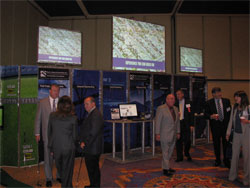 | �
�| Event exhibitors and sponsors contribute to an informative and engaging environment | �
�This year’s meeting was the best yet for the industry-leading construction defect and claims event.
�This year’s seminar concluded on May 13, 2011 with the Construction Defect Community Charitable Foundation Golf Tournament, held at Strawberry Farms Golf Course.
�The Disneyland Hotel in Anaheim, California was the place where more than 1,500 attendees convened for two days of professional development activities and seminars that included CLE workshops and panel discussions of special interest to legal and insurance professionals concerned with construction defect and claims litigation. Key events included “Challenges for Experts in Construction Defect Claims and Litigation,” “Keeping Up with Construction Defect Coverage,” and “Tips for Avoiding the ‘Perfect Storm’ in Handling of Wrap Claims.”
� �  | �
�| Supporting the golf tournament at the 15th hole | �
�This year’s Ollie award was given to George D. Calkins II, Esq. The West Coast Casualty Jerrold S. Oliver Award of Excellence was named in honor of the late Judge Jerrold S. Oliver, and recognizes an individual who is outstanding or has contributed to the betterment of the construction community.
�In addition to being the most comprehensive professional development seminar in the area of construction defects, this year’s seminar was equally valuable as a networking opportunity for members of the industry. People participated in professional development events during the day and then continued networking in the evening at numerous social events. The Lawn Party as well as the legendary Wood, Smith, Henning & Berman events were very well attended. Additional valuable networking events were hosted by a number of industry professionals at the House of Blues, and Tortilla Joe’s.
�As of this writing the 2011, West Coast Casualty's Construction Defect Seminar has applied for or has already received the following continuing education accreditation in the following areas;
�Read the full story…
�For more information about next year’s event, visit West Coast Casualty.
The Colorado Court of Appeals Rules that a Statutory Notice of Claim Triggers an Insurer’s Duty to Defend.�
October 23, 2012 — David M. McLain, Higgins, Hopkins, McLain & Roswell
Gene and Diane Melssen d/b/a Melssen Construction (“Melssen”) built a custom home for the Holleys, during which period of time Melssen retained a CGL insurance coverage from Auto Owners Insurance Company. Soon after completion of the house, the Holleys noticed cracks in the drywall and, eventually, large cracks developed in the exterior stucco and basement slab. Thereafter, the Holleys contacted Melssen, the structural engineer, an attorney, and Auto-Owners, which assigned a claims adjuster to investigate the claim.
�In April 2008, the Holleys sent Melssen a statutory notice of claim pursuant to C.R.S. § 13-20-803.5 (“NOC”). In this NOC, the Holleys claimed approximately $300,000 in damages related to design and construction defects. The Holleys also provided a list of claimed damages and estimated repairs, accompanied by two reports from the Holleys’ consultant regarding the claimed design and construction defects. In June 2008, Melssen tendered the defense and indemnity of the claim to Auto-Owners. While Auto-Owners did not deny the claim at that time, it did not inspect the property or otherwise adjust the claim. Thereafter, in October 2008, Auto-Owners sent Melssen a letter denying coverage on the basis that the damage occurred outside of the applicable policy period.
�Ultimately, Melssen settled the claims against it for $140,000.
� Read the full story…
�Reprinted courtesy of David McLain, Higgins, Hopkins, McLain & Roswell, LLC. Mr. McLain can be contacted at mclain@hhmrlaw.com
�
Housing Market on Way to Recovery�
October 23, 2012 — CDJ Staff
Bloomberg News reports that new home purchases neared a two-year high, with July sales being the strongest since April 2010. Economists polled by Bloomberg expected an annual pace of 380,000 sales, the current levels are at 373,000. Strongest sales gains were in the Northeast, with a 20 percent jump. The Midwest and Western regions had small gains, and the South saw a drop of 4.9 percent. As the Northeast’s home prices are highest and the South’s the lowest, the pattern of sales lead to a sharp increase in median sales price.
�Meanwhile, existing stocks of homes continued to deplete, reaching a record low of 38,000 completed homes on the market. In response, builders are constructing new homes at a pace not seen since April 2010, accord to the Commerce Department.
� Read the full story…
�
Homeowners Must Comply with Arbitration over Construction Defects
January 6, 2012 — CDJ Staff
The California Court of Appeals has upheld a decision by the Superior Court of Kern County that homeowners must comply with arbitration procedures in their construction defect claim. The California Court of Appeals ruled on December 14 in the case of Baeza v. Superior Court of Kern County, denying the plaintiff’s petition that the trial court vacate its order.
The plaintiffs in the case are homeowners in various developments built by Castle & Cook. The homes were sold with a contract that provided for “nonadversarial prelitigation procedures, including mediation, and judicial reference.” The homeowners made defect claims and argued that Castle & Cooke failed to comply with statutory disclosure requirements and that some of the contracts violate related statutes.
The appeals court found that there was no ground for appeal of the lower court’s order to continue with prelitigation procedures. The court noted that the plaintiffs could not seek a review of the mediation until a judgment was issued, but that then the issue would be moot. The court felt that there were issues presented that needed clarification, and so they reviewed this case. This was cleared for publication.
The court considered the intent of the legislature in passing the Right to Repair Act, noting that “under the statutory scheme, the builder has the option of contracting for an alternative nonadversarial prelitigation procedure,” as established in Chapter 4. The court noted that Chapter 4 “contains no specifics regarding what provisions the alternative nonadversarial contractual provisions may or must include.”
The plaintiffs contended that the builder was in violation of the standards set out in Section 912, however the court responded that these sections set out one set of procedures, but they concluded that “if the Legislature had intended the section 912 disclosure provisions…it could have made the requirements applicable to all builders by locating them in a section outside Chapter 4.”
Read the court’s decision…
AFL-CIO Joins in $10 Billion Infrastructure Plan
June 30, 2011 — CDJ Staff
The AFL-CIO has announced plans to generate up to $10 billion in funding for infrastructure development, training construction workers, and making buildings more energy efficient, pledging $20 million to retrofit buildings. Bloomberg News reports that union officials made the announcement in Chicago at the Clinton Global Initiative, releasing a statement from Richard Trumka, president of the union, “we, at the AFL-CIO, believe that together, with our partners in business and government, we can profitably invest significant resources to make America more competitive and energy efficient.” A foot injury prevented Mr. Trumka from attending the event.
�The statement also quoted Mark Ayers, president of the Building and Construction Trades Department of the AFL-CIO, “the time is now to become intensely focused on the creation of jobs.”
� Read the full story…
Ohio “property damage” caused by an “occurrence.”
May 18, 2011 — May 18, 2011 - CDCoverage.com
In JTO, Inc. v. State Automobile Mut. Ins. Co., No. 2010-L-062 (Ohio Ct. App. March 25, 2011), general contractor JTO was sued by hotel project owner Marriott for breach of contract and warranties seeking damages for the repair of construction defects resulting in moisture penetration property damage to interior components. JTO filed a third party complaint against subcontractor Farizel and also tendered its defense as an additional insured under Farizel’s State Auto CGL policy.
�Read the full story…
�Reprinted courtesy of CDCoverage.com
�
�Census Bureau, HUD Show Declines in Residential Construction
�May 17, 2011 – CDJ Staff
�The U.S. Census Bureau and the Department of Housing and Urban Development released their summary of residential construction for April 2011 on May 17.
�Building permits for privately owned housing units were down 4% from last month and 12% from last year. Similarly, privately-owned housing starts were down 10% from March and 23% below the previous year.
�For further details, read the Census Bureau/HUD report
Appeals Court Reverses Summary Judgment over Defective Archway Construction
February 10, 2012 — CDJ Staff
A judge has ruled that a plaintiff can go forward with her suit that she was injured by a defective archway during a birthday party. A three-judge panel of the California Court of Appeals issued this ruling on January 23, 2012, in the case of Trujillo v. Cosio.
� Ms. Trujillo attended a birthday party at the home of Maria Cosio and Joel Verduzco. A piñata was hung between a tree and a brick archway. Ms. Trujillo went to get candy that had fallen from the piñata, during which the archway fell on her hand. Subsequent examination of the archway showed that it had not been “properly anchored to the supporting pillars to protect the arch from falling.”
� Ms. Cosio and Mr. Verduzco argued that they could not have been aware of the defective nature of the archway’s construction, as it had been built at the request of the prior property owner. The structure was constructed without building permits. Mark Burns, a civil engineer testifying for the plaintiff, said that “a reasonable property owner would have thoroughly tested the archway to ensure it was capable of withstanding such horizontal forces before allowing children to enter into the area.” Mr. Burns noted that twenty rope pulls would have been sufficient to demonstrate the structure’s instability.
� The trial court rejected Mr. Burn’s statements, finding that the respondents did not have any knowledge of the defect and that a visual inspection should have sufficed. The court noted that this a triable issue, whether visual inspection suffices, or whether the property owners should have done as Mr. Burns suggested and yank a rope twenty times. The court noted that “although a jury may ultimately disagree with Burn’s opinion, it was supported by sufficient foundation and was not speculative.”
� The opinion was written by Judge Flier, with Judges Rubin and Grimes concurring.
Read the court’s decison…
Condominium Exclusion Bars Coverage for Construction Defect
August 17, 2011 — Tred Eyerley, Insurance Law Hawaii
Coverage was denied under the policy’s condominium exclusion in California Traditions, Inc. v. Claremont Liability Ins. Co.,2011 Cal. App.LEXIS912 (Cal. Ct. App., ordered published July 11, 2011).
� California Traditions was the developer and general contractor for a housing development. California Traditions subcontracted with Ja-Con to perform the rough framing work for 30 residential units. The project had 146 separate residences that were freestanding with no shared walls, roof, halls, or plumbing or electrical lines. To allow a higher density development, the project was developed, marketed and sold as condominiums.
� The purchaser of one of the units filed a complaint against California Traditions alleging property damage from the defective construction. California Traditions cross-complained against Ja-Con.
Read the full story…
�Reprinted courtesy of Tred R. Eyerly, Insurance Law Hawaii. Mr. Eyerly can be contacted at te@hawaiilawyer.com